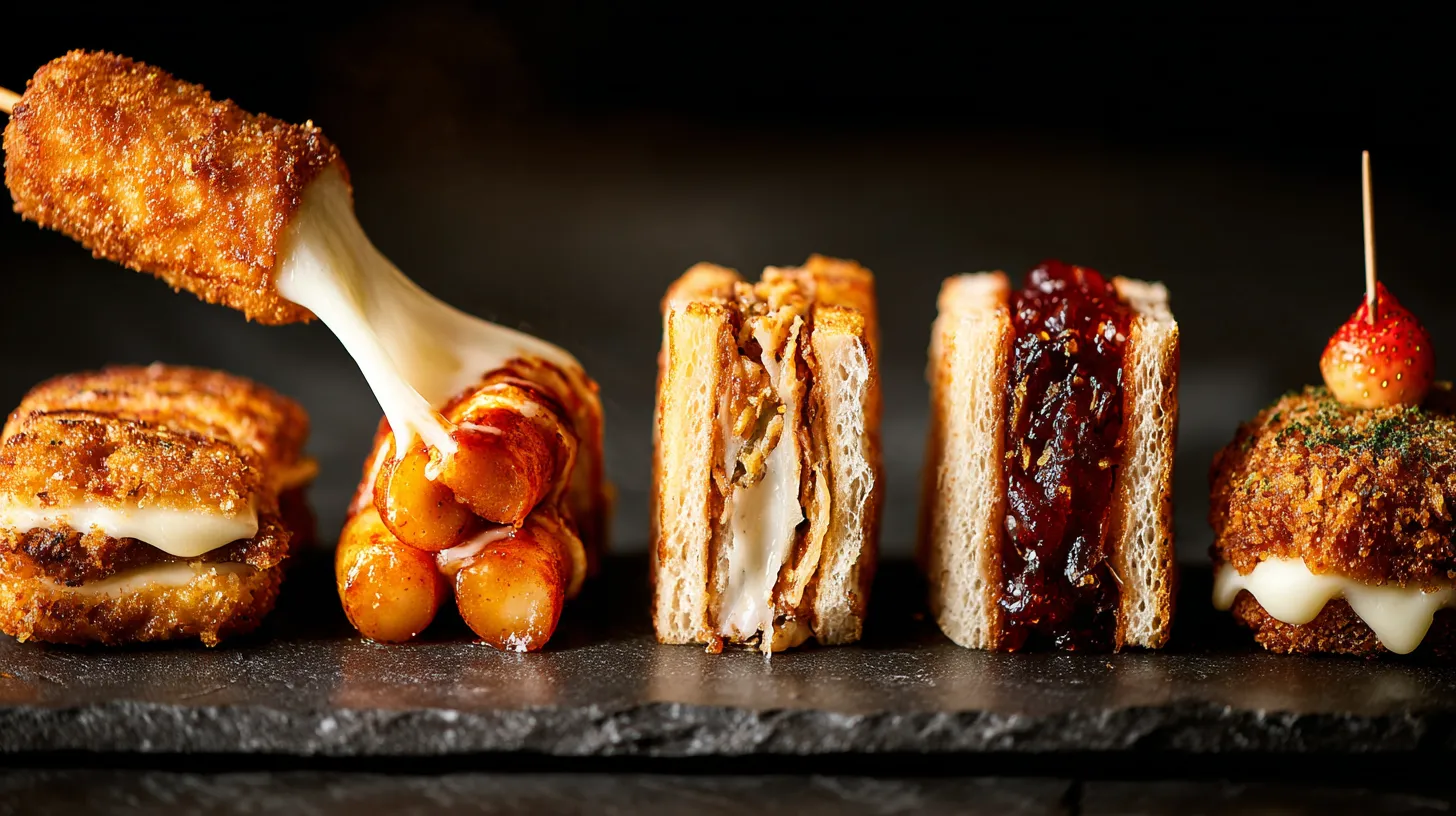
Something significant has shifted in how Americans discover and adopt foods from Asian culinary traditions. For most of the twentieth century, Asian food in the US moved through the filter of American Chinese, Japanese, and later Korean restaurant culture, with dishes adapted substantially for mainstream palates before reaching broad adoption. TikTok and Instagram have compressed that process dramatically. A dish that is popular in Seoul or Tokyo this month can have its own dedicated shop in Austin within a year, and an established recipe search volume within six months.
This article covers the Asian street food formats that have made the most significant crossover into American food culture in 2025 and 2026, with data on adoption rates, the specific content that drove awareness, and what you can expect if you are encountering these dishes for the first time. This article is part of the Biggest Viral Street Food Trends Right Now series at SnackyStreet.
Why Korean Street Food Has Dominated American Adoption
K-Pop Culture as a Food Gateway
Korean food’s rapid adoption in the US over the past decade is not accidental and not purely driven by social media. It has structural foundations that predate TikTok. According to Datassential’s 2025 Asian Food Trends report, Gen Z consumers, born between 1997 and 2010, are leading adoption of highly authentic Korean items, with tteokbokki showing a 274 percent appeal index compared to the general population and Korean corn dogs at a 210 percent appeal index among this demographic. These are very high numbers that indicate genuine enthusiasm rather than passing trend interest.
Why Authenticity Demand Is Higher Than in Previous Waves
The underlying drivers are K-pop and Korean drama culture, which gave millions of American teenagers and young adults a primary cultural reference point for Korean life, including its food. When BTS members are filmed eating at a specific Seoul restaurant or a Netflix drama shows a street market food stall, the audience has already developed an emotional connection to the cultural context. This makes the food feel like participation in something meaningful rather than just novelty consumption. The appetite for authenticity within this audience is notably higher than in prior waves of Asian food adoption in America.
Korean Corn Dogs: The Cheese Pull That Changed American Fried Food
What Makes the Korean Version Different
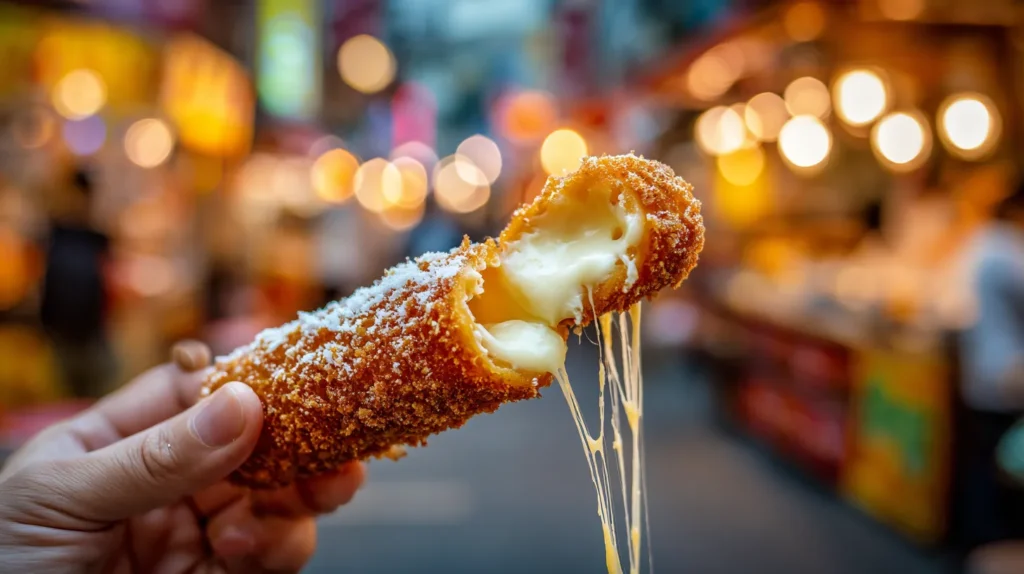
Korean corn dogs emerged in South Korea in the 1980s and 1990s as a distinctly Korean adaptation of the American corn dog. The American original uses a cornmeal batter and a hot dog. The Korean version uses a yeast-leavened wheat or rice flour batter, coats the finished product in panko breadcrumbs for exterior crunch, fills the interior with mozzarella cheese rather than or alongside a sausage, and applies a light dusting of fine sugar after frying. The result is lighter, crispier, and produces a dramatically different interior texture than the American corn dog.
The Cheese Pull That Built a Trend
The mozzarella filling is the defining innovation. When pulled, mozzarella stretches into a long, thin ribbon of cheese before breaking. This pull, filmed in close-up, is one of the most reliably engaging food content moments on social media, combining motion, texture, and the promise of melted cheese in a single frame. Korean corn dog shops opened across the US through 2024 and 2025, with brands like Myungrang Hot Dog establishing US locations in multiple cities. Korean corn dogs are available in multiple filling variations: half sausage half mozzarella, ramen-coated versions using crushed instant ramen noodles, and potato-cube variations embedding small fried potato pieces in the batter.
Tteokbokki: Korea’s Most Iconic Street Food Finds an American Audience
Celebrity Endorsements and the H-Mart Expansion
Tteokbokki, described by NBC News as Korea’s “ultimate street food,” consists of cylindrical rice cakes cooked in a spicy, sweet sauce based on gochujang and gochugaru, typically with fish cakes, green onions, and sometimes cabbage. Several forces converged to push tteokbokki into American awareness in 2024 and 2025. Celebrity endorsements from K-pop figures, particularly BTS’s Jimin being spotted eating tteokbokki at a Seoul food market, drove immediate interest among fan communities. Sesame Street’s first Asian muppet, Ji-Young, was depicted eating tteokbokki, which introduced the dish to a younger demographic. Pre-packaged instant tteokbokki began appearing at Costco and on Amazon through O’Food and similar brands, creating accessibility that converted social media interest into at-home consumption.
Rose, Carbonara, and Cheese Variants: Modern Formats
The modern tteokbokki available at trend-forward Korean restaurants in the US is not limited to the classic spicy format. Rose tteokbokki adds heavy cream to the gochujang base, producing a pink, milder sauce that photographs distinctively. Carbonara-style tteokbokki replaces the gochujang entirely with a cream and parmesan sauce. Cheese-topped versions melt mozzarella directly over the sauce. Each variation has its own social media identity and performs well in video format because the color contrast and steam visual are consistently compelling. Tteokbokki-specific restaurants have opened in US cities including Witch Topokki in the New York area, which offers the format as a tabletop cooking experience.
Jianbing: China’s Savory Street Crepe Takes the US by Surprise
A Century-Old Beijing Breakfast That TikTok Discovered
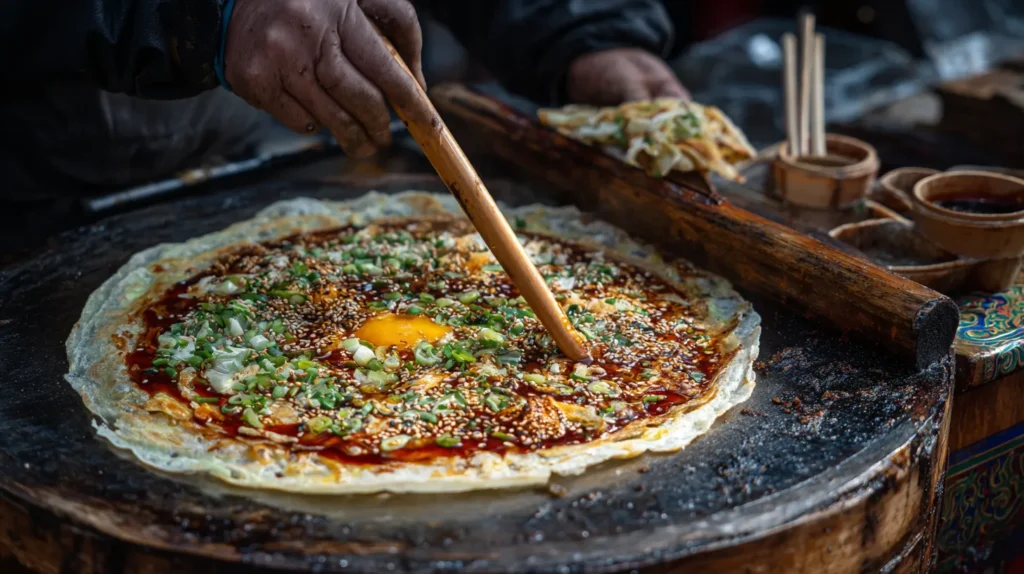
Jianbing is a Chinese savory breakfast crepe that has been a staple of northern Chinese street food, particularly in Beijing and Tianjin, for over a century. A vendor spreads thin mung bean or wheat batter on a hot, circular iron griddle, cracks an egg directly onto the crepe and spreads it thin, adds scallions, sesame seeds, and sometimes cilantro while the batter sets, then spreads hoisin and chili sauces across the surface, places a crispy thin cracker (baocui) or fried wonton sheet in the center, and folds the whole structure into a rectangular packet to be eaten in hand. The assembly process, which takes about two minutes and involves multiple simultaneous actions on the griddle, is itself a compelling visual that makes excellent short-form video content.
Where to Find Jianbing in the US
Jianbing has a smaller but growing footprint in the US compared to Korean formats, concentrating primarily in cities with large Chinese-American populations including New York (particularly in Flushing, Queens), Los Angeles, San Francisco, and Chicago. Food creators who grew up eating jianbing from family-run carts began posting US-based versions in 2024, generating the kind of “I didn’t know this existed and now I need to find it” engagement that typically precedes broader adoption. By 2025, jianbing stalls had appeared at several major American food festivals without requiring a Chinese-American community baseline in the host city.
Japanese Sando: The Prestige Street Food That Commands Premium Prices
Shokupan: The Bread That Makes All the Difference
The Japanese sando, a sandwiched format using thick, fluffy Japanese milk bread (shokupan), has become one of the most reliably premium street food items in American cities over the past two years. The bread is distinctive: it is leavened using the tangzhong method, which involves cooking a portion of the flour with liquid before adding it to the dough, producing an extraordinarily soft, pillowy interior and a thin, tender crust. When pressed, shokupan compresses and springs back in a way that is visually satisfying and structurally unique among sandwich breads.
Katsu Sando, Tamago Sando, and the Premium Positioning
The two dominant American sando formats are the katsu sando, featuring a panko-breaded and deep-fried pork cutlet with tonkatsu sauce and shredded cabbage, and the tamago sando, featuring a thick layer of Japanese egg salad made with hard-boiled eggs and Kewpie mayonnaise. Both formats photograph exceptionally well when cross-sectioned, showing the clean geometric layers of bread, filling, and bread. This cross-section presentation has become a signature content moment for sando shops, equivalent to the Dubai chocolate bar snap or the birria consomé dip. Dedicated sando shops in New York, Los Angeles, and San Francisco command prices of twelve to twenty-five dollars for a single sandwich, positioning the format as luxury street food.
Tanghulu: Chinese Candied Fruit as Jewelry
Song Dynasty Origins and Modern Viral Reach
Tanghulu, the Chinese candied fruit street food described in detail in our TikTok Street Food Trends guide, traces to the Song Dynasty, originally made with hawthorn berries as a medicinal sweet, and has been a feature of Chinese street food, particularly in northern China, for centuries. Traditional tanghulu uses hawthorn berries (shan zha), which are small, tart, and firm enough to hold the sugar shell without collapsing. American versions substituted strawberries, grapes, and other fruits because hawthorn berries are difficult to source outside of specialty Asian grocery stores.
Why the Strawberry Version Outperforms the Original
The strawberry tanghulu version became particularly popular because the bright red of a strawberry visible through a transparent sugar shell is more visually striking than the hawthorn original, and the strawberry’s sweetness against the crunchy sugar produces a more intuitive flavor combination for Western palates. Tanghulu vendors at US Asian food festivals sold out consistently through the summer of 2025, and the format is now present at mainstream food events in cities including Nashville, Charlotte, and Minneapolis that previously had minimal Asian street food vendor representation.
Where to Find These Foods in the US
The Gateway Cities: LA, New York, Houston, and Chicago
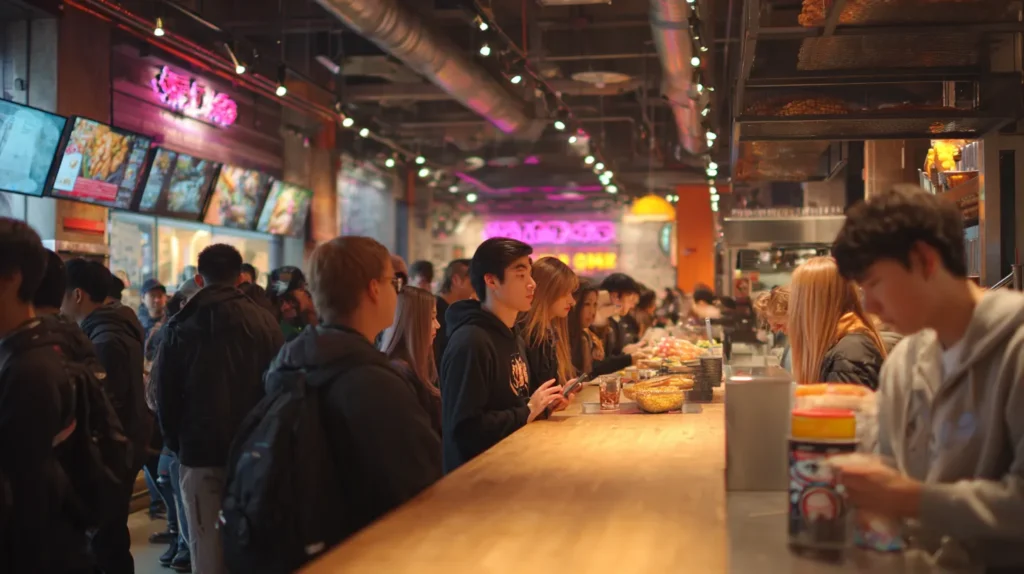
The concentration of these Asian street food formats in the US follows a clear geographic pattern. Los Angeles has the broadest coverage of all five formats described here, reflecting its large Korean, Chinese, and Japanese-American communities and its role as a gateway city for Pacific Rim culinary influences. New York’s Flushing neighborhood in Queens is the most comprehensive Asian food district in the US, with multiple vendors for each of these formats within walking distance of each other. San Francisco’s Richmond and Sunset districts offer consistent access. Houston and Dallas have developed strong Korean food scenes reflecting their growing Korean-American populations.
Food Festivals and Pop-Ups in Mid-Sized Markets
Outside these major markets, the most reliable path to these foods in 2025 and 2026 is through food festivals and pop-up markets. Asian-focused food festivals, including festivals specifically celebrating Korean, Chinese, or pan-Asian food culture, are now operating in mid-sized markets including Austin, Denver, Portland, Nashville, and Atlanta, and typically host vendors offering most of the formats described here. Korean food trucks specifically have expanded aggressively into markets where no brick-and-mortar Korean food presence existed two years ago.
Frequently Asked Questions
What are the most popular Asian street foods in the US right now?
By search volume, social media engagement, and new vendor adoption, Korean corn dogs, tteokbokki, and Japanese sandos are the three most significant Asian street food formats driving trend activity in the US in 2025 and 2026. Tanghulu and jianbing show strong growth from smaller baselines. Among all Asian culinary traditions, Korean food shows the highest rate of authentic-format adoption, meaning Americans are seeking the dishes in their original form rather than adapted versions.
Why is Korean street food so popular in the US?
Korean street food’s rapid adoption reflects a combination of factors: the global reach of K-pop and Korean drama culture created an emotional connection to Korean life before food discovery; the visual formats of Korean street food, cheese pulls, steam, gloss, color, are ideal for short-form video; and Gen Z has a 274 percent above-average appeal index for tteokbokki and a 210 percent index for Korean corn dogs according to Datassential research.
What is a jianbing and where can I find one in the US?
Jianbing is a Chinese savory breakfast crepe assembled on a hot circular griddle with egg, hoisin, chili sauce, scallions, and a crispy cracker folded inside. In the US, find it most reliably in Flushing, Queens in New York, in Los Angeles in the San Gabriel Valley area, and in San Francisco’s Richmond District. It is beginning to appear at Asian food festivals in other cities, and some food trucks in major markets now offer it as a specialty item.
What makes shokupan (Japanese milk bread) different from regular sandwich bread?
Shokupan uses the tangzhong technique, which involves cooking a portion of the flour and liquid together into a paste before incorporating it into the dough. This gelatinizes some of the starch, which allows the dough to absorb more liquid than a standard loaf and produces an exceptionally soft, springy crumb that stays moist longer. The texture is noticeably different from American sandwich bread in both feel and structural behavior, holding together under compression in a way that makes it ideal for pressed and cross-sectioned sandwiches.
More from the Viral Street Food Trends Series
- The Biggest Viral Street Food Trends Right Now (Pillar)
- Dubai Chocolate Bar: What It Is and How to Make It
- TikTok Street Food Trends Blowing Up This Year
- Smash Burger Tacos: The Viral Mashup Everyone’s Making
- Birria Tacos: How the Trend Took Over the US
- Tornado Potato: The Fair Food TikTok Cannot Stop Watching
- Pickle Pizza and Other Wild Street Food Combos Worth Trying
- We Tried 10 Trending Fair Foods: Here’s the Honest Verdict
- Street Food Challenges: The Most Outrageous Food Dares by City
- What’s Trending at US Food Festivals This Season
For more global street food coverage, see our NYC Halal Cart Chicken and Rice guide and Ultimate Guide to Making Street Food at Home.
© 2026 SnackyStreet.com. All rights reserved.