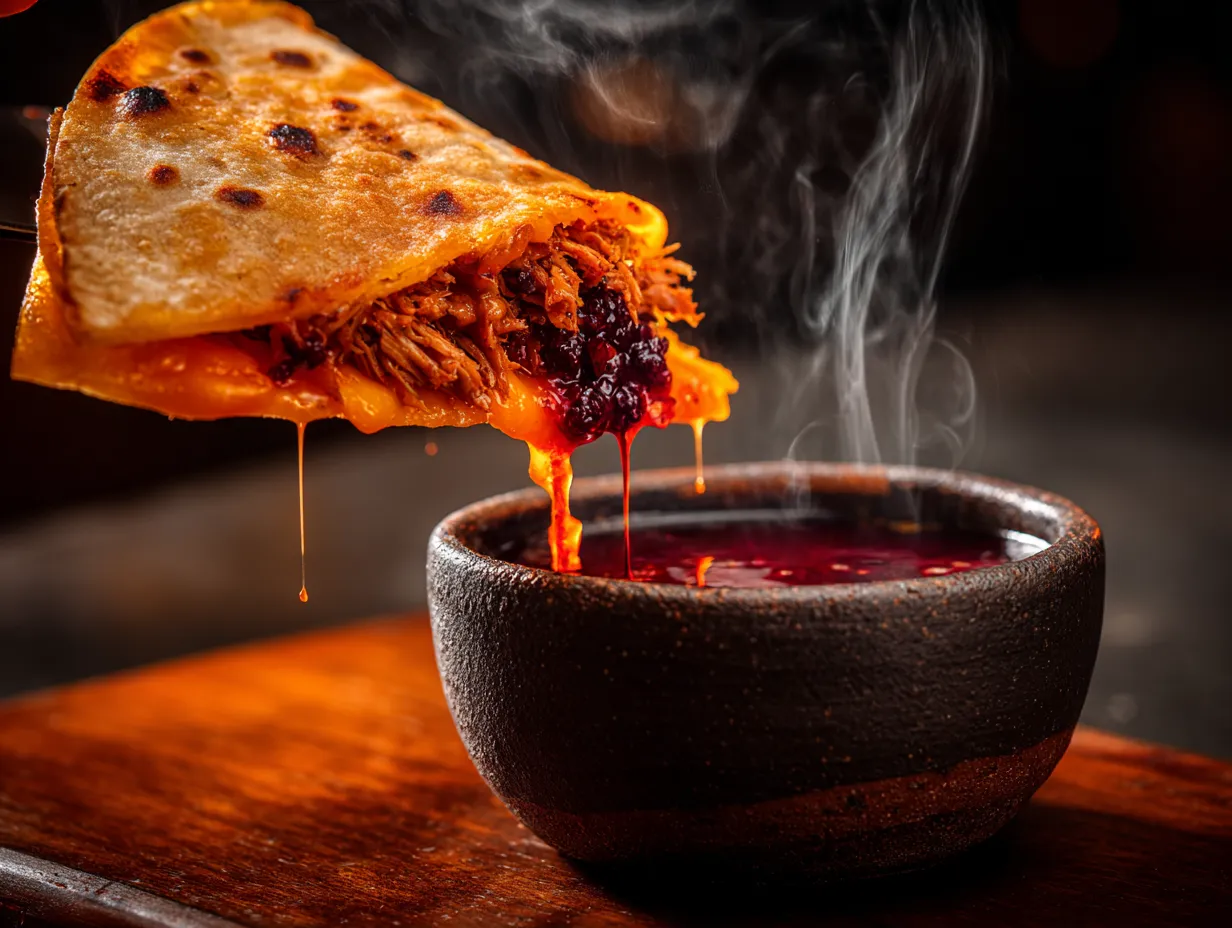
There is a specific claim that appears in nearly every article about birria tacos: that they went viral on Instagram and TikTok and then exploded nationwide. This is accurate, but incomplete. The more interesting story is everything that happened before the algorithm found them. Five centuries of culinary history, a migration from Jalisco to Tijuana, a specific taquero in Los Angeles who spent nine months driving for Uber while sampling strangers from the trunk of his car, and an accidental innovation involving the fat layer on top of a stewing pot. The consomé dip that generates millions of views today was not designed for social media. It was designed to prevent soggy tortillas. That gap between origin and virality is what makes birria tacos one of the most substantive food stories in American street food history.
This article is part of the Biggest Viral Street Food Trends Right Now series at SnackyStreet. It covers the full history of birria, the specific innovations that made it viral, the geography of its spread across the US, all the variants worth knowing, and a complete at-home recipe for quesabirria with authentic consomé.
The Origin: Jalisco, Goats, and a Derogatory Name
How Spanish Colonization Created a Mexican Icon
Birria begins in the state of Jalisco in western Mexico, with roots that trace to the arrival of Spanish conquistadors in 1519. The Conquistadors brought goats to Mexico during the colonization period. Goat meat was considered low-quality and undesirable by Spanish standards, so they distributed it to indigenous communities. Mexican cooks responded by marinating the tough, gamey meat in a complex adobo of dried chiles, vinegar, garlic, cumin, bay leaves, and thyme before slow-cooking it in a pit or clay pot. The result was tender, richly flavored meat that transformed the ingredient completely.
From Celebration Food to Street Food
The Spanish called the dish “birria,” a derogatory term meaning roughly “worthless,” intended as a dismissal of the indigenous adaptation. The name stuck and the dish survived, which says something about whose food culture actually endured. For several centuries, birria remained a regional specialty of Jalisco and surrounding areas, served at celebrations including weddings, baptisms, and major holidays. It was celebratory food, not everyday street food, and its preparation was a communal activity requiring significant time and skill.
The Tijuana Innovation: Beef, Consomé, and Don Guadalupe Zárate
The Taquero Who Switched Goat for Beef
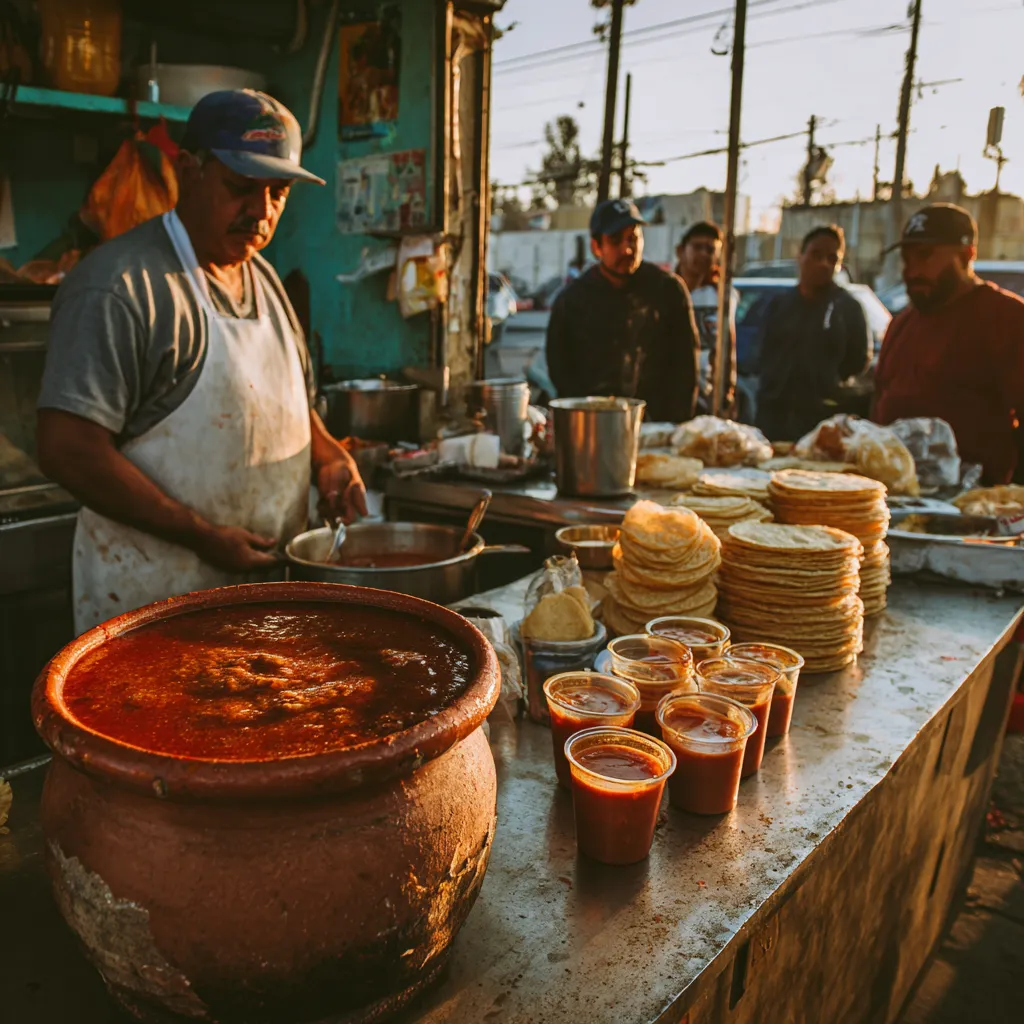
The transformation of birria from a Jalisco pit roast into the consomé-based format that Americans recognize today happened in Tijuana in the 1950s. A taquero named Guadalupe Zárate moved north from Coatzingo, Puebla and opened a street stand. He made the practical decision to substitute beef for goat because beef was more affordable and had better yield at scale. One version of the story holds that a customer asked him to add more liquid to the cooking pot to prevent the meat from burning. The resulting broth, reduced and concentrated with the fat, chiles, and rendered meat juices, became the consomé that defines the modern format.
The Invention of Quesabirria and the Fat-Dipped Tortilla
Zárate’s stand evolved over the years and by 1968 had become a late-night destination called Las Ahumaderas. Through the 1980s and 1990s, birria de res grew in Tijuana, operating as a breakfast and early lunch food served with corn tortillas, white onion, cilantro, and salsa de chile de árbol. Taquería Tacos Aarón in Tijuana is credited with adding cheese to the format, creating what would eventually be called quesabirria, though the name came later. The tortilla was dipped in the fat layer on top of the consomé before griddling, which created the lacquered, crimson-colored exterior that became the dish’s visual signature.
Los Angeles and the Great Birria Boom
Teddy Vasquez and the Trunk Samples That Built a Movement
Tijuana taqueros brought quesabirria to Los Angeles around 2016. Taqueros and diners began posting about the format on Instagram. But the moment that turned birria from a regional specialty into a national phenomenon has a specific human origin. Teddy Vasquez, who had never eaten birria before deciding to make it his business, spent a year in Tijuana learning the dish from traditional birrierías before returning to Los Angeles. He started Teddy’s Red Tacos as a weekend stand, promoting it by offering free samples from the trunk of his car to Uber and Lyft passengers and directing them to follow him on Instagram. For nine months he drove, worked the stand, and saved enough to open a food truck.
From Instagram Lines to National Chain Menus
The videos he posted on Instagram, showing the consomé dip in close-up, were the first content to give birria its visual identity for American audiences. The act of dipping the taco into the broth before eating, which originated in Los Angeles as a practical adaptation to keep the tortilla from going soggy, produced the ASMR-friendly, visually dramatic content moment that translated perfectly to social media. By 2019 and into 2020, Birria-Landia in New York was drawing lines stretching around blocks on weekends, and the format had crossed from the Mexican-American community into the broader American food conversation. The scale of adoption was documented by Datassential, which reported that birria’s presence on US restaurant menus grew 412 percent over a four-year period through 2024, penetrating midscale chains including Del Taco and Qdoba.
The Three Things That Made It Viral
The Consomé Dip, the Griddle Stage, and the Table Dunk
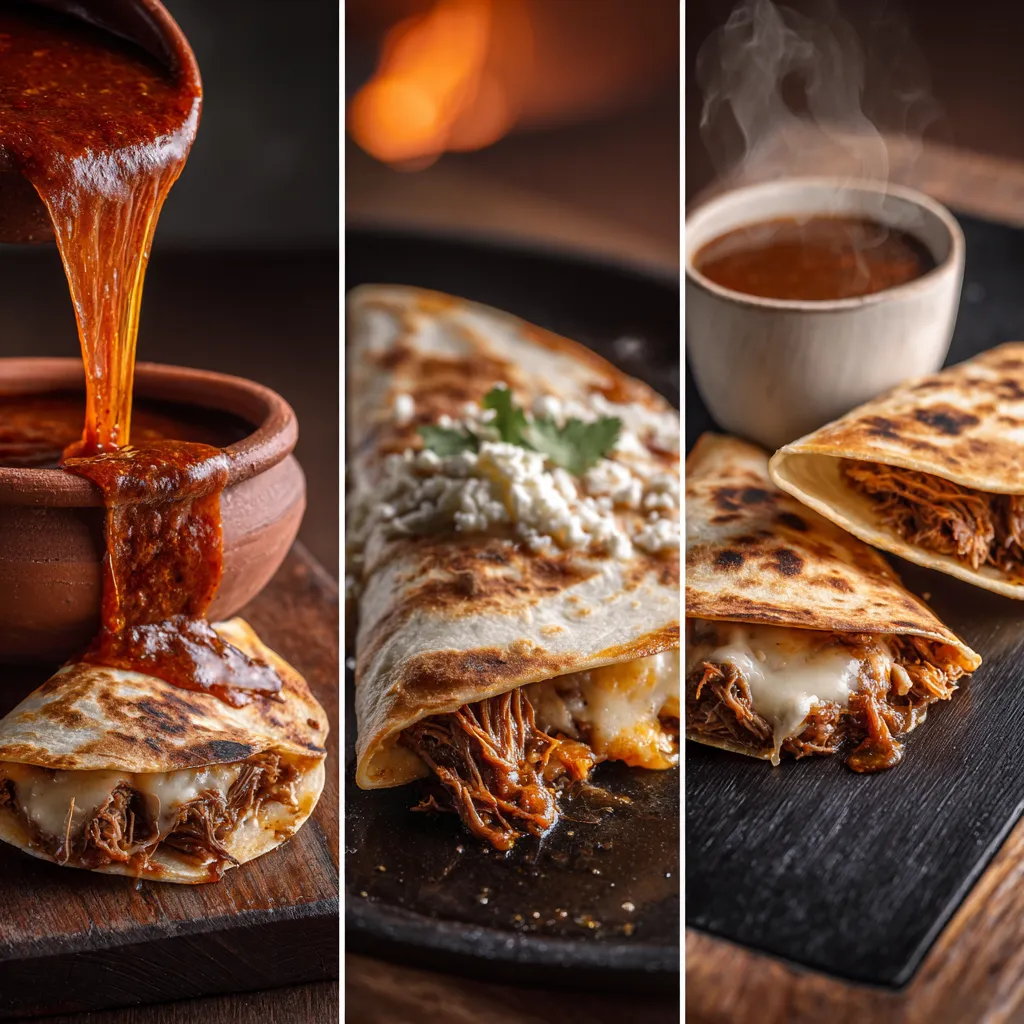
Birria tacos have three visual events that perform exceptionally well on short-form video, which is unusual. Most viral foods have one. The consomé dip is the first: the tortilla going from pale corn to a deep, lacquered red as it absorbs the chile-fat broth. This transformation is visually immediate and dramatic. The second is the griddle stage: the cheese melting and spreading across the surface of the fat-dipped tortilla, forming the crispy, golden, cheese-laced crust that is the quesabirria’s structural signature. The third is the consomé dip at the table: the finished taco being dunked into the accompanying cup of broth before each bite, creating a sensory interaction with the food that turns eating into a performance.
Why No Other Taco Format Has This Level of Drama
No other mainstream taco format in America has this level of multi-stage visual drama. The cheese pull from the quesabirria format added a second visual event that layered on top of the consomé dip. The underlying dish, slow-braised beef in complex chile broth, is genuinely delicious at a fundamental level that goes beyond trend appeal, which is why the trend shows no sign of fading.
Birria Variants: Beyond the Original
Ramen, Pizza, Grilled Cheese, and Loaded Fries
The success of birria tacos in the US generated a wave of adaptation that is still ongoing. Each variant is built on the base of the braised meat and its consomé, which function as a flavor module that transfers to other formats. Birria ramen first appeared in Tijuana and was popularized in Los Angeles, where the consomé, strained and finished with butter or beef fat for shine, replaced the standard ramen broth. Ramen noodles cook directly in the birria broth and absorb its chile and beef depth. The birria ramen format was significant enough that Del Taco added it to their menu nationally.
How the Consomé Module Transfers to Any Format
Birria pizza uses the shredded meat as a topping on a pizza base with mozzarella, and the consomé is served separately as a dipping sauce for the crust. Birria grilled cheese sandwiches use the braised meat as the filling with Chihuahua or American cheese, griddled until the exterior is crispy in the same technique as the original quesabirria. Birria loaded fries top french fries with shredded birria, melted cheese, diced white onion, fresh cilantro, and a side of consomé. All of these variants are now present on menus across the US from food trucks to national chains.
How to Make Quesabirria at Home: Full Recipe
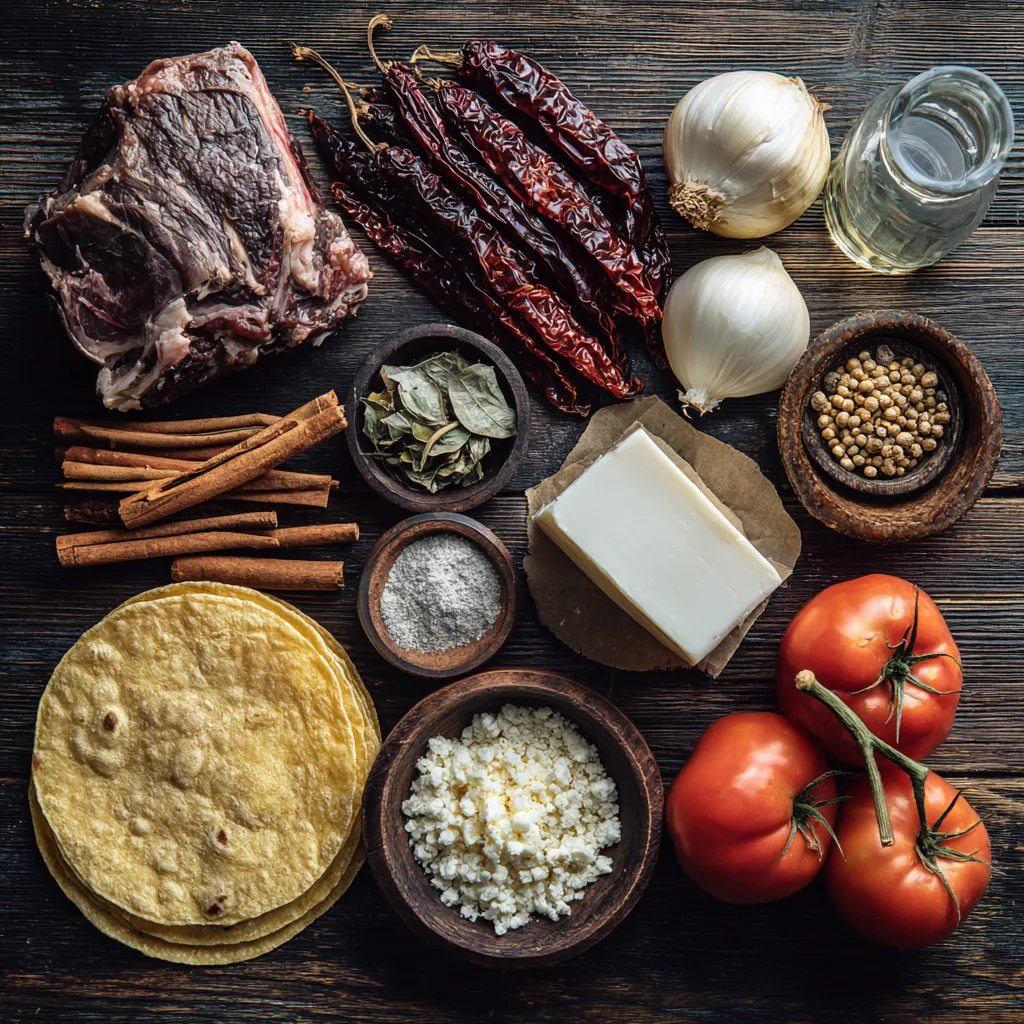
Making authentic quesabirria at home requires time but not technique. The braising process is largely passive, and the consomé develops itself. Plan for at least 4 hours total, though 6 hours of braise produces more deeply flavored meat.
For the Adobo and Consomé
Toast 4 dried guajillo chiles, 2 dried ancho chiles, and 2 dried chiles de árbol (adjust for heat preference) in a dry skillet over medium heat until fragrant, about 2 minutes per side. Remove stems and seeds. Soak in hot water for 15 minutes until soft. Transfer to a blender with 4 peeled garlic cloves, half a white onion, 3 roma tomatoes (halved and charred under a broiler), 1 teaspoon cumin, 1 teaspoon dried Mexican oregano, 1 cinnamon stick broken in pieces, 3 bay leaves, 2 tablespoons white vinegar, 1 teaspoon salt, and 1 cup of the chile soaking water. Blend until completely smooth. Strain through a medium-mesh sieve. Season 2 pounds bone-in beef chuck or short rib with salt. Brown in batches in a heavy pot, return all beef, pour blended adobo over it, add water to just cover. Bring to a boil, skim foam, reduce to a low simmer, braise covered for at least 4 hours, ideally 6. Remove the meat, shred it, and return to the pot. Reserve 2 cups of the consomé with its fat layer for tortilla dipping.
For the Quesabirria Assembly
Use corn tortillas. Skim the fat layer from the top of the consomé into a wide shallow bowl. Dip each tortilla in the fat briefly on both sides. Place on a preheated comal or cast iron skillet over medium-high heat. Add shredded Oaxacan cheese or Chihuahua cheese to one half. Add a generous portion of shredded birria meat over the cheese. Fold the tortilla over. Cook until the exterior is crispy and the cheese is fully melted, about 2 minutes per side. The tortilla should be deeply colored from the chile fat. Serve immediately with a small cup of warm consomé for dipping, topped with finely diced white onion and fresh cilantro.
Where to Find the Best Birria Tacos in the US
The Cities With the Strongest Birria Culture
Los Angeles remains the center of birria culture in the United States, with Teddy’s Red Tacos in Venice still drawing lines and food trucks across East LA and the San Gabriel Valley producing some of the most technically precise quesabirria outside of Tijuana. Birria-Landia in Jackson Heights, Queens, New York, operates a consistently excellent version with a particularly well-balanced consomé. Houston’s food truck scene has developed strong birria representation reflecting the city’s large Mexican-American community, and Austin’s food truck parks have made birria a staple of the city’s street food identity.
Chicago and the Pre-Social-Media Tradition
Chicago’s Mexican-American neighborhoods on the city’s south and southwest sides have long-standing birria culture that predates the social media boom by decades and produces some of the most traditional preparations available in the US. This context matters: Chicago’s birria was not created for content. It emerged from community cooking traditions that predate the viral moment and continues to produce some of the most authentic versions outside of Tijuana and Guadalajara.
Frequently Asked Questions
What is the difference between birria and quesabirria?
Birria is the braised meat and its broth, the consomé. Quesabirria is a specific preparation where the corn tortilla is dipped in the fat layer of the consomé, placed on a griddle, filled with cheese and birria meat, and cooked until the tortilla is crispy and the cheese is melted. The word quesabirria is a portmanteau of queso (cheese) and birria. Quesabirria is always served with consomé on the side for dipping.
What cut of beef is best for birria?
Bone-in beef chuck or beef short ribs produce the best results for home birria because both have sufficient collagen and fat to break down over a long braise into tender, shreadable meat with rich flavor. The bones contribute significantly to the depth of the consomé. For a traditional Tijuana-style birria, the combination of bone-in chuck with some short rib for fat content is the closest match to what you find at authentic birrierías.
What chiles are used in birria?
The most common base is guajillo chile, which provides color and mild fruity heat, combined with ancho chile for sweetness and depth, and a small amount of chile de árbol for sharpness. Some recipes add pasilla for earthiness or mulato for chocolate notes. The specific combination varies by region and family recipe, but guajillo is nearly universal. All dried chiles should be toasted briefly in a dry pan before rehydrating, which develops their flavor significantly.
Is birria always spicy?
The heat level of birria is adjustable based on the amount of chile de árbol or other hot chiles used. The guajillo and ancho that form the base are mild, with fruity and sweet notes rather than significant heat. A traditional Tijuana-style birria is moderately spiced but not intensely hot. Adjust the amount of chile de árbol to control heat without affecting the overall flavor profile of the adobo.
More from the Viral Street Food Trends Series
- The Biggest Viral Street Food Trends Right Now (Pillar)
- Dubai Chocolate Bar: What It Is and How to Make It
- TikTok Street Food Trends Blowing Up This Year
- Smash Burger Tacos: The Viral Mashup Everyone’s Making
- Tornado Potato: The Fair Food TikTok Cannot Stop Watching
- Pickle Pizza and Other Wild Street Food Combos Worth Trying
- Viral Asian Street Foods Americans Are Obsessed With
- We Tried 10 Trending Fair Foods: Here’s the Honest Verdict
- Street Food Challenges: The Most Outrageous Food Dares by City
- What’s Trending at US Food Festivals This Season
For more taco recipes, see our Best Homemade Taco Recipes guide covering birria, al pastor, and smash tacos. Full street food at-home techniques in our Ultimate Guide to Making Street Food at Home.
© 2026 SnackyStreet.com. All rights reserved.