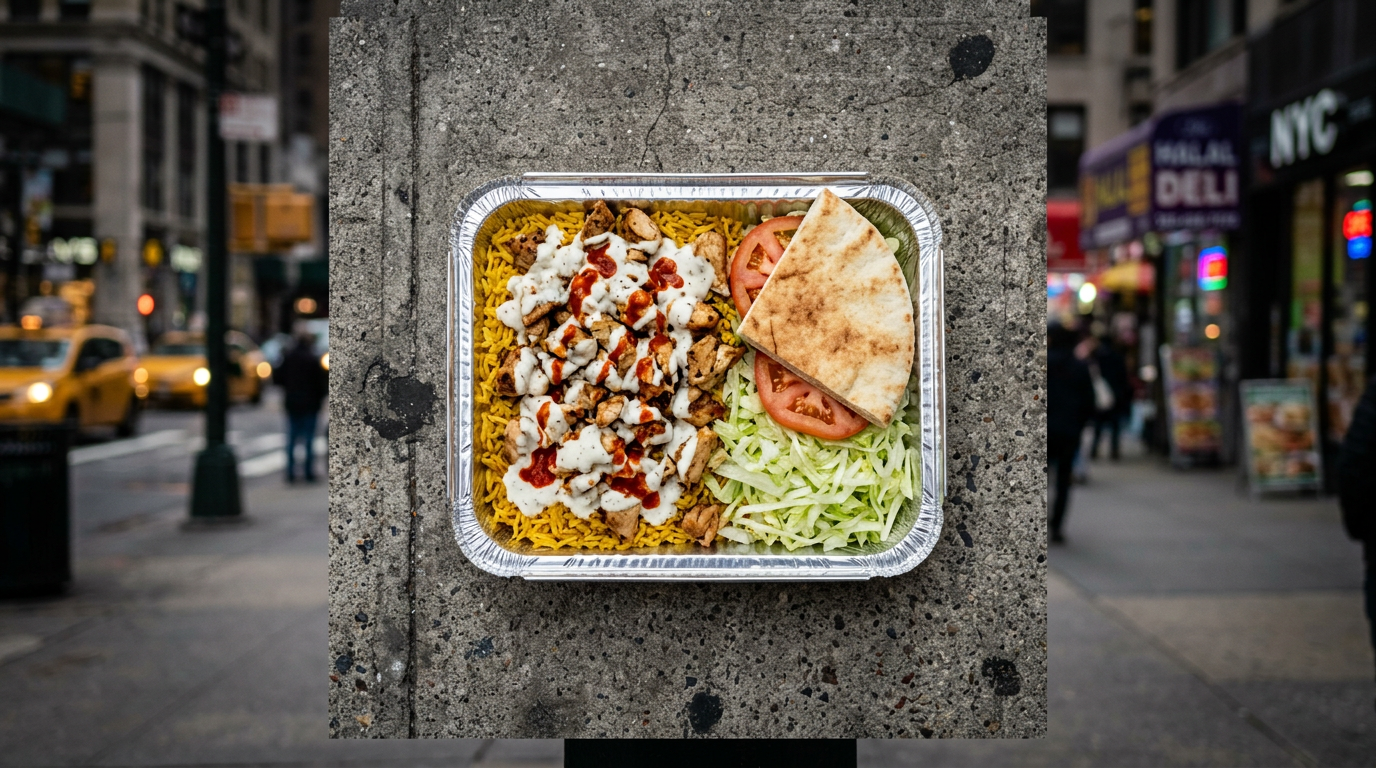
There is a cart on the corner of 53rd Street and 6th Avenue in Midtown Manhattan that has been drawing lines of 30 to 40 people at lunchtime since 1990. The Halal Guys started as a food cart serving halal meat to cab drivers, grew into a city institution, and eventually became the template for an entire category of American street food. The dish they made famous is deceptively simple: spiced chicken or lamb over turmeric rice, with a white sauce that has been the subject of more culinary detective work than almost any other condiment in New York food history.
This article is part of the Ultimate Guide to Making Street Food at Home, our complete playbook for building restaurant and street cart quality dishes in your own kitchen. If you are putting together a full street food spread, pair this plate with our Street-Style Loaded Fries or pick up the full technique foundation in the pillar guide before you start.
The Halal Cart Plate: What It Actually Is
The dish that the Halal Guys made famous is a combination of three components that each need to be cooked correctly and served together at the right temperature. The chicken is marinated in warm spices, seared or griddled until the exterior has some color, then chopped into pieces. The rice is cooked in chicken broth with turmeric and butter, which gives it a golden color and a buttery, savory flavor that is completely different from plain steamed rice. The white sauce is a creamy, tangy condiment made from mayonnaise, Greek yogurt, lemon juice, vinegar, and a tight set of aromatics.
The dish is always served the same way: rice on the bottom, chicken on top, lettuce and tomato on the side, white sauce drizzled over everything, and a generous splash of hot sauce for those who want heat. The pita comes on the side and is used for scooping. The genius of the format is that every component is independently good but the plate only reaches its full potential when all three are combined in a single bite.
The History Behind the Cart
The Halal Guys began in 1990 when Egyptian immigrants Mohamed Abouelenein, Ahmed Elsaka, and Abdelbaset Elsayed set up a hot dog cart in Midtown Manhattan. Noticing that many of their customers were Muslim cab drivers who had no halal food options nearby, they pivoted to selling chicken and lamb over rice from their cart. The decision was both practical and visionary. New York’s Muslim community was large, the lunch crowd was enormous, and no one was serving this style of food at cart prices in that part of the city.
The white sauce became the defining element of the brand. It was kept deliberately secret for years and became the subject of countless reverse-engineering attempts by food writers and home cooks. The Halal Guys eventually franchised and expanded to locations across the United States, but many longtime fans insist the original 53rd Street cart still produces the best version.
Component 1: The Chicken Marinade
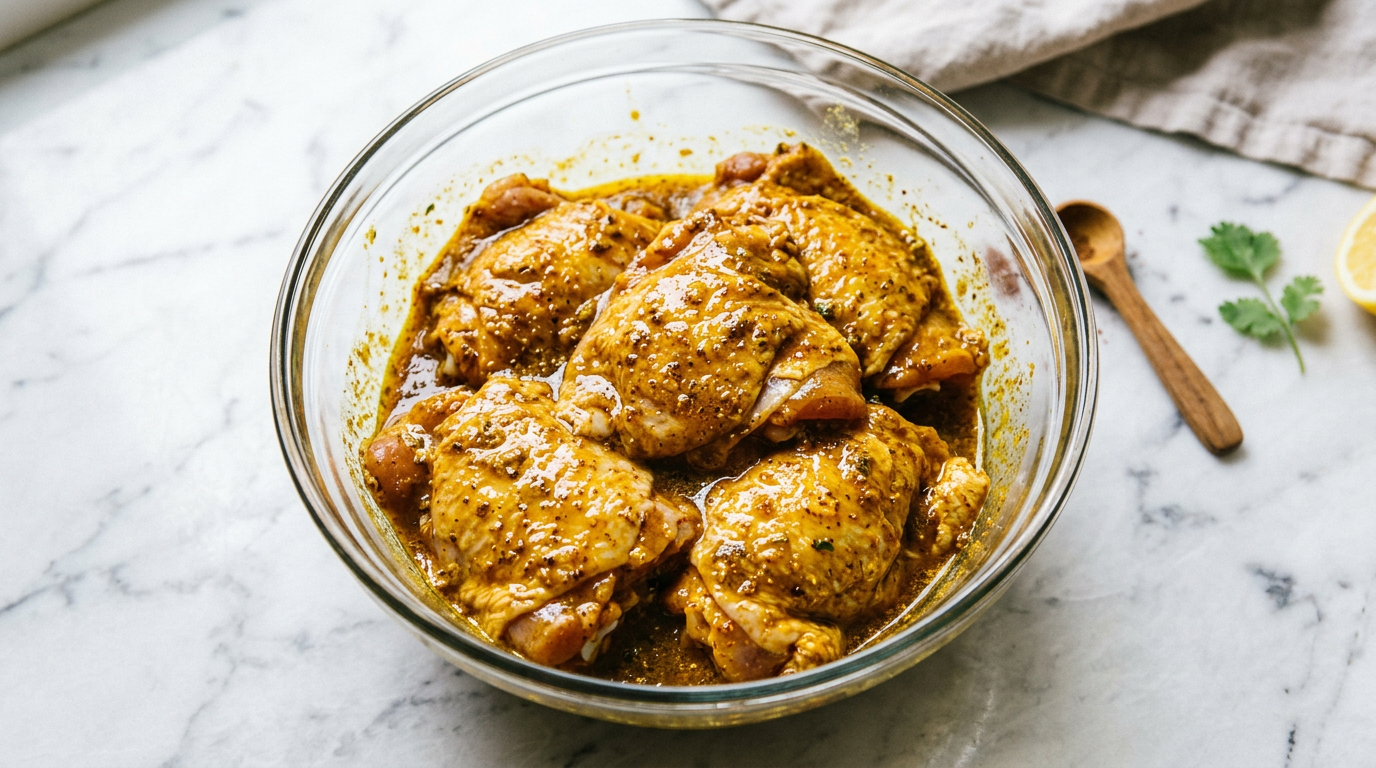
The chicken used at halal carts is typically boneless, skinless chicken thighs rather than breast meat. Thighs have more fat, which means they stay juicy under high heat and develop better color and flavor when seared. If you use chicken breasts, you risk dry, chalky meat, which is the opposite of what this dish needs.
The Spice Blend
The character of this chicken comes from a specific combination of warm, aromatic spices rather than heat. The foundation is turmeric for color and earthiness, cumin for depth, coriander for brightness, and black pepper for background warmth. Sumac adds a tangy, almost lemony note that is characteristic of Middle Eastern and Levantine spice blends. Garlic powder, smoked paprika, and a small amount of allspice round the blend out. Some versions add a pinch of cinnamon, which reads as warmth rather than sweetness when used in small amounts.
Combine all the spices with olive oil, fresh lemon juice, a small splash of white vinegar, and minced garlic. The acid helps the spices penetrate the meat during marination and also acts as a tenderizer. Coat the chicken thighs thoroughly, cover, and refrigerate for at least two hours. Overnight produces noticeably better results. The spice crust that forms during cooking is what distinguishes properly marinated halal cart chicken from chicken that was simply seasoned before cooking.
How to Cook the Chicken
The original carts use a flat griddle at high heat, which produces a slightly charred, caramelized crust on the chicken while keeping the interior juicy. At home, a cast iron skillet preheated over medium-high heat for four to five minutes is the closest equivalent. You can also use a grill, which adds a pleasant smokiness.
Cook the chicken thighs in a single layer without crowding. If your skillet will not hold them all, cook in two batches. Sear for five to six minutes per side without moving them until deeply golden on each side and cooked through to an internal temperature of 165 degrees Fahrenheit. Rest the chicken for five minutes on a cutting board, then chop into one-inch pieces. Add the chopped chicken back to the pan with any remaining marinade and cook over high heat for one to two minutes, tossing to pick up any caramelized bits from the pan. This second step is important. It coats the chicken pieces in a concentrated layer of spiced, caramelized marinade that gives them the glossy, richly flavored finish you see on the cart.
Component 2: The Turmeric Rice.
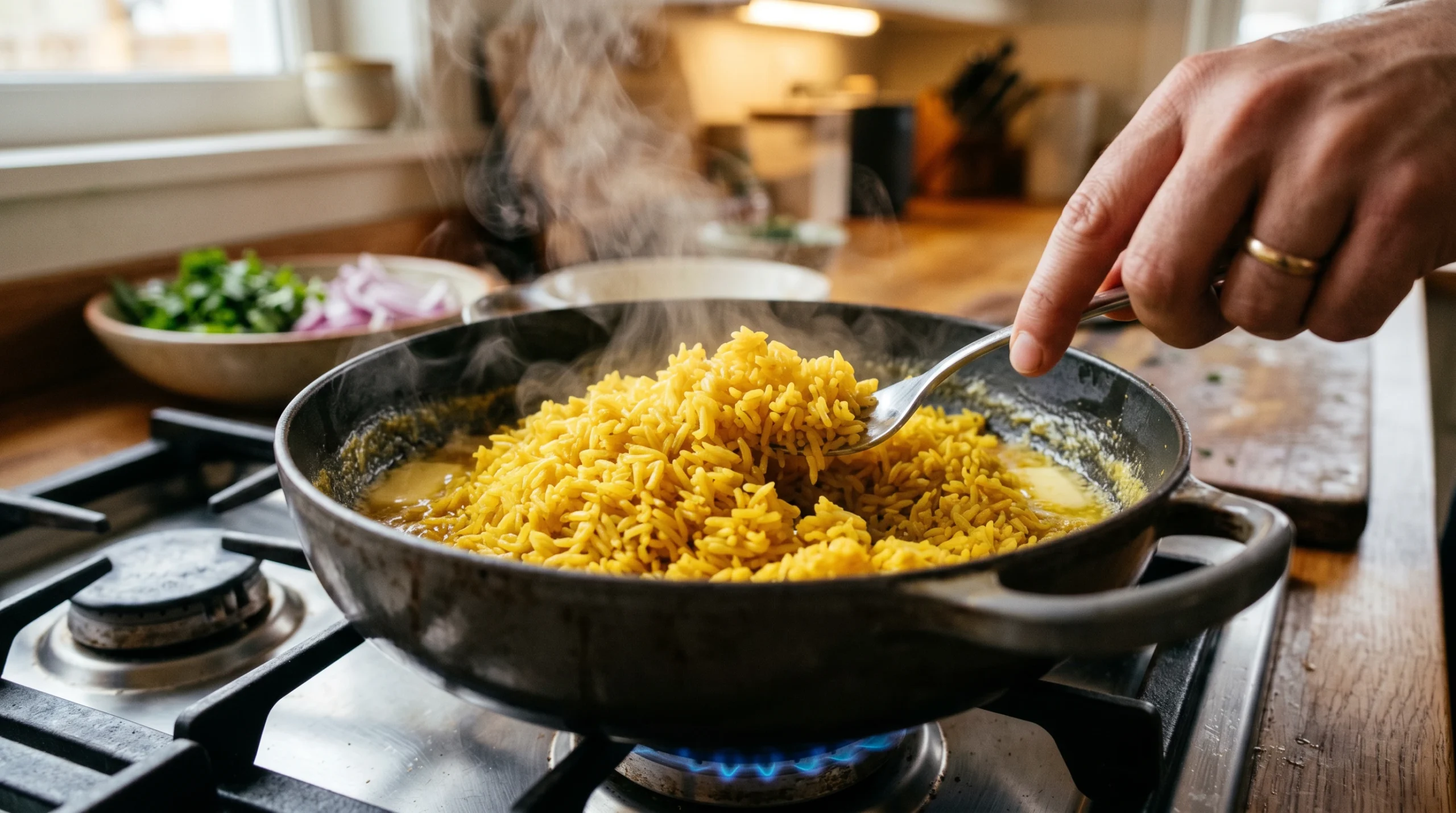
The rice at the Halal Guys is not plain steamed rice with turmeric stirred in at the end. It is cooked from scratch in a way that makes every grain absorb the flavor of the spices and broth during cooking. Getting the texture right, fluffy and separate rather than clumped, requires a few specific steps that most home cooks skip.
The Rice Method
Use long-grain basmati rice. It is the right texture for this dish and holds up well to the rich toppings. Rinse the rice thoroughly under cold water until the water runs nearly clear. This removes surface starch that would make the grains sticky. Let it drain in a fine mesh strainer for a few minutes.
Melt butter in a medium saucepan over medium heat. Add turmeric and ground cumin and toast them in the butter for about one minute until fragrant. The fat carries the spice compounds and distributes them evenly through the rice during cooking. Add the drained rice and stir to coat every grain in the spiced butter. Toast for three to four minutes, stirring frequently, until the rice smells slightly nutty. Add chicken broth in a two-to-one ratio by volume, bring to a boil, then reduce to the lowest possible simmer, cover, and cook for 15 minutes without lifting the lid. Remove from heat and let rest, still covered, for another 15 minutes. Fluff with a fork before serving.
The resting step after cooking is not optional. It allows the steam that has built up in the pot to redistribute through the rice, completing the cooking and separating the grains. Rice that is served immediately without resting will be wet and unevenly cooked at the top.
Component 3: The White Sauce
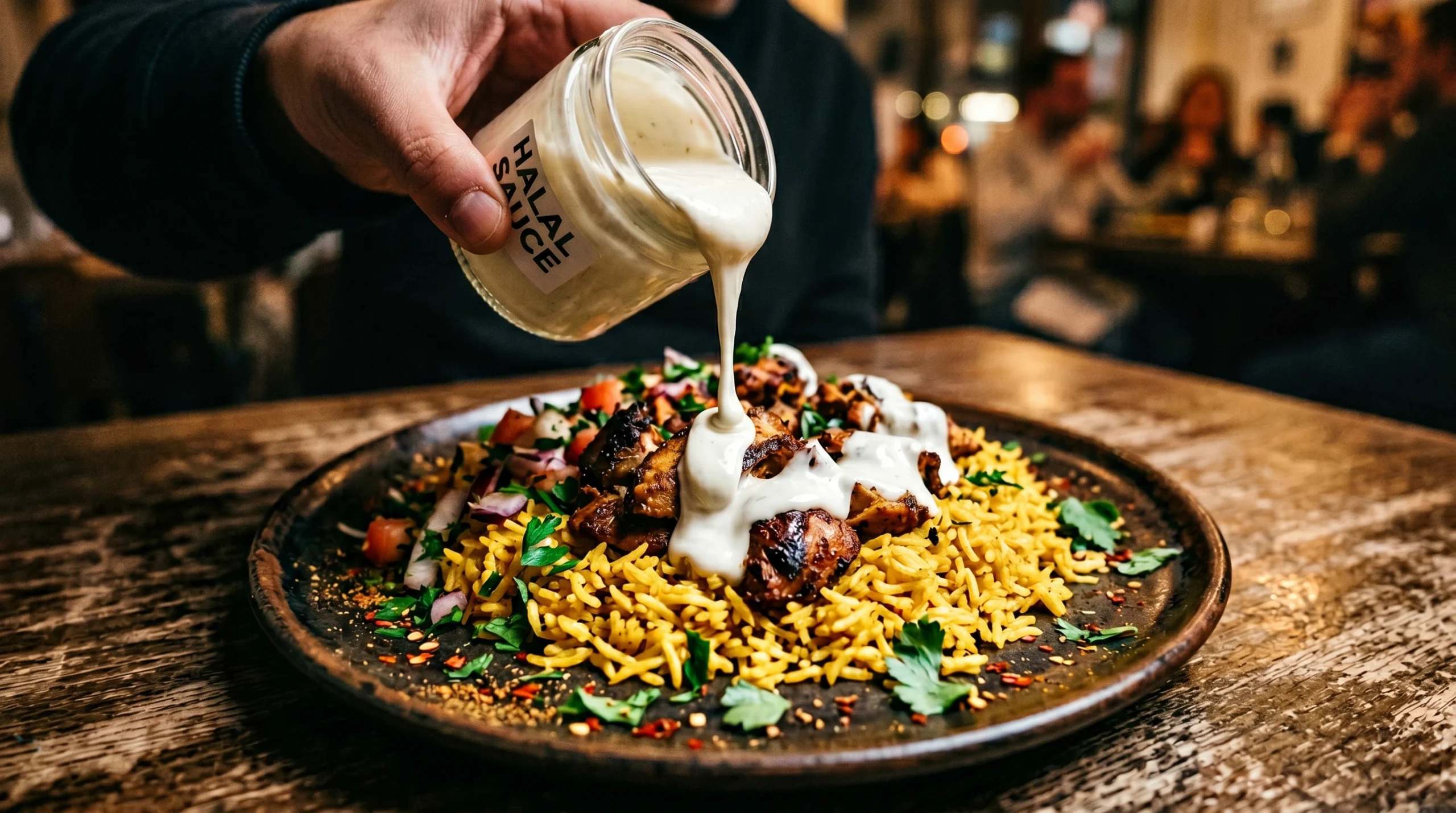
The white sauce is the element that transforms this from a competent chicken and rice dish into something people crave specifically. It is creamy, tangy, faintly garlicky, and slightly sweet in a way that is hard to identify. It should be thick enough to drizzle but thin enough to soak into the rice. It should taste bright but not sharp. Every component needs to be in balance.
The Ingredients
Start with a base of full-fat mayonnaise and plain Greek yogurt in roughly equal proportions. The mayonnaise provides richness and body. The yogurt provides tang and lightens the texture so the sauce does not feel heavy. Do not use low-fat versions of either. The fat is not incidental, it is structural.
To this base, add fresh lemon juice, white vinegar, a small amount of sugar, dried parsley, and a generous amount of freshly ground black pepper. The pepper is more prominent in this sauce than most people expect, and it is part of what gives the sauce its backbone. Some versions also add a small amount of garlic powder or toum, a Lebanese garlic cream, which deepens the flavor significantly. A pinch of salt to season, and the sauce is done.
Whisk everything together until fully combined and refrigerate for at least 30 minutes before serving. The sauce improves as it sits because the flavors have time to meld. It keeps in the refrigerator for up to a week in an airtight container and works beautifully as a dipping sauce for grilled meats, pita, and the homemade soft pretzels from our recipe collection.
The Red Hot Sauce
The red sauce served at halal carts is a separate component that provides heat to balance the richness of the white sauce and the buttery rice. It is typically a thin, oil-based hot sauce made with dried red chiles, garlic, and vinegar. At home, harissa thinned with a small amount of olive oil and lemon juice is the best substitute. Sriracha also works but is sweeter than the traditional version. The red sauce is applied in dots or lines on top of the white sauce and mixed into the plate as you eat.
Assembly: How to Build the Plate
The assembly sequence matters. Start with a generous base of turmeric rice, roughly one cup per person. Add the chopped spiced chicken on top, covering most of the rice. Place a small pile of shredded iceberg lettuce on one side and two or three slices of ripe tomato on the other. Add a wedge of warmed pita bread. Drizzle the white sauce generously over the chicken and rice. Finish with the red sauce if you want heat.
The eating experience is a communal mix. Use the pita to scoop, or just mix the rice, chicken, and sauce together with a fork until every grain of rice is coated. The lettuce provides crunch and freshness that cuts through the richness. The tomato adds acidity. Every component exists in relationship to the others, which is why reducing any element weakens the whole plate.
Variations Worth Trying
Lamb Over Rice
The traditional halal cart alternative to chicken is lamb, usually gyro-style sliced lamb or ground spiced lamb. To make a lamb version at home, season ground lamb with cumin, coriander, cinnamon, black pepper, and garlic, form it into flat patties, sear over high heat, then chop and serve exactly as you would the chicken. The flavor is richer and more assertive. The white sauce handles it beautifully.
The Bowl Format
For a more composed presentation, serve the halal cart plate in a deep bowl rather than a flat plate. Layer the rice first, then the chicken, then arrange the lettuce, tomato, and cucumber around the protein rather than as a side. This format works well for meal prep since each component can be stored separately and assembled fresh. The chicken and rice keep for three to four days refrigerated. The white sauce keeps for a week.
The Halal Cart Rice Plate for a Crowd
This dish scales exceptionally well for entertaining. Double or triple the rice and chicken quantities and serve everything family-style in large platters with the sauces in small pitchers or squeeze bottles on the side. Set out a topping bar with lettuce, tomatoes, cucumbers, pickled onions, and both sauces and let people build their own plates. This format is very close to the cart experience and works well for taco-night style gatherings. Pair it with the Vietnamese Banh Mi or the Late-Night Street Food Snacks if you are building out a full street food evening.
Make-Ahead Strategy
The halal cart plate is one of the most make-ahead-friendly recipes in this entire series. The marinade can be prepared and the chicken can be marinated for up to 24 hours before cooking. The white sauce can be made up to a week in advance. The rice can be cooked up to three days ahead and reheated gently in a skillet with a small amount of butter and a splash of chicken broth, which restores the texture beautifully. The only component that needs to be cooked fresh is the chicken, and even that reheats well in a hot cast iron pan over two to three minutes.
For the full make-ahead strategy for this and every other recipe in the series, see the planning section of the Ultimate Guide to Making Street Food at Home.
Common Mistakes and How to Fix Them
White sauce that is too thin: You used low-fat yogurt or mayonnaise, which have a higher water content. Use full-fat versions of both and the sauce will hold its texture. If it is still too thin, add an extra tablespoon of mayonnaise and whisk again.
Rice that is sticky or clumped: Skipped the rinsing step, or lifted the lid during cooking. Rice releases steam pressure when the lid is removed mid-cook, which disrupts the steaming process. Keep the lid on and use the resting period after heat is removed to complete the cooking.
Chicken that is dry: Overcooked, or marinated in too much acid for too long. Lemon juice and vinegar begin to denature proteins after about 8 hours, which can produce a mushy or chalky texture. Marinate for a maximum of 12 to 16 hours and cook to exactly 165 degrees Fahrenheit rather than pushing the temperature higher.
Spices that taste raw or sharp: The butter-toasting step before adding the rice exists specifically to cook out the raw edge of the dried spices. If you add the spices directly to the broth or skip this step, the finished rice will have a dusty, sharp spice flavor rather than a deep, rounded one.
Frequently Asked Questions
What makes halal chicken different from regular chicken?
Halal refers to the method of slaughter rather than the breed or feed of the chicken. For meat to be halal, the animal must be healthy, the slaughter must be performed by a Muslim reciting a blessing, and the blood must be fully drained from the carcass. Halal chicken is widely available at halal butchers, many Middle Eastern grocery stores, and increasingly at mainstream supermarkets. For this recipe, standard chicken thighs work perfectly well if halal chicken is not available in your area.
What rice does the Halal Guys use?
Long-grain basmati rice is standard for this dish. It produces the right texture: fluffy, separate grains that absorb the turmeric and cumin butter without becoming heavy. Do not use short-grain or medium-grain rice, which will produce a stickier, clumpier result that does not work well for this plate format.
Can I use chicken breasts instead of thighs?
You can, but the result will be less flavorful and less forgiving. Chicken thighs have more fat and stay juicy under high heat. If you do use breasts, slice them horizontally to create thinner pieces, do not overcook them beyond 160 degrees Fahrenheit, and rest them for five minutes before chopping.
How long does the white sauce keep?
Up to one week in the refrigerator in an airtight container. The flavor actually improves after the first day as the garlic and spices mellow into the mayo and yogurt base. It does not freeze well, as the dairy components separate on thawing.
What hot sauce should I use for the red sauce?
Harissa is the closest match to the halal cart red sauce in terms of flavor profile. Thin it with a small amount of olive oil and lemon juice to reach a drizzleable consistency. Sriracha is a serviceable substitute. If you want to make a from-scratch version, blend rehydrated dried chiles (guajillo and chile de arbol work well) with garlic, vinegar, olive oil, and salt until smooth. The same chile base used in our birria taco recipe can be thinned and used here.
More Street Food at Home
This article is part of the Street Food at Home series at SnackyStreet.com. Each recipe goes deep on a single dish with technique explanations, sourcing advice, and the details that actually make the difference between a good result and a great one.
- The Ultimate Guide to Making Street Food at Home (Pillar)
- Best Homemade Taco Recipes: Al Pastor, Birria and Smash Tacos
- Copycat Raising Cane’s and Chick-fil-A Street Sauces
- Easy Elotes (Mexican Street Corn) 4 Ways
- Korean Corn Dogs at Home: The Crispy, Cheesy Guide
- Street-Style Loaded Fries: Regional American Variations
- Vietnamese Banh Mi You Can Make in 30 Minutes
- Homemade Soft Pretzels with Beer Cheese Dipping Sauce
- Authentic Jamaican Beef Patties from Scratch
- Late-Night Street Food Snacks Under 20 Minutes
© 2026 SnackyStreet. All rights reserved.