In late 2023, a food influencer named Maria Vehera filmed herself biting into a chocolate bar in Dubai. The video reached 120 million views. Within eighteen months, that single piece of content had triggered a global pistachio shortage, forced Trader Joe’s to ration its version to two bars per customer, and turned a little-known Dubai chocolatier into one of the most searched brands on the internet. The Dubai chocolate bar is not just a food trend. It is one of the most precisely documented cases of a single video permanently changing how an ingredient is grown, traded, and eaten worldwide.
This article covers everything worth knowing about the Dubai chocolate bar: what it actually is, where it came from, what makes it different from other chocolate confections, how to source the key ingredients in the US, and how to make a version at home that delivers the crunch, the pistachio depth, and the snap that made the original irresistible. This article is part of the Biggest Viral Street Food Trends Right Now series at SnackyStreet.
What Is the Dubai Chocolate Bar?
The Core Components
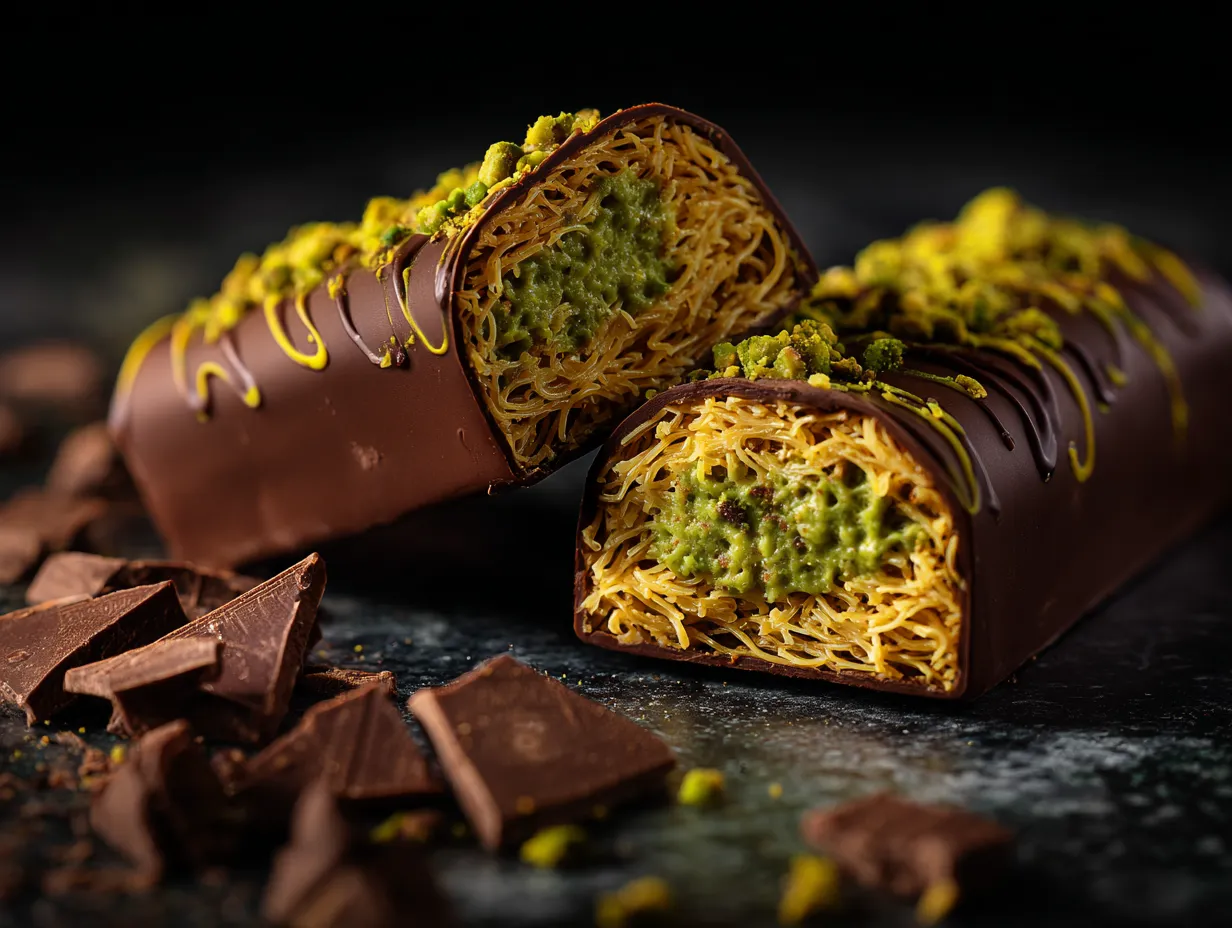
The Dubai chocolate bar is a molded chocolate confection filled with a mixture of toasted kataifi pastry and pistachio cream. The shell is typically milk or dark chocolate, tempered to produce a glossy finish and an audible snap when broken. The filling has a dual texture: the pistachio cream is smooth and sweet, almost like a pistachio-flavored Nutella, while the toasted kataifi strands provide a shattering crunch that survives contact with the cream because the pastry is cooked dry in butter before being combined.
The Visual Signature
The visual signature of the bar is the cross-section. When you snap it in half, the interior shows a dense mat of golden pastry strands embedded in vivid green pistachio cream, framed by the dark chocolate walls of the mold. This specific image is what made the bar a social media phenomenon. The interior looks unlike anything in Western chocolate confectionery. Most versions also feature decorative swirls of colored white chocolate on the exterior, mimicking the green and yellow patterns of the original Fix Dessert Chocolatier packaging.
The Origin Story: Fix Dessert Chocolatier and the Knafeh Connection
Sarah Hamouda and the Knafeh Craving That Started Everything
The bar was created by Sarah Hamouda, a British Egyptian entrepreneur living in Dubai who founded Fix Dessert Chocolatier in 2021. The direct inspiration was a pregnancy craving for knafeh, the Middle Eastern layered pastry dessert. Knafeh, which traces its origin to the Palestinian city of Nablus in its most celebrated form, Knafeh Nabulsi, is built around kataifi dough, a sweet white cheese filling, sugar syrup, and crushed pistachios.
Translating a Centuries-Old Dessert Into a Chocolate Bar
Hamouda’s insight was to take the two defining flavor elements of knafeh, the crispy kataifi and the pistachio, and embed them inside a Western format, the molded chocolate bar, that would appeal to a global audience unfamiliar with knafeh but immediately comfortable with premium chocolate. The result, named “Can’t Get Knafeh of It,” was one of Fix Dessert Chocolatier’s first products and became the bar that put both the shop and the Dubai chocolate category on the map. The cultural dimension matters because this is a deliberate translation of a centuries-old Middle Eastern dessert tradition into a contemporary luxury confection format, not a random innovation.
Why It Went Viral: The Sensory Mechanics
The Snap: Audio as Marketing
Properly tempered chocolate breaks with a clean, loud crack. When you snap a Dubai bar in a video, the sound is immediate, clear, and satisfying in a way that engages hearing as well as sight through a phone speaker. The crack of a tempered chocolate bar is one of the most reliable audio cues for triggering a positive response in food content audiences.
The Reveal: Visual Surprise at Two Seconds
The cross-section of pistachio and kataifi is visually surprising because of the contrast between the dark exterior and the vivid green of the pistachio cream. The golden threads of kataifi visible through the filling add texture information. You can see the crunch before you hear it, which creates an anticipation loop that drives repeat viewing.
The First Bite: Texture Complexity That Earns Its Hype
After the chocolate snap, the kataifi crunch inside the bar is a different texture signature, lighter and more sustained, that layers with the softness of the pistachio cream. The combination of crunch, creaminess, and chocolate richness in a single bite is genuinely unusual in Western confectionery and delivers an experience that is difficult to fully anticipate from the video alone, which drives the desire to try it in person.
The Global Pistachio Shortage: What Actually Happened
Viral Demand Meets a Tight Supply Cycle
When the bar went viral in late 2023 and through 2024, the surge in demand for pistachio cream and kataifi dough as home cooks attempted recreations created a measurable spike in global pistachio prices and local supply shortages at specialty retailers. The United States and Iran are the world’s two largest pistachio producers. The viral demand created supply pressure at a point in the growing cycle when 2024 harvest volumes were already forecast to be below the prior year due to weather conditions.
The Downstream Effect: From Trader Joe’s to South Korea
Trader Joe’s introduced its own Dubai chocolate bar and immediately faced sell-out conditions, resulting in purchase limits. Lindt, Ghirardelli, and dozens of smaller chocolatiers released versions. By 2026, the bar had spun off into Dubai chocolate croissants, Dubai chocolate cakes, Dubai chocolate iced coffee, and a chewy South Korean cookie variant using kataifi and pistachio in a marshmallow-adjacent format that went viral in its own right. The pistachio shortage is the clearest evidence that the Dubai chocolate bar was not just a content trend but a genuine demand event with real supply chain consequences.
The Key Ingredients: A Sourcing Guide for US Home Cooks
Making a Dubai chocolate bar at home that actually delivers the original experience requires sourcing three non-standard ingredients. Each has reliable US sources.
Kataifi Pastry
Kataifi, also spelled kadayif, is a type of shredded phyllo dough made by pushing dough through fine holes to create thin, vermicelli-like strands. In the US, it is most reliably found refrigerated or frozen at Middle Eastern, Greek, or Turkish grocery stores. In cities with significant Middle Eastern or Mediterranean communities, particularly in the metro areas of New York, Los Angeles, Chicago, Houston, and Detroit, it is typically available fresh. For cooks without access to a specialty market, dried and pre-chopped kataifi is available online and works well for the bar’s filling.
The kataifi must be toasted before use. Bring it to room temperature first, then chop it into roughly one-centimeter pieces. Toast in a dry pan over medium heat, stirring continuously, until deeply golden brown. The color should go well past light gold, this is the most common mistake in home versions. The deeper the toast, the more pronounced the crunch.
Pistachio Cream vs Pistachio Butter vs Pistachio Paste
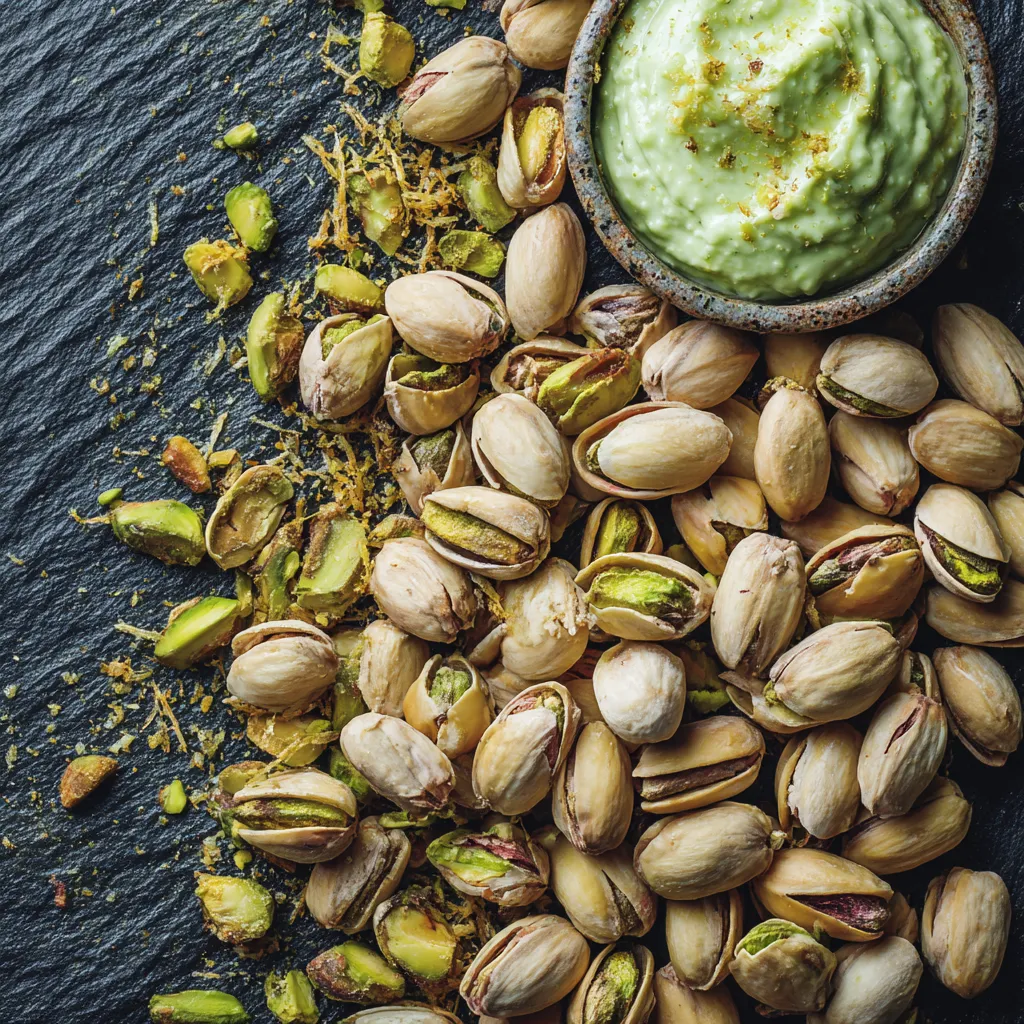
The distinction between these three products is important and widely confused. Pistachio paste or pistachio butter is 100% ground pistachios, similar in texture and composition to almond butter. It is savory and dense. Pistachio cream, the correct ingredient for the Dubai bar, is a sweet spread made from pistachios combined with sugar, milk solids, and oil, similar in sweetness and texture to Nutella but pistachio-flavored. Using pure pistachio butter instead will produce a filling that is correct in texture but wrong in flavor. Reliable US brands include Pisti Pistachio Cream (Costco), Il Colle Del Gusto Pistacchiosa, and Vincente Sicilian Pistachio Cream.
Chocolate and Tempering
Use a baking bar or couverture chocolate rather than chocolate chips, which contain stabilizers that prevent proper tempering. Brands like Valrhona, Callebaut, Guittard, or Lindt baking bars work well. Tempering is optional but recommended: melt two-thirds of the chocolate to 115 to 120 degrees Fahrenheit for dark chocolate or 110 to 115 for milk chocolate, then stir in the remaining third to cool to 89 degrees for dark or 86 for milk. Tempered chocolate sets with a glossy finish and breaks with the snap that is central to the bar’s identity.
How to Make the Dubai Chocolate Bar at Home: Full Recipe
Ingredients
For the filling: 100 grams kataifi pastry, coarsely chopped, 1 tablespoon unsalted butter, 230 grams pistachio cream, 2 tablespoons tahini, a quarter teaspoon fine salt. For the shell: 400 grams good-quality milk or dark chocolate, chopped. For optional decoration: 30 grams white chocolate, a few drops green food coloring.
Method
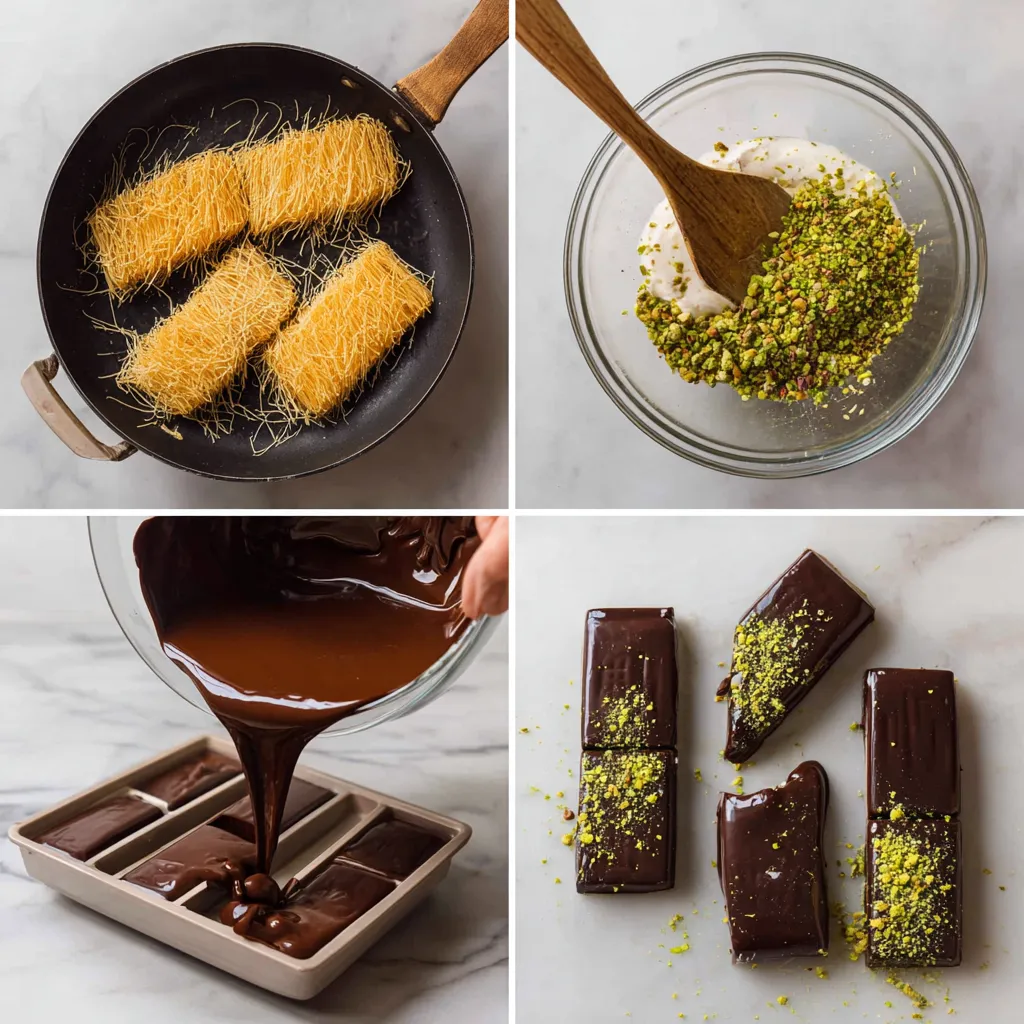
Bring kataifi to room temperature. Chop into one-centimeter pieces. Melt butter in a dry skillet over medium heat, add kataifi, and toast, stirring constantly, for 8 to 10 minutes until deep golden brown throughout. Transfer immediately to a bowl. Let cool for five minutes, then stir in pistachio cream, tahini, and salt until every strand is coated. The filling should hold together when pressed but not be wet or loose. If decorating, melt white chocolate, stir in food coloring, and drizzle across the bottom of the silicone molds. Refrigerate two minutes to set.
Assembly and Setting
Temper or melt the main chocolate. Pour enough into each mold to coat the bottom and sides to two to three millimeters depth. Tilt to coat evenly, then turn upside down over the bowl and shake gently to remove excess. Scrape the edges clean. Refrigerate two minutes until the shell sets. Spoon the kataifi filling into each mold, pressing gently to pack without air pockets. Leave three millimeters of space at the top. Pour remaining chocolate over the filling to seal. Smooth with a bench scraper. Refrigerate for 20 to 30 minutes until fully set. Unmold by inverting the silicone tray. Store in an airtight container at room temperature for up to two weeks. Do not refrigerate finished bars.
The Dubai Chocolate Bar Spin-Offs: What Came After
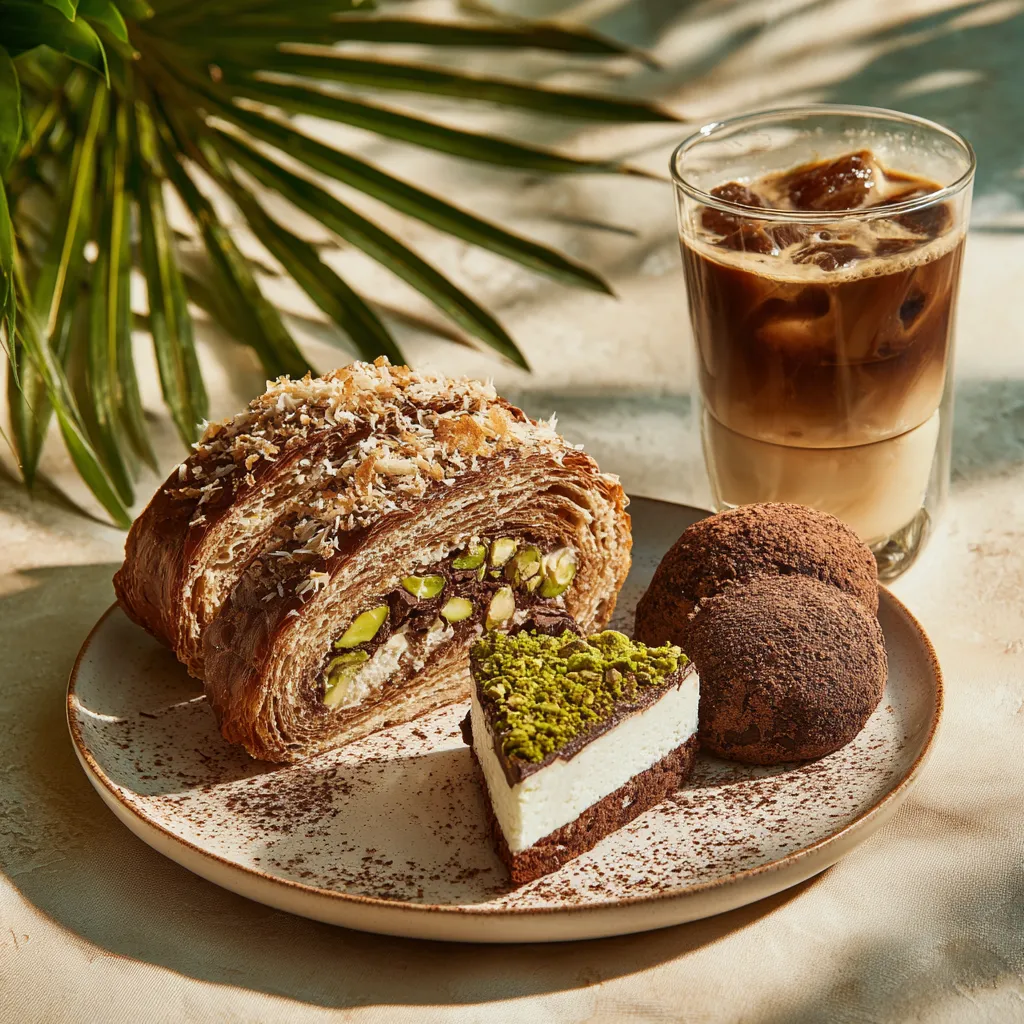
Croissants, Cheesecakes, and Iced Coffee
Dubai chocolate croissants layer the kataifi filling between laminated dough layers, producing a visually dramatic cross-section when cut. This format went viral in its own right in 2025 as bakeries in New York, London, and Dubai began offering it as a premium weekend item. Dubai chocolate cheesecake uses the kataifi as a crust substitute, pressed and baked into a base before the cream cheese filling is added. Dubai chocolate iced coffee became a popular independent coffee shop menu item, combining espresso with cold milk, pistachio syrup, and a swirl of pistachio cream.
The South Korean Chewy Cookie Variant
The South Korean cookie variant that emerged in late 2025 wraps pistachio paste and kataifi in a chocolate marshmallow shell rather than a tempered chocolate casing. The result is chewier and more yielding than the original bar, emphasizing the pistachio flavor over the crunch element. It was widely described as a cross between mochi and a chocolate truffle, and spread back to the US through K-pop community food content channels.
How the Dubai Chocolate Bar Changed Retail Chocolate
From Niche Flavor to Industry Standard
Before the bar went viral, pistachio chocolate was a niche premium flavor, common in European traditions but marginal in American supermarket candy aisles. By 2025, every major chocolate brand had a pistachio offering. Trader Joe’s introduced its version and faced immediate sell-out conditions, democratizing access but also raising consumer expectations. The reference point shifted from vague pistachio flavor to a specific experience of kataifi crunch combined with sweet pistachio cream, which is a much more demanding standard for a mass-produced product to meet.
A Cultural Pathway for Middle Eastern Ingredients
Tahini, kataifi, and pistachio cream are now stocked at major US grocery chains that would not have carried them three years ago. The cultural pathway from knafeh to a global ingredient supply chain shift is an unusual example of food content creating structural change in how ingredients are distributed and consumed.
Frequently Asked Questions
What is the original Dubai chocolate bar called?
The original bar is called “Can’t Get Knafeh of It” and was created by Fix Dessert Chocolatier, founded by Sarah Hamouda in Dubai in 2021. It is still sold exclusively through the Fix Dessert Chocolatier brand, which ships internationally but sells out frequently. All other versions are inspired by or modeled on this bar.
What is kataifi and where can I buy it in the US?
Kataifi is a shredded phyllo pastry dough made by extruding dough through fine holes to create thin vermicelli-like strands. In the US, find it at Middle Eastern, Greek, or Turkish grocery stores, usually in the refrigerated or frozen section near phyllo dough. It is also available dried and chopped from online retailers.
Is pistachio cream the same as pistachio butter?
No. Pistachio cream is a sweet spread made from pistachios plus sugar, milk solids, and oil, similar in sweetness to Nutella. Pistachio butter is pure ground pistachios, which is savory and denser. For the Dubai bar, you need pistachio cream. Using pistachio butter will produce a filling that is correct in texture but missing the sweetness that balances the dark chocolate and tahini.
Why is my kataifi not crunchy in the filling?
Two common causes. First, the kataifi was not toasted long enough or hot enough. It should reach a deep golden brown before you stop cooking. Second, too much pistachio cream was added to the filling, which saturates the pastry strands. Use less cream and mix thoroughly so each strand is coated but not submerged. The filling should feel like a slightly sticky granola rather than a wet paste.
How long does a homemade Dubai chocolate bar keep?
Up to two weeks in an airtight container at room temperature in a cool, dry location. Do not refrigerate finished bars, as condensation causes chocolate bloom, the white surface discoloration that happens when cocoa butter migrates. Bloom is not harmful or a sign of spoilage, but it affects appearance.
More from the Viral Street Food Trends Series
- The Biggest Viral Street Food Trends Right Now (Pillar)
- TikTok Street Food Trends Blowing Up This Year
- Smash Burger Tacos: The Viral Mashup Everyone’s Making
- Birria Tacos: How the Trend Took Over the US
- Tornado Potato: The Fair Food TikTok Cannot Stop Watching
- Pickle Pizza and Other Wild Street Food Combos Worth Trying
- Viral Asian Street Foods Americans Are Obsessed With
- We Tried 10 Trending Fair Foods: Here’s the Honest Verdict
- Street Food Challenges: The Most Outrageous Food Dares by City
- What’s Trending at US Food Festivals This Season
Also see our full recipe series: The Ultimate Guide to Making Street Food at Home and Best Homemade Taco Recipes.
© 2026 SnackyStreet.com. All rights reserved.