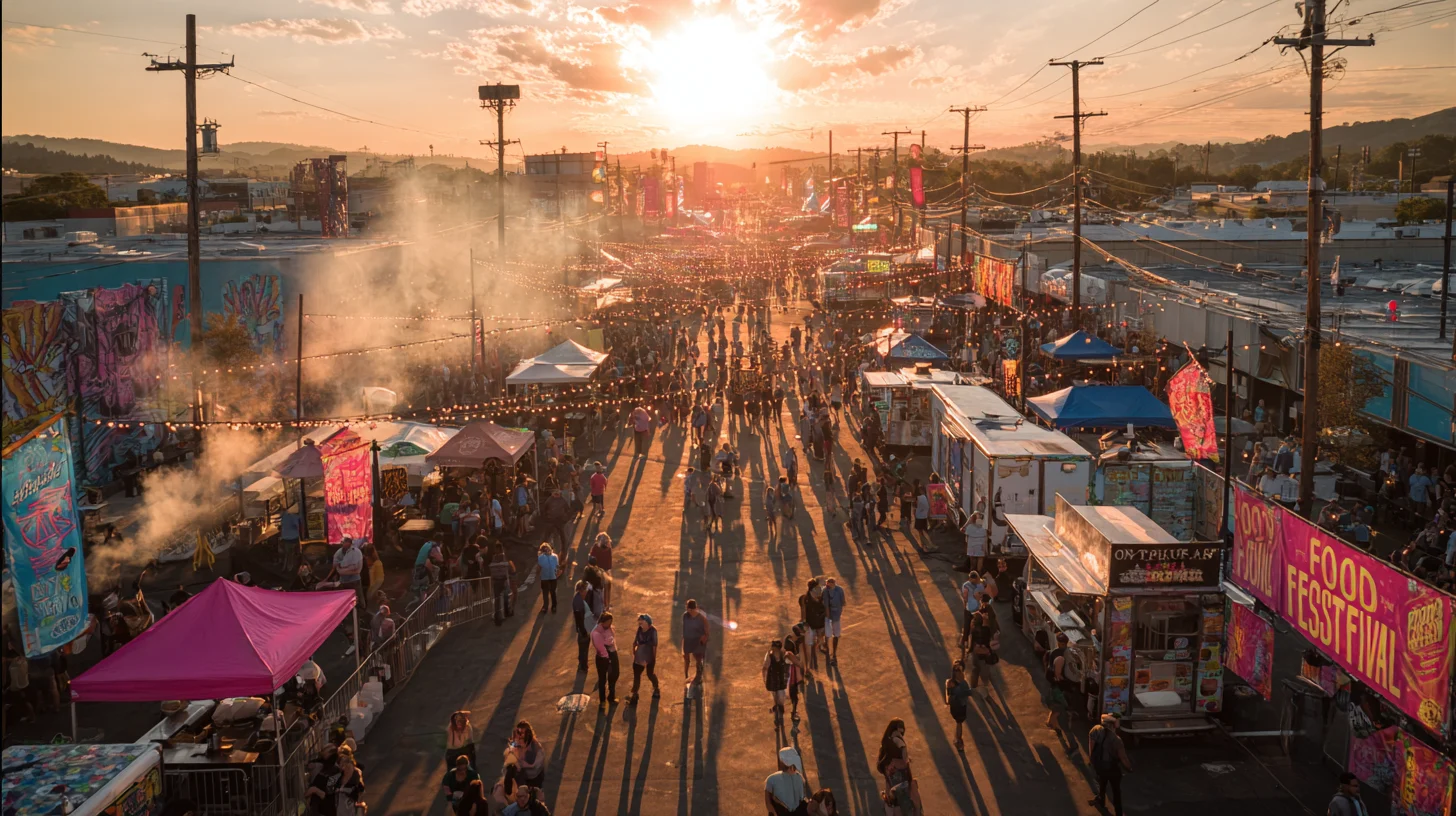
Something has changed in the American food festival economy over the past three years. The events that dominated pre-social media food festival culture, county fairs, state fair midways, and regional ethnic food celebrations, have not disappeared, but they have been joined by a new category of food festival that operates more like a curated brand experience than a traditional public fair. Vendors apply months in advance, are selected partly based on their social media presence and the visual appeal of their signature item, and are expected to produce content as part of their participation rather than simply show up and cook.
This article covers what is actually trending at US food festivals in 2025 and 2026: which food categories are dominating vendor lineups, what the broader shifts in festival programming and vendor selection look like, which events are worth attending if you want to find the most significant trends, and what to look for when you arrive. This article is part of the Biggest Viral Street Food Trends Right Now series at SnackyStreet.
The Dominant Food Categories at US Festivals This Season
Elotes, Korean Street Food, and BBQ-Adjacent Formats
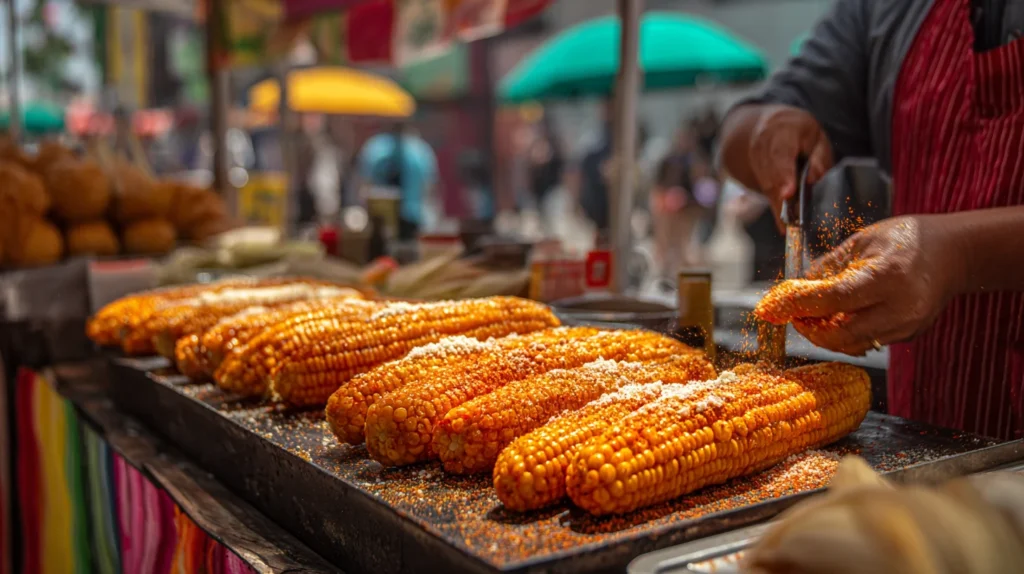
Mexican street corn in its elotes form, corn on the cob slathered with mayonnaise, rolled in cotija cheese, dusted with chili powder, and finished with lime, has become one of the most consistent presences at food festivals across the US regardless of the event’s cultural focus. It now appears at beer festivals, music festivals, ethnic food festivals, and state fairs with equal frequency. Korean street food has expanded beyond dedicated Korean food festivals into mainstream American gathering contexts. Korean corn dogs, tteokbokki, and bibimbap in portable bowl formats now appear at general food festivals in cities where there was no Korean food vendor presence two years ago.
Dessert-Forward Stalls and the High-Production Item Economy
Smoked and BBQ-adjacent street food has undergone an aesthetic update at food festivals. Traditional BBQ competition events have been joined by vendors offering BBQ formats specifically designed for festival portion sizes and social media presentation: brisket in small tacos with pickled onion and crema, smoked sausage on a stick with mustard aioli, smoked duck flatbreads with hoisin. Dessert-forward stalls offering high-production items have multiplied significantly. Rolled ice cream, which involves spreading ice cream base on a frozen surface and rolling it into cylindrical portions, is still actively expanding into food festival contexts in markets that were not yet saturated. Liquid nitrogen ice cream preparations remain a reliable spectacle. Loaded waffle creations, massive Belgian-style waffles with elaborate toppings including fried chicken, fresh fruit, gelato, and drizzled sauces, are a growing presence because the visual payload of a fully loaded waffle is very high relative to the production complexity.
The Plant-Based Revolution at Food Festivals
From Afterthought to Dedicated Category
Plant-based vendor sections have moved from afterthought to dedicated category at major food festivals in 2025 and 2026. This shift is driven by three forces: genuine consumer demand from attendees who do not eat meat, vendor innovation in plant-based formats that photograph as compellingly as their meat-based counterparts, and festival organizer recognition that plant-based sections attract press coverage and social media content that is disproportionate to their size.
Jackfruit Carnitas, Mushroom Shawarma, and Cashew Queso
Jackfruit carnitas tacos have become one of the most consistently present plant-based street food formats at festivals. When properly seasoned and prepared, jackfruit’s fiber structure mimics the texture of pulled pork closely enough to satisfy attendees who might not otherwise seek out a vegan option. The visual of a jackfruit carnitas taco is indistinguishable from a conventional carnitas taco at food photography scale, which means it performs well in content even without labeling. Mushroom shawarma in pita with tahini and pickled vegetables is another high-performing plant-based festival format. Vegan loaded fries with cashew-based queso and spiced lentil chili have appeared at festivals where the conventional loaded fries version already has a strong presence. The cashew queso format has improved significantly over the past two years as vendors have better understood emulsification and seasoning, and the current best versions are genuinely convincing rather than apologetic substitutes.
The Assembly Theater Trend: Making Watching Part of the Experience
What Assembly Theater Is and Why Vendors Adopt It
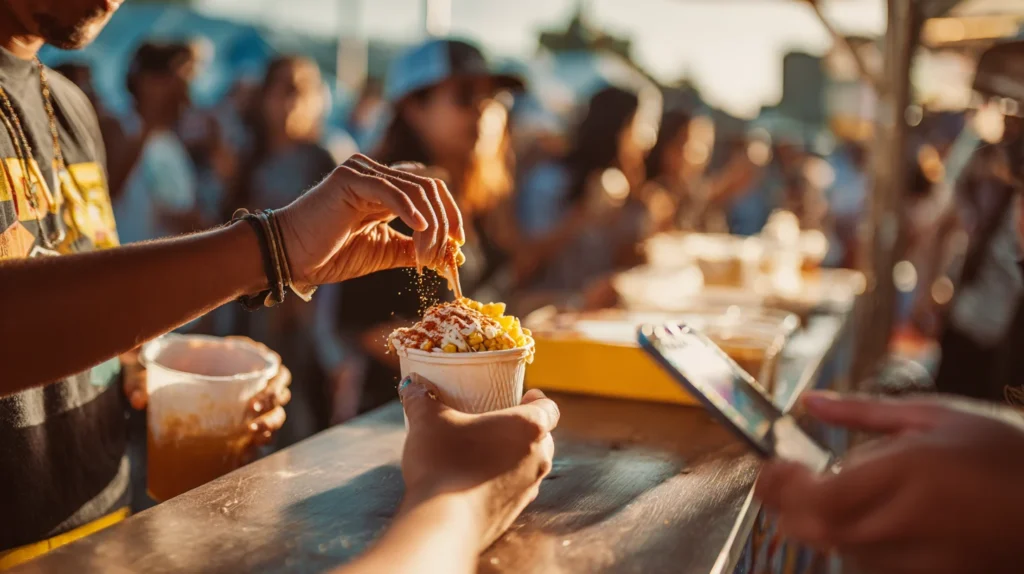
One of the most significant programming innovations at food festivals in 2025 and 2026 is what the food industry calls “assembly theater”: the deliberate staging of food preparation as a visible performance for the customer rather than as a back-of-house operation. Vendors who have adopted this format position their prep space at the front of their stall, face the customer while cooking, and structure their preparation sequence to maximize visual engagement.
The Marketing Value of User-Generated Content
The elotes format is perhaps the clearest example: applying cotija cheese, chili powder, and lime in sequence while the customer watches is assembly theater in its simplest form. Korean corn dog vendors who stretch and coat the batter in front of the customer are doing the same thing at higher complexity. From the vendor’s perspective, assembly theater has a significant business advantage: it generates social media content that functions as free advertising. A customer who films the assembly and posts it has created marketing material that may reach an audience larger than the event’s total attendance. Several food festival vendors have explicitly designed their setup to be optimized for phone-camera documentation, including consistent lighting, colorful branded backgrounds, and preparation sequences that have a clear visual climax.
The Most Significant US Food Festivals of 2025 and 2026
Texas State Fair and Eat Real Festival
The food festival landscape in the US is too large and diverse for a complete survey, but several events have established themselves as reliable indicators of broader food trends and as destination-worthy experiences for food-focused visitors. The Texas State Fair in Dallas in September and October remains the most prominent venue for new fair food innovation in the country. The deep-fried food competition consistently generates national media coverage for whatever wins the most creative new food category. The 2025 edition saw significant Korean food influence in the competition entries, reflecting the broader trend wave rather than preceding it. Eat Real Festival in Oakland, California, has established itself as one of the most curated food festival experiences in the country, with a vendor selection process that deliberately prioritizes artisan producers, culturally authentic food, and sustainable practices. The vendor lineup is often ahead of what mainstream food festivals are offering by one to two trend cycles.
Chicago Gourmet, Mid-Tier Cities, and the Expanding Festival Map
The Chicago Gourmet festival in Millennium Park brings together a different tier of food festival experience, with chef demonstrations and curated vendor relationships that make it more closely resemble a food and beverage industry event than a public fair, despite being open to the public. Food festivals in mid-tier cities including Nashville, Austin, Portland, and Denver have grown significantly in the past three years both in attendance and in vendor quality. These events now regularly attract vendors who would previously have operated exclusively in New York and Los Angeles, and they often offer better value for the food dollar because the cost structure of operating in a mid-tier market is lower.
How to Navigate a Food Festival to Find the Best Vendors
The Full Circuit Walk and Line Length as Signal
Arriving at a large food festival without a plan is how you end up spending forty dollars on four items you did not particularly want. Walk the entire festival before buying anything. The first stall you encounter is not necessarily the best. A complete circuit of the vendor area takes fifteen to twenty minutes and gives you a full map of what is available, which vendors have the longest lines (a useful signal of quality at festivals where repeat customers exist), and which items are genuinely interesting versus which are festival filler.
Asking the Right Questions and Practical Logistics
Line length is an imperfect but useful quality signal. Vendors who have been at a festival for multiple years have earned their spot through quality and customer satisfaction. First-year vendors may be excellent, but the uncertainty is higher. Ask vendors when they arrived and how long they have been selling. Bring more cash than you expect to need. Most food festival vendors accept cards, but card readers slow service and some vendors offer cash discounts. Having cash available gives you flexibility and often results in faster service.
Frequently Asked Questions
What foods are trending most at US food festivals right now?
Mexican street corn (elotes), Korean street food formats including corn dogs and tteokbokki, smash burger tacos, tornado potatoes, and elaborate dessert formats including rolled ice cream and loaded waffles are the most consistently present trending items at US food festivals in 2025 and 2026. Plant-based versions of these formats are growing in dedicated sections at larger events.
How do food festivals decide which vendors to include?
Selection criteria vary significantly by event. Larger, more curated festivals evaluate vendor applications on food quality, concept originality, social media presence and content capability, health code compliance, and the visual appeal of the flagship menu item. Many festivals now explicitly include content creation ability in their vendor selection criteria, acknowledging that vendors who generate quality social media content extend the event’s marketing reach at no additional cost. Smaller community food festivals often have less formal selection processes based primarily on food quality and local reputation.
Are food festivals worth the entry cost?
Entry cost varies from free to twenty-five or thirty dollars for larger curated events. Whether it is worth it depends on what you are comparing against. A major curated food festival with fifty high-quality vendors offers a diversity of food experience that no single restaurant visit can match, which makes the entry fee reasonable if food discovery is your primary objective. If you are primarily interested in eating a specific type of food, checking whether that vendor will be present before paying entry is time well spent. Free admission food festivals almost always offset their cost through higher food pricing per item.
More from the Viral Street Food Trends Series
- The Biggest Viral Street Food Trends Right Now (Pillar)
- Dubai Chocolate Bar: What It Is and How to Make It
- TikTok Street Food Trends Blowing Up This Year
- Smash Burger Tacos: The Viral Mashup Everyone’s Making
- Birria Tacos: How the Trend Took Over the US
- Tornado Potato: The Fair Food TikTok Cannot Stop Watching
- Pickle Pizza and Other Wild Street Food Combos Worth Trying
- Viral Asian Street Foods Americans Are Obsessed With
- We Tried 10 Trending Fair Foods: Here’s the Honest Verdict
- Street Food Challenges: The Most Outrageous Food Dares by City
For at-home versions of the best festival foods, see our Ultimate Guide to Making Street Food at Home.
© 2026 SnackyStreet.com. All rights reserved.