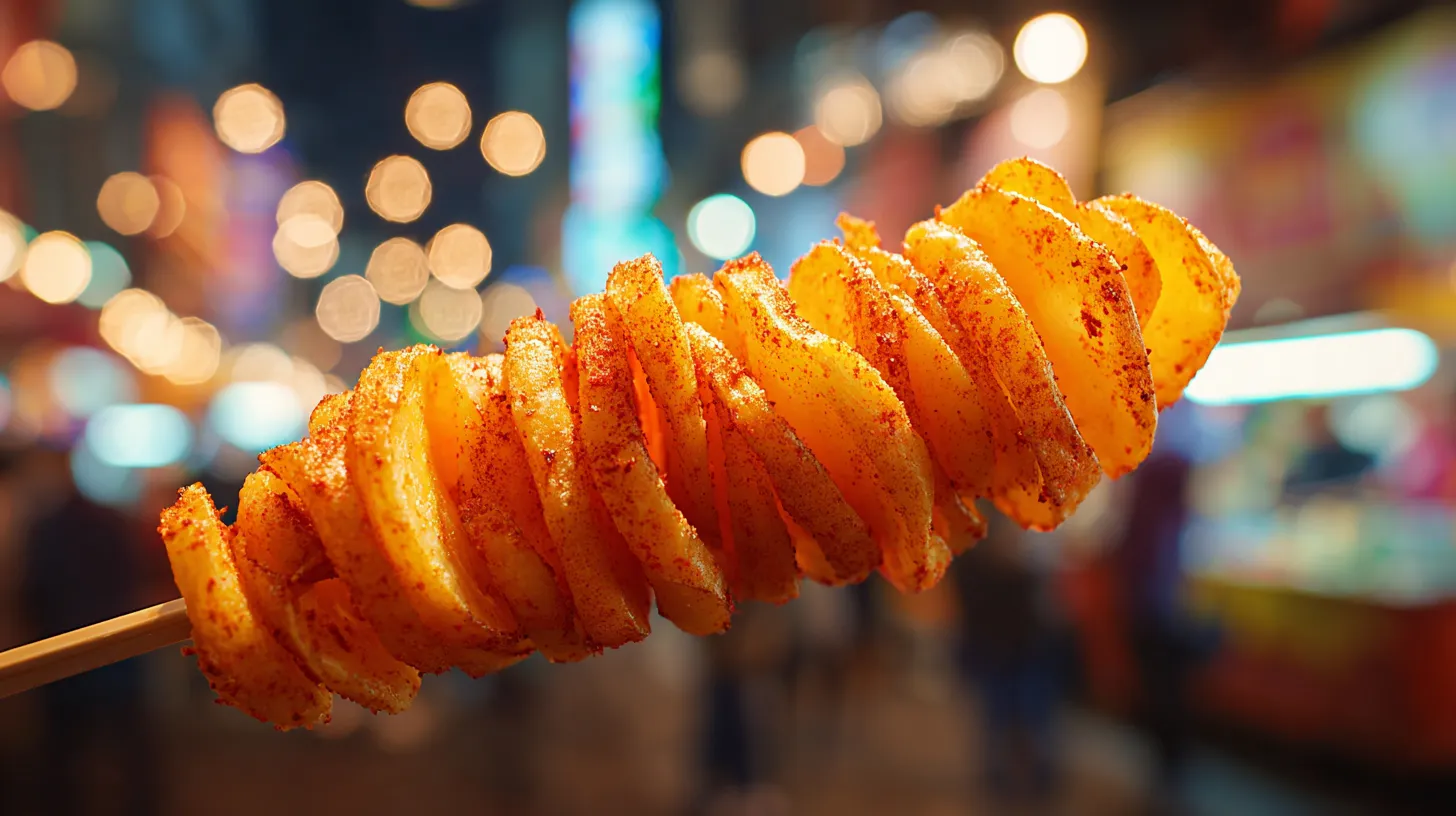
There is a specific moment in every tornado potato video that freezes the thumb mid-scroll. It is not the eating. It is the stretch. A vendor picks up the freshly fried potato on its skewer and pulls gently upward, and the spiral expands from a compact cylinder into a long, golden, accordion-like column. The ratio of visual satisfaction to apparent simplicity is almost perfectly calibrated for short-form video. This is a potato. Everyone knows what a potato is. Nobody expected it to look like that.
That gap between expectation and visual reality is the engine of the tornado potato’s viral appeal. And unlike some viral food moments where the reality disappoints, the tornado potato delivers. The exterior is shattering-crispy, the interior stays fluffy, and the surface area created by the spiral means every bite has maximum seasoning contact. This article covers the full story of the tornado potato, how it moved from Korean street markets to American fairs to TikTok, how to cut and cook it at home, and every seasoning worth trying. This article is part of the Biggest Viral Street Food Trends Right Now series at SnackyStreet.
What Is a Tornado Potato?
The Spiral Cut That Changes Everything
A tornado potato is a whole potato threaded onto a bamboo skewer and spiral-cut in a single continuous motion so that the flesh fans out in an expanding coil along the stick. When pulled gently outward, this coil stretches to two or three times its original length, creating the visual that gives the format its name. The skewered spiral is then seasoned and deep-fried, or baked or air-fried in modern home kitchen versions, until the exterior is crispy and golden while the interior stays soft.
Why Maximum Surface Area Is the Entire Point
The spiral geometry is the key structural innovation. By transforming a round potato into a continuous ribbon, the tornado potato dramatically increases the ratio of exterior crispy surface to interior fluffy mass. A standard french fry has two crispy surfaces and two soft surfaces. The tornado potato is almost entirely exterior. This is why the first bite is a genuinely different texture experience from any other potato format, and why the crunch carries so distinctively even in the audio of a video.
Origin: Korean Night Markets and Myeongdong

A Modern Korean Invention, Not an Ancient Recipe
The tornado potato is a modern Korean street food innovation, not an ancient recipe. It emerged in the early 2000s in South Korea’s outdoor market culture and became a fixture at night markets including Myeongdong in Seoul, one of the most visited street food districts in the country and one that has historically served as an export point for Korean street food formats to international audiences. At Myeongdong, vendors offer tornado potatoes up to 77 centimeters long at a price point around 5,000 Korean won, approximately three to four US dollars.
The Seasoning Culture That Shaped the Format
Korean vendors developed the format around a practical insight: the spiral cut creates enormous surface area on a single potato, which means maximum seasoning contact after frying, and maximum visual impact per unit of raw material. Early iterations at Myeongdong used simple salt and pepper, but the format quickly absorbed the seasoning culture of Korean street food: cheddar powder blends, gochugaru, honey butter, squid ink, and the combination of sweet, spicy, and savory that characterizes Korean snack culture. At markets in Busan’s Bupyeong Kkangtong, vendors developed the gochugaru and honey butter version that became the format’s most influential flavor profile for international adaptation.
From Korean Markets to American Fairs: The Migration
Why the Format Travels So Well
Tornado potatoes appeared at American food festivals and fairs in the mid-2010s, initially at events with significant Asian street food representation and then progressively at mainstream carnival and state fair contexts. The format’s appeal to fair food culture is structural: it is visually dramatic from a distance (drawing foot traffic to the stall), fast to produce once the spiral cutter is mastered, inexpensive to produce relative to its retail price, and highly customizable with different seasoning options that encourage repeat purchases.
TikTok and the Gen Z Amplification
TikTok amplified the format significantly starting in 2023 and continuing through 2025. According to Tastewise’s social media trend tracking, tornado potato content showed meaningful year-over-year growth through this period, with Gen Z driving the majority of engagement. The transition from fair food specialty to nationwide social media topic is characteristic of the TikTok food trend pipeline: a vendor format with real-world presence suddenly becomes visible to audiences who had no prior exposure to it, generating curiosity and searches that translate into new vendor adoption at markets where it had previously been absent. By summer 2025, tornado potato stalls had appeared at major food festivals across the American Southeast and Midwest, in markets where Korean street food had minimal prior presence.
How to Cut a Tornado Potato: Two Methods
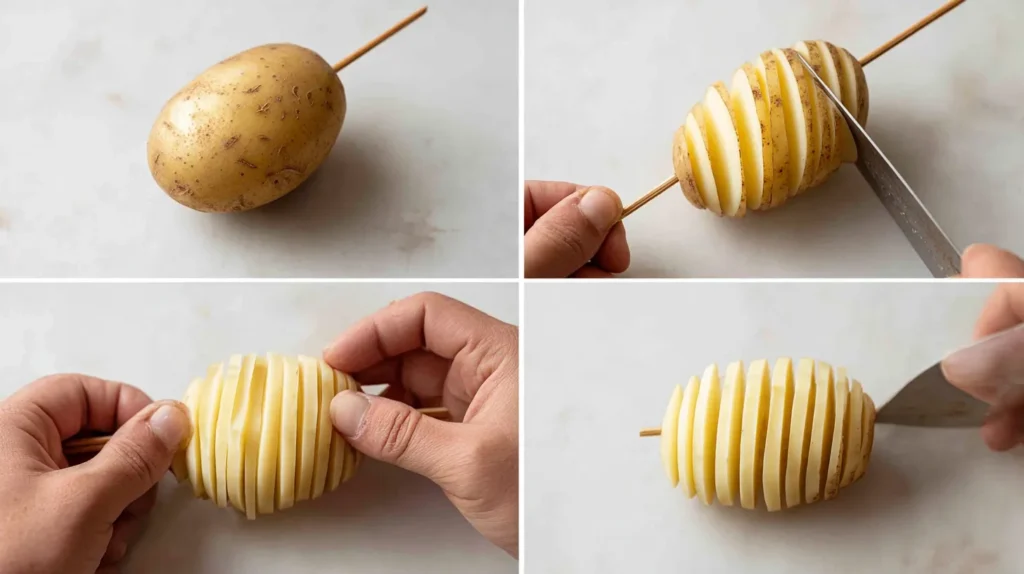
Method 1: Manual Knife Cut with Two Chopsticks
This requires only a sharp knife and two chopsticks, making it the most accessible method for home cooks without specialty equipment. Insert a bamboo skewer lengthwise through the center of a large potato, from end to end, so the skewer is perfectly centered. Lay two chopsticks on either side of the potato parallel to the skewer. The chopsticks act as a depth guide to prevent the knife from cutting all the way through. Hold the potato steady and use a sharp paring or chef’s knife to make diagonal cuts at a consistent angle, rotating the potato slowly away from you as you cut. The chopsticks stop the knife before it completely severs the slices, keeping the spiral attached. When complete, gently pull the coils apart along the skewer to achieve the tornado shape. The key is maintaining consistent angle and spacing throughout the cut.
Method 2: Spiral Potato Cutter
A dedicated tornado potato cutter, available online for under twenty dollars, consists of a blade mounted at a fixed angle on a central rod. You insert the skewer through the potato, then rotate the potato along the cutter’s blade, which automatically produces a consistent spiral with each rotation. This method is significantly faster for high-volume production and produces more uniform spirals than the manual knife method, but the manual technique produces fully adequate results for home quantities. After cutting by either method, soak the skewered spirals in cold water for 15 to 20 minutes to remove excess starch, which helps achieve maximum crispiness during frying. Pat completely dry before adding to hot oil.
Cooking Methods: Deep Fry, Air Fry, or Bake
Deep Frying: The Commercial Standard
The commercial tornado potato is deep-fried in oil at 350 to 375 degrees Fahrenheit for 5 to 10 minutes depending on the thickness of the spiral. The oil bath produces the most dramatic exterior crispiness because the potato is completely surrounded by heat rather than heated from one side. For home cooks, deep frying is optimal for authenticity but requires sufficient oil volume to fully submerge the spiral. Fry one spiral at a time in home cooking rather than crowding the pot, and ensure the oil is properly preheated and at temperature before adding any potato.
Air Frying and Baking: Accessible Alternatives
Air frying at 400 degrees Fahrenheit for 15 to 18 minutes produces results that are genuinely excellent, slightly less dramatic in crispiness than deep-fried but significantly easier to execute at home without a large volume of hot oil. Brush the spiral thoroughly with oil using a pastry brush, getting into every crevice, before air frying. Turn once at the halfway point for even browning. Baking at 220 degrees Celsius (430 Fahrenheit) for 20 to 25 minutes with an oil brush coat produces a crispier result than standard oven-baked potatoes but falls short of both frying methods. If using a conventional oven, place the skewer across a baking rack with a sheet pan below to catch drips and allow hot air to circulate around the entire spiral.
Seasoning Guide: From Classic to Korean
Why Surface Area Makes Seasoning More Powerful
The tornado potato’s large, uneven surface area holds seasoning extraordinarily well. Apply any dry seasoning blend immediately after cooking, while the exterior is still hot and slightly oily from the frying process, so the seasonings adhere and the heat blooms the spices. The simplest and most universally appealing is generous salt, fine black pepper, and smoked paprika. For the authentic Korean experience, use a blend of Korean cheddar powder, gochugaru for heat, and a small amount of sugar for the sweet-savory balance that defines Korean street food seasoning.
The Honey Butter Version and American Adaptations
The honey butter version, developed in Busan’s markets, finishes the hot potato with a drizzle of butter mixed with honey and then a dusting of onion powder and salt. This version is particularly popular in American adaptations because the familiar butter-honey combination gives accessible entry to the Korean seasoning format. For a more American fair food register, finish with fine cheddar powder and hot sauce, or with ranch seasoning powder and a squeeze of lime. All of these work because the spiral format creates surface area that amplifies whatever is applied to it.
Why Tornado Potatoes Work Better at Fairs Than at Home
The Commercial Fryer Advantage

Commercial deep fryers maintain a precise oil temperature with a large thermal mass, which means that when a cold potato enters the oil, the temperature drop is minimal and recovery is fast. This precise, consistent temperature produces superior crispiness compared to what most home setups achieve. A home pot of oil drops significantly in temperature when a potato is added and takes time to recover, during which the potato is partially steaming rather than frying, which reduces exterior crispiness.
How to Close the Gap at Home
The practical lesson is to fry one spiral at a time in home cooking rather than crowding the pot, and to ensure the oil is properly preheated and at temperature before adding any potato. Using a thermometer to verify oil temperature is worth the effort for this specific preparation. The quality gap between a properly fried home version and a fair version is smaller than people assume once the temperature management is correct.
Frequently Asked Questions
What potato is best for tornado potatoes?
Large Russet potatoes work best because their high starch content produces a fluffy interior and crispy exterior under heat, and their size and shape accommodate the full spiral length. Medium-large Yukon Golds also work well and produce a slightly buttery flavor. Avoid waxy potatoes like red potatoes, as their lower starch content produces a less fluffy interior and they do not crisp as effectively.
Do I need a special cutter to make tornado potatoes?
No. The two-chopstick method described above produces good results using only a sharp knife. A dedicated spiral potato cutter makes the process faster and more consistent for multiple potatoes, but is not necessary for home cooking. The manual method requires practice to maintain consistent angle and spacing, but the result is fully adequate.
Can tornado potatoes be made in an air fryer?
Yes, and the result is excellent. Air fry at 400 degrees Fahrenheit for 15 to 18 minutes, turning once. Brush thoroughly with oil before cooking, getting into every spiral gap. The air fryer version is slightly less crispy than deep-fried but significantly easier to execute without a large quantity of hot oil, and the reduced oil content produces a lighter result that some people prefer.
How do you get the seasoning to stick?
Apply dry seasoning immediately after cooking, while the exterior is still hot and slightly oily from the frying process. The residual surface oil and the heat cause the seasoning to adhere and bloom simultaneously. If seasoning a baked version, brush with additional oil immediately after removing from the oven before applying seasoning for the same effect.
More from the Viral Street Food Trends Series
- The Biggest Viral Street Food Trends Right Now (Pillar)
- Dubai Chocolate Bar: What It Is and How to Make It
- TikTok Street Food Trends Blowing Up This Year
- Smash Burger Tacos: The Viral Mashup Everyone’s Making
- Birria Tacos: How the Trend Took Over the US
- Pickle Pizza and Other Wild Street Food Combos Worth Trying
- Viral Asian Street Foods Americans Are Obsessed With
- We Tried 10 Trending Fair Foods: Here’s the Honest Verdict
- Street Food Challenges: The Most Outrageous Food Dares by City
- What’s Trending at US Food Festivals This Season
For more viral street food recipes, see our Ultimate Guide to Making Street Food at Home.
© 2026 SnackyStreet.com. All rights reserved.