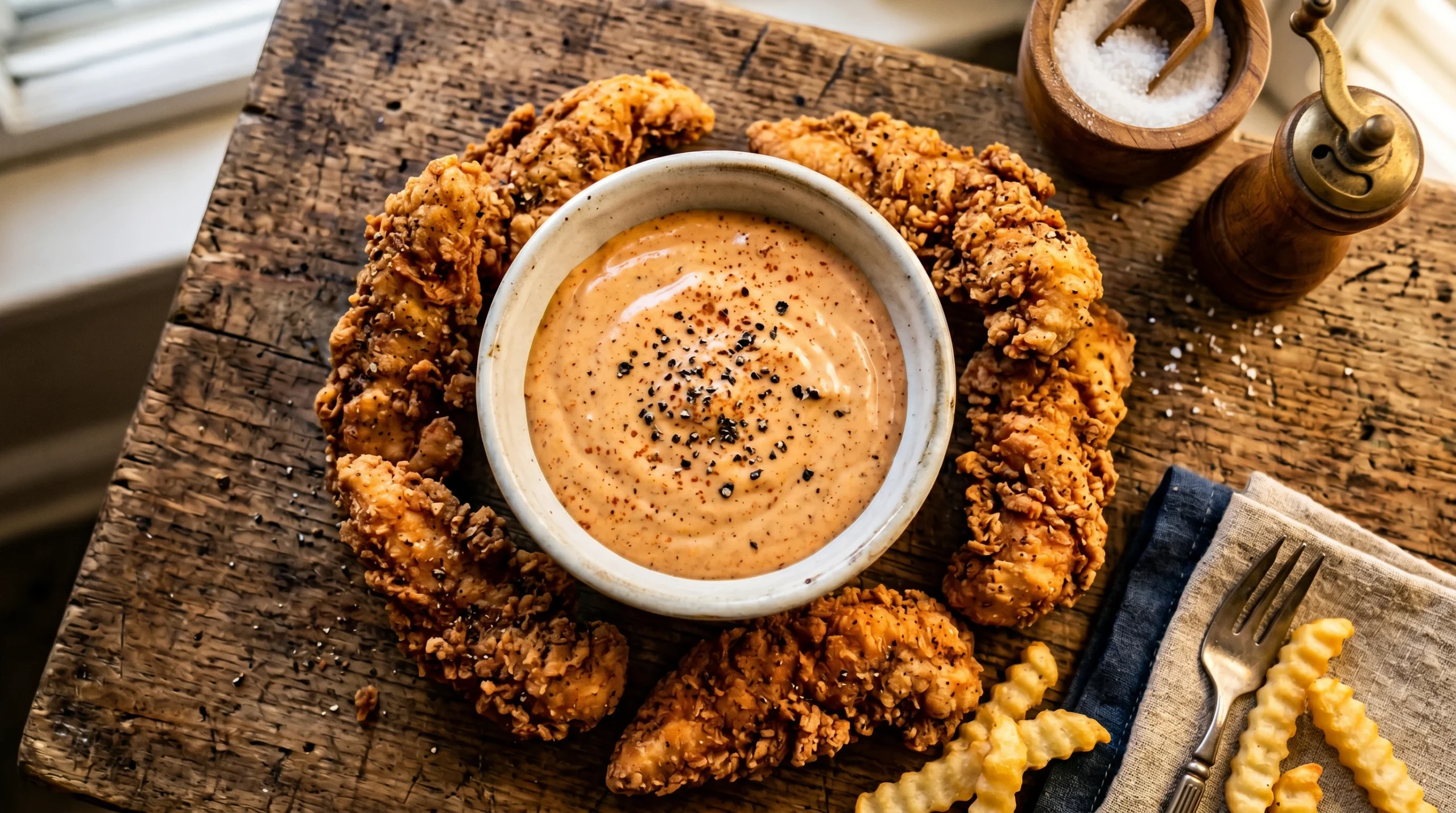
There’s a reason people detour across town, wait in drive-thru lines that stretch around the block, and stash packets in their glove compartments. Raising Cane’s Sauce and Chick-fil-A Sauce aren’t just condiments: they are cultural touchstones. Each one has achieved what very few restaurant creations manage, they’ve become more famous than the food they accompany.
This guide is part of our deep dive into The Ultimate Guide to Making Street Food at Home, the pillar resource that covers everything from sauce science to global street flavors. Here, we’re going granular on two American fast-food sauces that have earned their place in the street food conversation: one Southern-Louisiana, one Georgia-born, both obsession-worthy.
What makes both so addictive isn’t mystery, it’s chemistry. Emulsified fat (mayo), acid (vinegar, lemon), umami depth (Worcestershire), and a sugar-salt balance that triggers the brain’s reward system. Once you understand the formula, you can not only replicate it but improve on it.
Raising Cane’s Sauce: Decoding the Legend
The Origin Story
Todd Graves opened the first Raising Cane’s in 1996 outside LSU’s campus in Baton Rouge, Louisiana. The concept was almost laughably simple: one menu item (chicken tenders), one sauce. But that sauce, creamy, peppery, tangy, with a warmth that builds slowly, became the chain’s real product. Today, Raising Cane’s reportedly makes its sauce fresh in-house daily and rests it for a minimum of 24 hours before serving.
That resting period is the secret most copycat recipes miss. Flavor compounds in Worcestershire sauce, garlic powder, and black pepper need time to bloom and marry with the fat molecules in mayo. Skip it, and you get a sauce that tastes fine. Wait overnight, and you get something that tastes identical to the restaurant version.
The Exact Formula
After testing dozens of ratios, here’s the definitive copycat formula:
- ½ cup full-fat mayonnaise (Duke’s or Hellmann’s, avoid light mayo)
- ¼ cup ketchup (standard, not fancy, the sugar balance matters)
- ½ teaspoon freshly cracked black pepper (the word “freshly” is non-negotiable)
- ½ teaspoon garlic powder (not garlic salt, not fresh garlic)
- ¼ teaspoon Worcestershire sauce
- Optional: ½ teaspoon lemon juice for extra brightness
Method: Whisk everything together in a bowl until smooth. Cover tightly with plastic wrap pressed directly onto the surface of the sauce (to prevent oxidation). Refrigerate for at least 8 hours, ideally 24. The sauce will keep for up to one week.
The Pepper Variable: Why It Changes Everything
Most home cooks use pre-ground black pepper from a jar. Raising Cane’s uses coarsely ground fresh pepper, and the difference is dramatic. Pre-ground pepper loses volatile aromatic compounds within days of processing. Fresh-cracked pepper has a sharp, almost floral heat that softens during resting into something complex and warming. Use a pepper mill set to coarse, and your sauce will be immediately distinguishable from any grocery-store imitation.
Chick-fil-A Sauce: The Accidental Masterpiece
How a Mistake Became an Icon
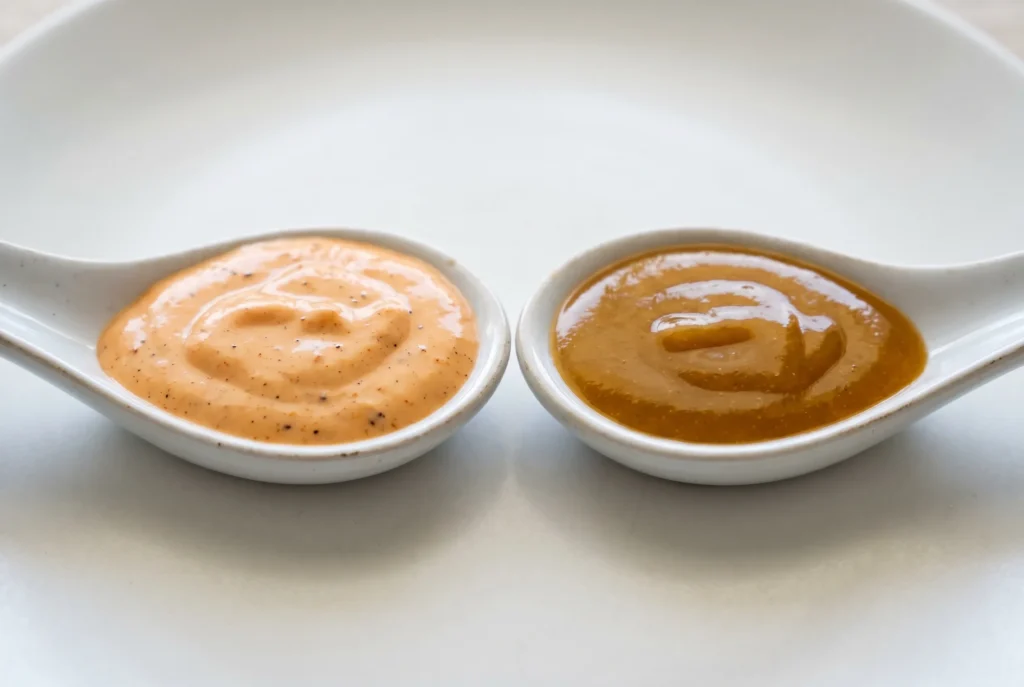
According to Chick-fil-A lore, their signature sauce was invented by accident in the 1980s when a franchise operator in Virginia accidentally mixed honey mustard into barbecue sauce. The result was so good that customers started asking for it by name. The chain eventually standardized and bottled it, but the homemade version is far superior and once you make it, you’ll understand why people describe it as “smoky, sweet, tangy, and rich all at once.”
The flavor profile is more complex than Cane’s sauce: it leans smokier, has a distinct honey sweetness, and finishes with a mustard tang. Think of it as barbecue sauce and honey mustard having a very successful child.
The Formula
- ½ cup mayonnaise
- 2 tablespoons honey
- 1 tablespoon yellow mustard
- 2 tablespoons BBQ sauce (use a standard sweet, smoky variety, not spicy)
- 1 teaspoon lemon juice
Method: Combine and whisk until completely smooth and uniformly orange-amber in color. This sauce does NOT require overnight resting, the flavors are well-rounded immediately. Refrigerate for up to two weeks in an airtight jar. The BBQ sauce choice matters enormously: a smoky-sweet Kansas City style produces the most authentic result.
Beyond the Dip: Creative Applications for Both Sauces
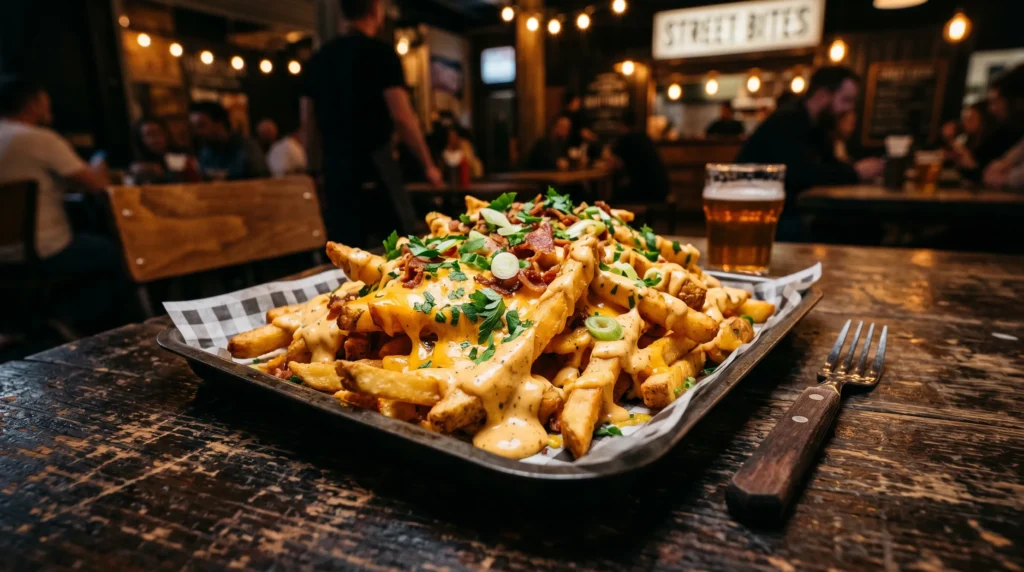
These sauces were born for chicken, but they’re capable of so much more. Cane’s sauce spread on a brioche bun transforms a smash burger into something extraordinary. Chick-fil-A sauce stirred into scrambled eggs adds a smoky-sweet dimension that has no right to be that good. Both sauces work magnificently on our Street-Style Loaded Fries, drizzled on top rather than used as a dip, they sink into the fries and create a flavor-saturated base that beats any dedicated fry sauce on the market.
Both also pair beautifully alongside Korean Corn Dogs, a combination that sounds unorthodox but works because the sweetness of both sauces cuts through the richness of the fried batter and molten cheese interior.
Sauce Science: Why These Two Work So Well
Both sauces exploit the same fundamental flavor principle: the Maillard-meets-umami effect. Ketchup and BBQ sauce contain cooked-down tomatoes loaded with glutamates (natural flavor amplifiers). Combined with the glutamates in Worcestershire sauce and the fat-binding power of mayo, they create what food scientists call a “flavor synergy cascade”: each ingredient makes the others taste more intense.
The acid component (lemon juice, vinegar in Worcestershire) serves two roles: it brightens the flavor on the palate and it stabilizes the emulsion, keeping the sauce from separating during storage. This is why both sauces taste better after a day in the fridge, the acid has had time to fully integrate into the fat matrix rather than sitting on top of it.
Troubleshooting Guide
Too thick? Add ½ teaspoon of water and whisk, mayo-based sauces can thicken significantly when cold.
Too bland? Your pepper is probably stale. Add a pinch more freshly cracked pepper and another drop of Worcestershire.
Not tangy enough? A few extra drops of lemon juice or a tiny splash of apple cider vinegar will sharpen both sauces immediately.
Separated after storage? Normal. Simply stir vigorously or whisk briefly, the emulsion reconstitutes within 30 seconds.
The Verdict: Which Sauce Wins?
They serve different emotional needs. Cane’s sauce is pure umami comfort, the sauce equivalent of a warm hug. It belongs on chicken, fries, and anything you want to taste like a Louisiana roadside diner at 2 AM. Chick-fil-A sauce is more versatile and more complex, it works on almost everything, from waffle fries to grilled vegetables to the inside of a quesadilla.
The real answer? Make both. Use Cane’s sauce this week on crispy chicken strips, and use Chick-fil-A sauce next weekend as the spread for our Vietnamese Bánh Mì, the smoky honey notes play surprisingly well against pickled daikon and fresh cilantro.
For everything else, the world of street sauces, global dips, and homemade condiments that will change your cooking, head back to our complete Ultimate Guide to Making Street Food at Home. The sauce is just the beginning.
Related Articles in This Series
- Easy Elotes (Mexican Street Corn) 4 Ways
- Korean Corn Dogs at Home: The Crispy, Cheesy Guide
- Street-Style Loaded Fries: Regional American Variations
- Vietnamese Bánh Mì You Can Make in 30 Minutes
- Homemade Soft Pretzels with Beer Cheese Dipping Sauce
- Authentic Jamaican Beef Patties from Scratch
- Late-Night Street Food Snacks Under 20 Minutes