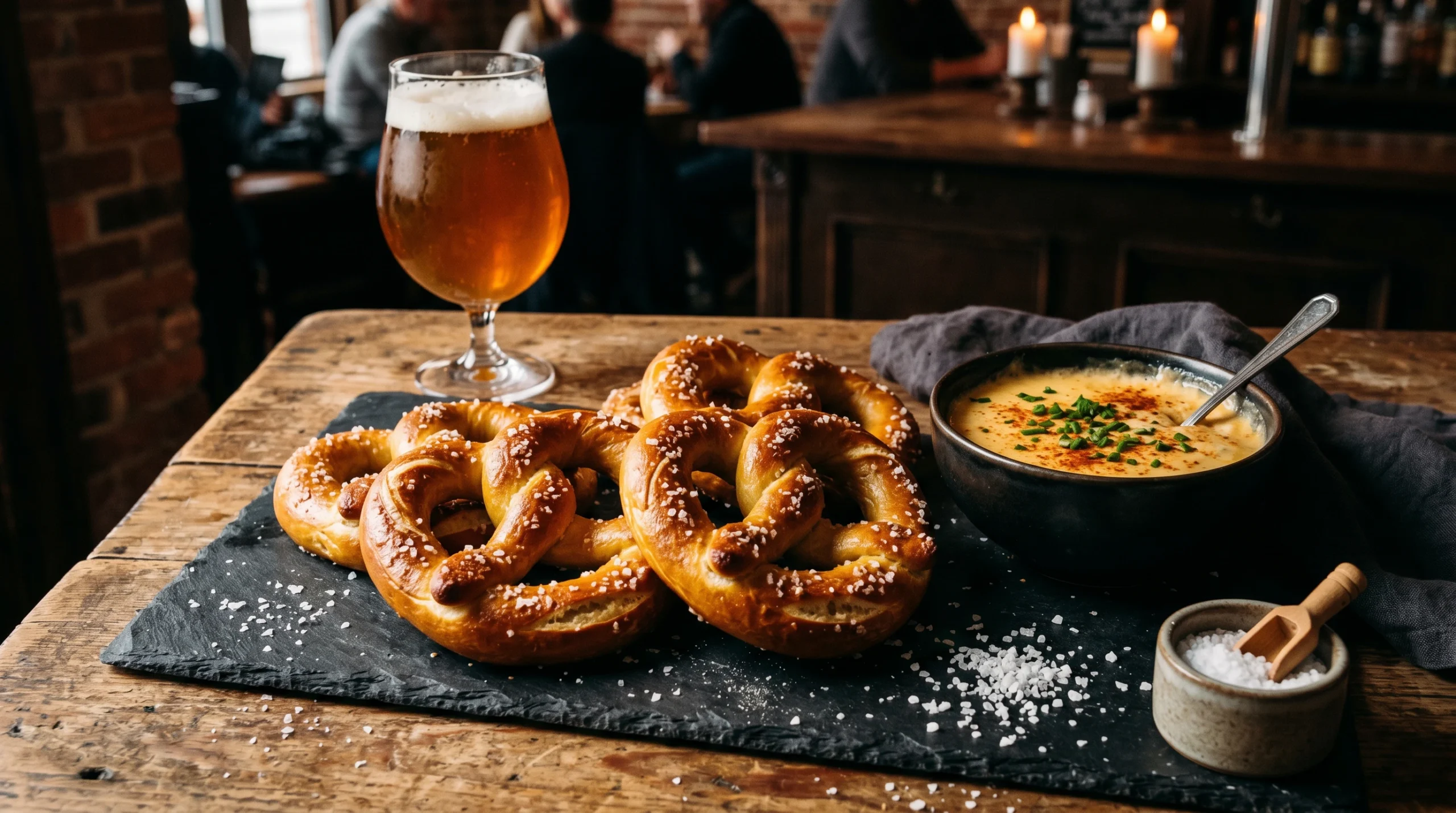
Germany perfected the pretzel roughly 1,300 years ago, and very little has changed since. Bavarian monks baked them, street vendors sold them from wooden carts across Europe, and they arrived in America with German immigrants where they found a permanent home at ballparks, state fairs, and bar counters. What changed is the sauce. Beer cheese sauce, a distinctly American invention born in Kentucky in the 1930s, transformed the pretzel from a standalone snack into the two-component experience that dominates gastropub menus from Portland to Nashville.
Making both from scratch is not complicated. It requires patience for the dough rise, attention during the alkaline bath, and one critical ingredient decision for the cheese sauce. This guide, part of our Ultimate Guide to Making Street Food at Home, walks through every step, explains the chemistry behind the pretzel’s characteristic crust, and gives you a beer cheese recipe considerably better than anything in a jar.
Keywords covered: homemade soft pretzels recipe, beer cheese sauce from scratch, baking soda bath pretzels, pretzel bites recipe, how to make soft pretzels, beer cheese dip recipe, pretzel dough yeast, soft pretzel baking soda, pub-style beer cheese, cheddar beer sauce recipe, pretzel shaping techniques, gruyere beer cheese sauce.
The Pretzel Dough: Simpler Than You Think
Yeast Temperature: The Variable That Kills Most Pretzel Dough
Yeast activates between 100F and 110F. Too cold and it sits dormant. Too hot and it dies before the dough can rise. A kitchen thermometer eliminates the single most common cause of failed pretzel dough. Combine 1 packet (7g) active dry yeast, 1 teaspoon sugar, and 1.5 cups warm water (105F). Wait 5 to 10 minutes until visibly foamy. No foam means dead yeast. Start again.
Mixing and Kneading: When to Stop
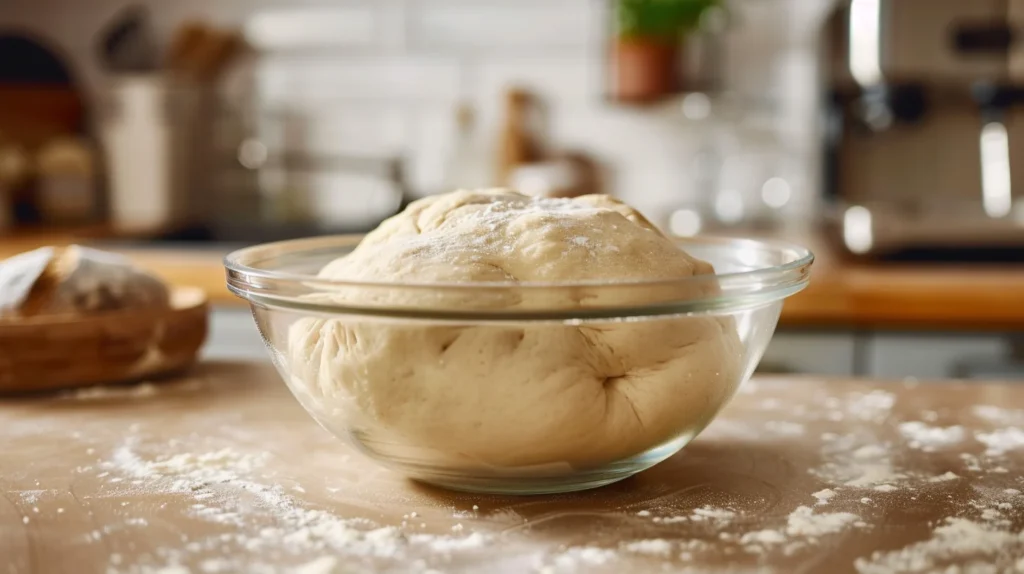
Add 4 cups (500g) all-purpose flour, 1 teaspoon fine salt, and 2 tablespoons softened unsalted butter. Knead 5 minutes with a dough hook (8 minutes by hand) until smooth, slightly tacky, and springs back slowly when poked. Do not over-knead. Transfer to a lightly oiled bowl, cover, and let rise in a warm spot for 60 to 90 minutes until doubled.
Shaping: Three Formats, One Dough
Traditional Twist Pretzels: Technique and Patience
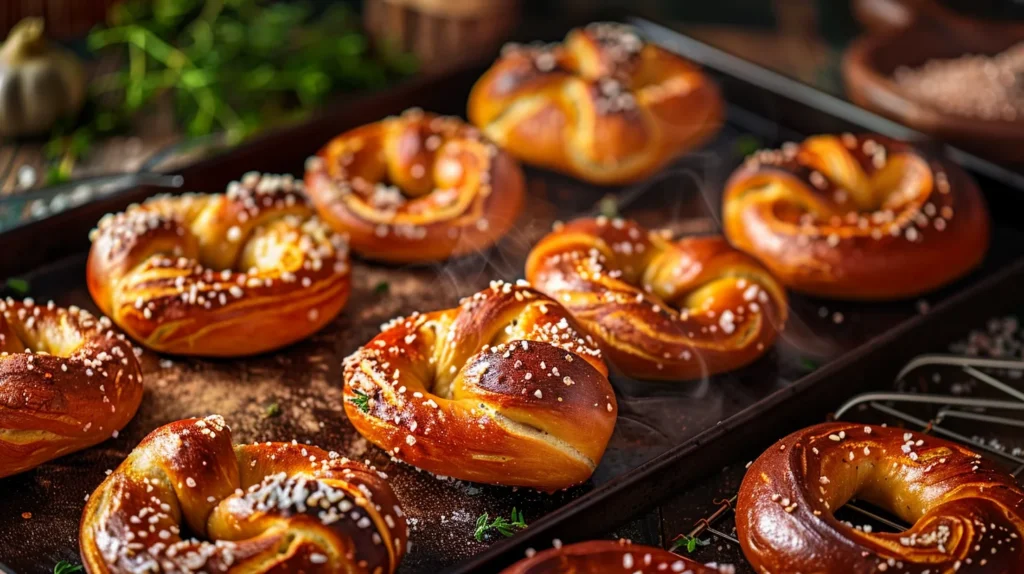
Roll a golf ball-sized piece of dough into a rope 20 to 24 inches long, thicker at the center and tapering toward the ends. Form a U shape, cross the ends twice, then fold them down and press firmly into the bottom curve of the U. The classic shape requires confidence: tentative rolling creates uneven ropes that bake unevenly.
Pretzel Bites and Sticks: The Party-Ready Formats
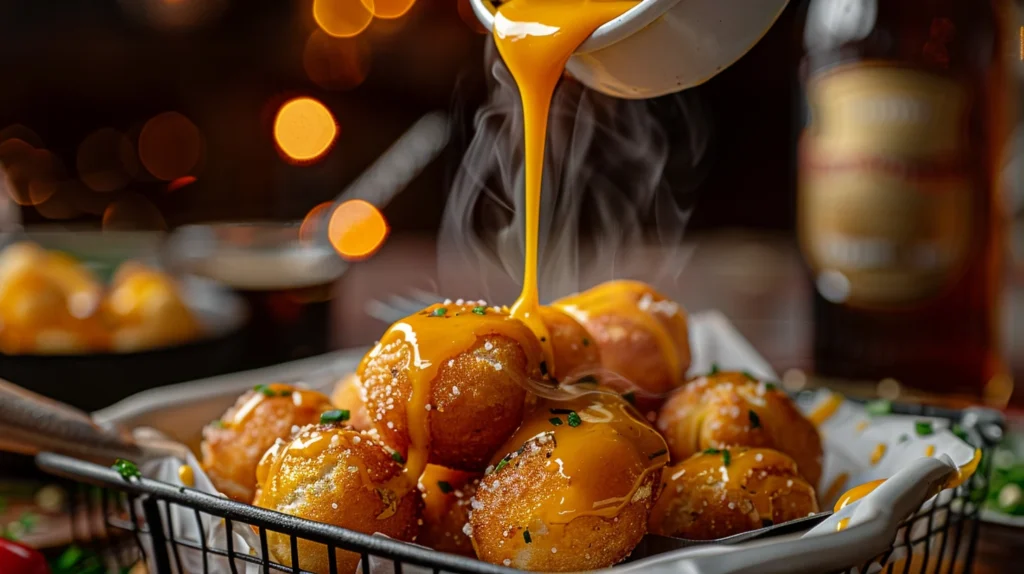
Pretzel bites are the pragmatic option: roll dough into 1-inch-thick ropes and cut into 1-inch pieces. No shaping required, and they offer the best dipping geometry for beer cheese. One batch yields 40 to 50 bites. Pretzel sticks (pencil-thin, 10-inch ropes) have the highest crust-to-interior ratio and deliver the most alkaline pretzel flavor in every bite.
The Baking Soda Bath: The Step You Cannot Skip
The Chemistry Behind the Pretzel Crust
The alkaline solution (sodium bicarbonate dissolved in boiling water) partially gelatinizes the surface starches of the dough before baking, triggering the Maillard reaction at a lower temperature and producing the specific mahogany-brown color, slightly bitter flavor, and distinctly chewy-yet-crisp crust that define the pretzel. Without this bath, you have a bread stick with a sentimental shape.
The 30-Second Rule and Why Timing Is Exact
Bring 8 cups water to a boil. Add 1/2 cup baking soda (it will foam violently: normal). Lower shaped pretzels with a slotted spoon. Boil exactly 30 seconds per side. Longer than 90 seconds total produces a gummy exterior. Transfer to parchment, brush immediately with egg wash, sprinkle with coarse salt. Bake at 425F for 12 to 15 minutes until deep mahogany brown. They should look darker than you expect: the alkaline surface browns faster than regular bread.
The Baked Baking Soda Upgrade for Stronger Pretzel Flavor
For a stronger, more authentic flavor closer to the German lye-bath version: bake a thin layer of baking soda on a foil-lined sheet pan at 300F for one hour. This converts sodium bicarbonate to sodium carbonate, a stronger alkali that produces noticeably more pretzel character. Store in a sealed jar and use in place of regular baking soda in the bath.
The Beer Cheese Sauce: Building Complexity from a Roux
Beer Selection: Which Style Does What
The beer you choose changes the sauce significantly. IPAs turn bitter and metallic when heated because hop acids intensify with temperature: avoid them. Lagers produce the mildest, most cheese-forward result. Amber ales add caramel malt notes. Stouts create a dark, deeply roasted sauce exceptional with sharp cheddar. Wheat beers add a bread-like sweetness. First-timers: use an amber ale.
The Roux Foundation and the Freshly Grated Cheese Rule
Melt 3 tablespoons butter over medium heat. Add 3 tablespoons flour and whisk 2 minutes until golden and nutty-smelling. Gradually whisk in 1 cup beer, then 1/2 cup whole milk. Simmer 4 to 5 minutes until it coats the back of a spoon. Reduce heat to low. Add 2 cups freshly grated sharp cheddar in three additions, whisking between each. Pre-shredded cheese contains cellulose anti-caking agents that cause the sauce to seize and turn grainy instead of silky. The freshly grated specification is non-optional. The roux technique here is identical to the gravy in the Disco Fries in our Regional Loaded Fries guide: learn it once, apply it everywhere.
The Gruyere Addition That Separates Good from Great
Adding 1/2 cup freshly grated Gruyere with the final cheddar addition creates a more complex, slightly nutty depth that makes this sauce noticeably better than the single-cheese version. Finish with 1 teaspoon Dijon mustard, 1 teaspoon Worcestershire sauce, 1/4 teaspoon garlic powder, salt, and white pepper. Serve immediately in a warm bowl.
Beyond Dipping: The Full Pretzel and Beer Cheese Experience
Building a Snack Board Around Pretzels
Pair pretzels with the Copycat Cane’s sauce from our Street Sauces guide for a honey-mustard adjacent dipping option. Add Korean corn dogs from our Korean Corn Dogs guide alongside for a fried-and-baked snack board covering every texture.
Storage and Reheating: What Works and What Doesn’t
Pretzels bake and go stale quickly. Day-of baking is ideal. Cool completely, seal in an airtight bag, store at room temperature up to 2 days. Reheat in a 325F oven for 5 to 7 minutes to restore the crust’s snap. Freeze fully baked pretzels up to 1 month. Bake from frozen at 375F for 12 to 15 minutes. The beer cheese sauce can be thinned with warm milk and reheated gently: it also works poured over loaded fries as an instant Disco Fry upgrade.
Related Articles in This Series
- The Ultimate Guide to Making Street Food at Home
- Easy Elotes (Mexican Street Corn) 4 Ways
- Korean Corn Dogs at Home: Crispy Cheesy Guide
- Street-Style Loaded Fries: Regional American Guide
- Vietnamese Banh Mi in 30 Minutes: Home Guide
- Authentic Jamaican Beef Patties from Scratch
- Late-Night Street Food Snacks Under 20 Minutes
- Copycat Raising Cane’s and Chick-fil-A Street Sauces