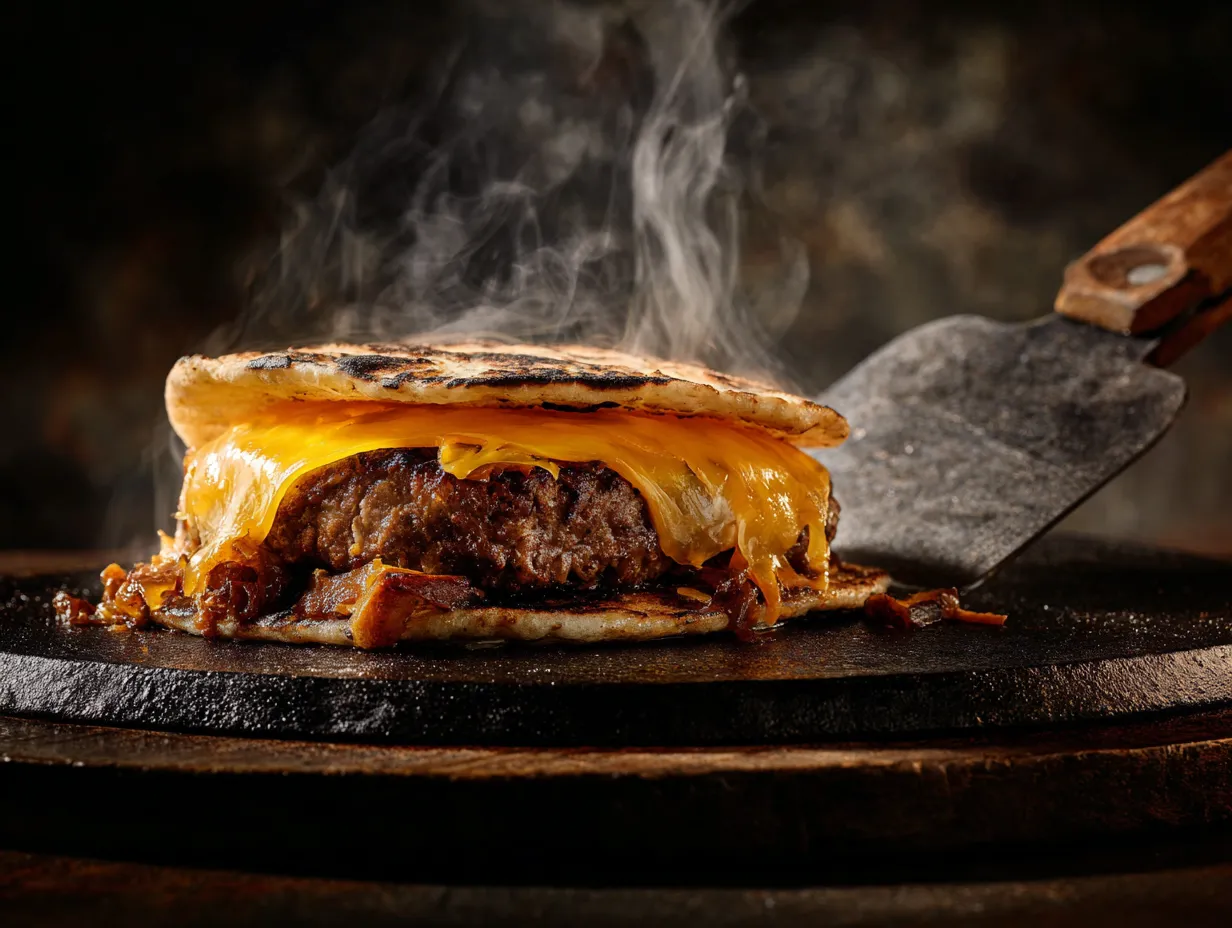
There is a specific sequence of events that happens when someone watches a smash burger taco video for the first time. First, confusion: why is there a tortilla on top of the beef? Then recognition as the cook flips the taco: the meat is fused directly to the bread. Then the first bite close-up, and the lacy, caramelized edges of the beef visible against the crisped tortilla, and then the comment they type before the video is even over: “making this tonight.” That is the arc of every successful smash burger taco video, and it is why the format has sustained genuine popularity for multiple years rather than fading after a single peak.
This guide covers everything: the technique, the meat ratios, the two methods for smashing, the secret sauce, all the variations worth trying, and the mistakes that prevent the lacy edges everyone is actually after. This article is part of the Biggest Viral Street Food Trends Right Now series at SnackyStreet.
What Is a Smash Burger Taco?
The Core Concept: One Unit, Two Formats
A smash burger taco is exactly what it sounds like: a ball of ground beef placed on an extremely hot cooking surface, a flour tortilla laid on top of it, and then the whole thing smashed flat with a heavy spatula or burger press so the beef spreads into a thin patty that physically bonds with the tortilla as it cooks. When you flip it, the tortilla is now on the bottom. It crisps against the hot surface while the beef side faces up to receive cheese. The result is a single piece: beef and tortilla cooked together into one unit, with a burger’s caramelized crust and a taco’s handheld format simultaneously.
Why the Fat Fusion Makes All the Difference
The critical difference from a standard taco is the fusion between the beef fat and the tortilla. As the patty smashes and spreads, the rendered fat from the beef soaks into the edges of the tortilla, crisping those edges in a way that is structurally different from a toasted tortilla. The edges of a smash burger taco are crispy because they have been fat-basted from the inside out. This is the texture that makes the format distinctive and that drives the crunch sound in video content.
The Technique: Two Methods, One Goal.
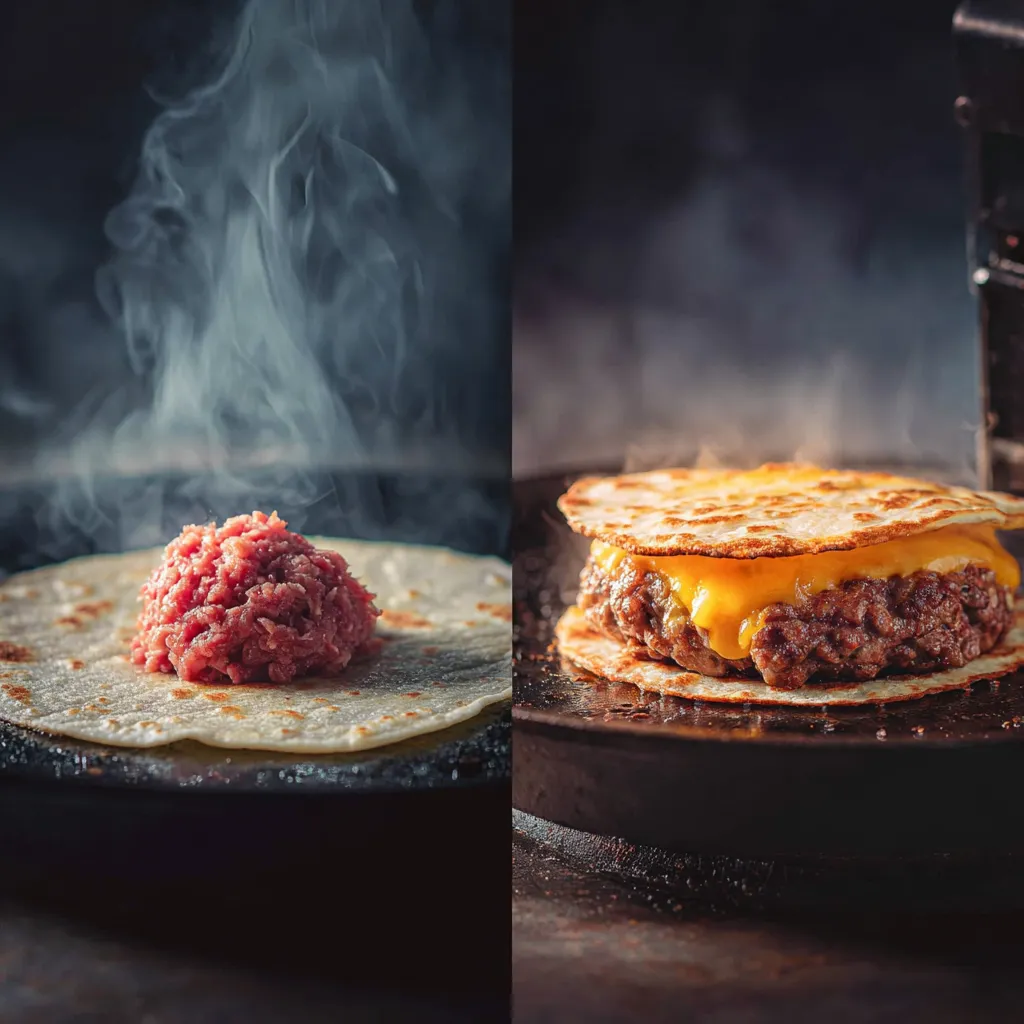
Method 1: Beef Ball First, Tortilla on Top
This is the original viral method and the one that produces the most dramatic lacy edges. Place the beef ball directly on the screaming-hot cooking surface. Lay the tortilla flat on top of the beef. Using a heavy burger press, flat spatula, or the bottom of a small heavy saucepan, press down with full weight and hold for 10 seconds. The beef spreads outward under the tortilla, its edges thinning to near-translucency where they will caramelize and crisp against the cooking surface.
Leave undisturbed for 2 to 3 minutes. The meat must release from the surface naturally. Forcing it early tears the crust. When the edges are deeply browned and the beef has released, slide a stiff steel spatula completely under the unit and flip in one motion. Tortilla now contacts the cooking surface. Add cheese immediately. The residual heat from the tortilla side and a loose dome with a lid or inverted bowl will melt the cheese in 60 to 90 seconds.
Method 2: Beef Pressed into Tortilla in Advance
The second approach involves pressing raw ground beef directly into the tortilla before it hits the pan. Lay the tortilla flat on a work surface. Place a measured ball of beef in the center and press it out to the edges using your palm or a burger press, creating a thin, even sheet of meat on the tortilla. Cook meat side down on the preheated surface. The tortilla on top acts as a lid, trapping steam and helping the beef cook through before the flip. This method is slightly easier for beginners because the flip is less dramatic. The tradeoff is that the lacy edges are less pronounced. Method 1 produces a more photogenic result and slightly more caramelization. Method 2 is more consistent for high-volume cooking.
The Beef: Fat Content Is Not Negotiable
Why 80/20 Is the Only Ratio That Works
Every recipe that has tested this format extensively reaches the same conclusion: 80/20 ground beef is the correct fat-to-lean ratio for smash burger tacos. The 20 percent fat content is not excess. It serves three structural functions. First, it provides the liquid fat that renders out during cooking and bastes the tortilla edges, creating the characteristic crust. Second, it provides enough internal lubrication to prevent the beef from seizing and turning rubbery under high heat. Third, it provides enough moisture to help the beef adhere to the tortilla before and during cooking.
Ball Size, Packing, and Why You Should Not Overwork the Meat
Leaner ground beef, 90/10 or 93/7, will produce a patty that does not stick well to the tortilla and will have less pronounced caramelization because there is less fat to facilitate the Maillard reaction at the edges. The beef ball size matters: portions between 2.5 and 3 ounces produce a patty that covers a standard fajita-size tortilla when smashed. Larger portions result in a thicker patty that does not caramelize as effectively at the edges. Do not overwork the beef when forming the balls. Loose packing allows the smash to spread the meat more easily and produces a more irregular, visually appealing edge profile.
The Pan: Heat Is the Entire Point
Cast Iron vs Carbon Steel: Which to Use and Why
A cast iron skillet is the best home kitchen tool for smash burger tacos because it retains heat extremely well under the load of cold beef being pressed against it. Most of the failures described in recipe testing come from insufficient pan temperature. A nonstick pan is not appropriate for this application: it cannot reach the temperatures required for proper caramelization and is not designed for the mechanical force of a burger press. Carbon steel is equally effective as cast iron and heats faster.
Preheating, Oil, and Target Temperature
Preheat the dry cast iron skillet over high heat for a minimum of 3 minutes. The surface should be producing faint wisps of smoke before any beef touches it. Add the smallest amount of neutral oil, a light spray or a paper towel wipe, to prevent sticking. The beef has enough internal fat that excessive added oil creates a greasy result rather than a seared one. The target surface temperature is between 375 and 425 degrees Fahrenheit. A standard infrared thermometer confirms this in seconds and eliminates guesswork.
The Tortilla: Flour, Fajita Size, Fresh
Why Flour Outperforms Corn for This Format
Flour tortillas in the fajita size, 5 to 6 inches, are the standard for this recipe and perform better than larger formats because they match the spread area of a properly portioned beef ball. Corn tortillas crack under the mechanical pressure of smashing, particularly along the fold lines from commercial packaging. If you want to use corn, warm them first in a dry pan to make them more pliable, but understand that they will not achieve the same fat-basting effect because corn masa absorbs fat differently than wheat flour.
Temperature and Pliability: The Easy Fix Most Cooks Miss
Refrigerator-cold tortillas that are stiff will develop fractures when smashed and will not adhere well to the beef. If your tortillas have been in the refrigerator, warm them in a microwave under a damp paper towel for 20 seconds before use. Fresh, room-temperature tortillas pliable enough to wrap around your hand without cracking are the correct starting condition for this recipe.
The Secret Sauce: Why Every Good Version Has One.
The Base Ratio That Every Recipe Converges On
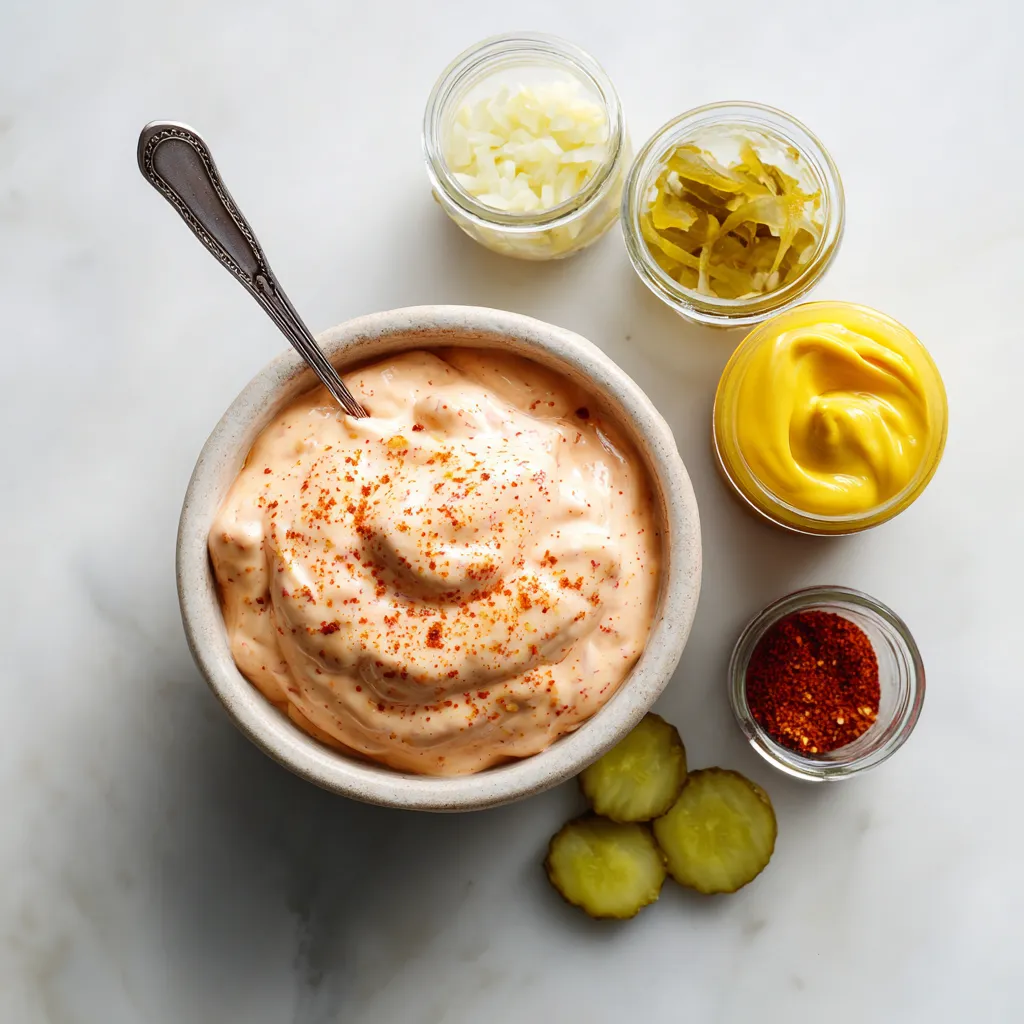
The “secret sauce” for smash burger tacos is not secret at all. Every successful recipe converges on the same base: mayonnaise, ketchup, mustard, and pickle relish combined in roughly 4:1:1:1 proportions, with garlic powder, paprika, and black pepper added to taste. This is functionally a simplified Thousand Island dressing calibrated for burger applications. The fat content of the mayo carries the bright acid notes of the ketchup and relish while the mustard provides a sharp back note that cuts through the beef fat.
How to Adjust and When to Make It
The sauce should be made first and refrigerated while you cook, as cold sauce against hot beef and tortilla creates a temperature contrast that improves the eating experience. A good ratio to start with: 4 tablespoons mayo, 1 tablespoon ketchup, 1 tablespoon yellow mustard, 1 tablespoon pickle relish or finely chopped dill pickles, half teaspoon garlic powder, quarter teaspoon paprika, black pepper to taste. Adjust brine level by using the pickle jar liquid for brightness if the sauce needs acid without adding more relish volume.
Variations Worth Making
The base smash burger taco format absorbs different flavor profiles without requiring technique changes, which is one of the reasons the format has generated so much derivative content.
Big Mac Style
The original viral format. American cheese, shredded iceberg lettuce, diced white onion, dill pickle slices, secret sauce. The recognizable flavor of a Big Mac in handheld taco form was what made the first wave of smash burger taco videos so compelling because it offered a familiar flavor landmark for the unfamiliar format.
Dubai Taco
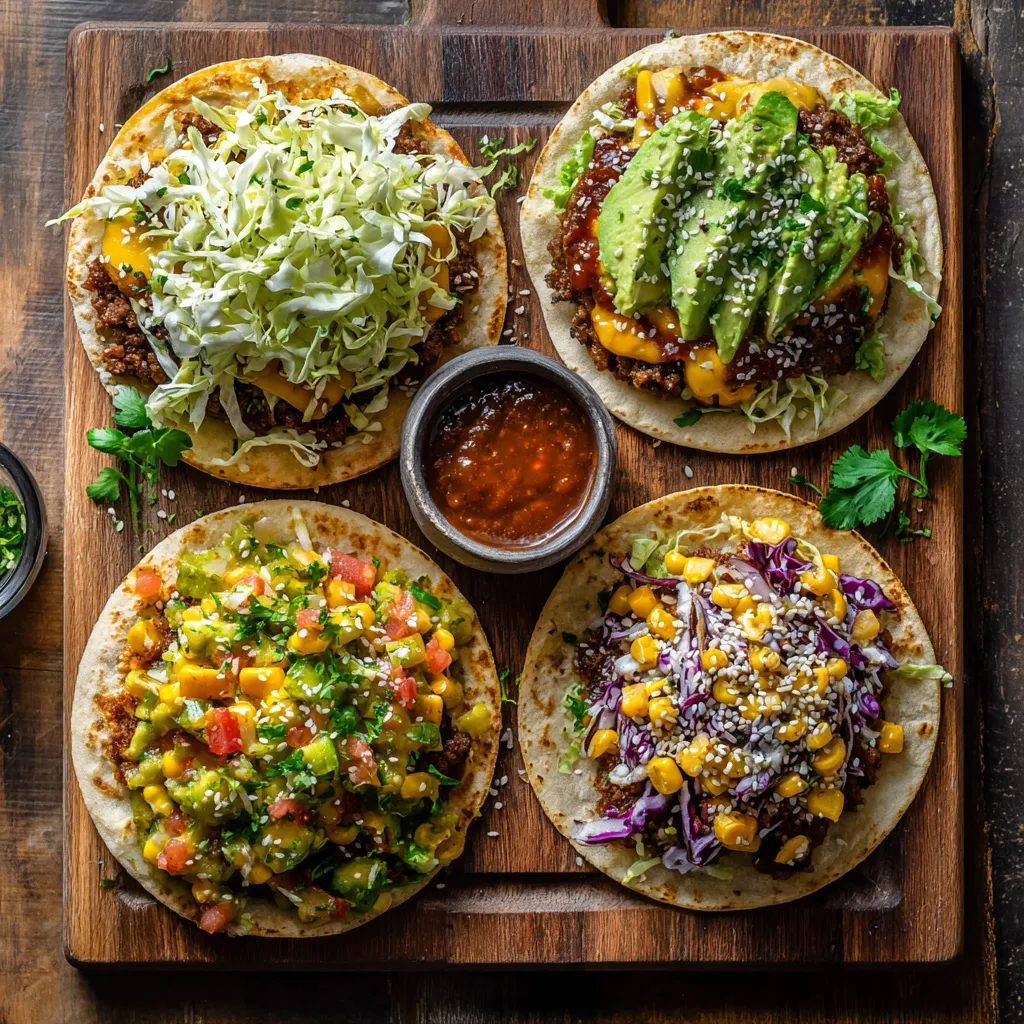
Season the beef with Middle Eastern aromatics: ground cardamom, cinnamon, coffee, cumin, and black pepper. Top with tahini-chili sauce instead of burger sauce, add fresh cilantro and a few drops of pomegranate molasses. This is the version that emerged in early 2025 as creators crossed the Dubai chocolate trend with the smash taco format, producing a genuinely interesting flavor profile that connects two major trend categories simultaneously.
Japanese BBQ Style
Mix Japanese BBQ sauce (tonkatsu sauce or a combination of Worcestershire, soy, and mirin) into the ground beef before forming balls. After flipping, top with shredded cabbage dressed with rice vinegar and sesame oil, sliced cucumber, pickled ginger, and a drizzle of Kewpie mayo. The umami from the BBQ sauce in the beef layers with the acid from the pickled ginger and the richness of Kewpie in a combination that is genuinely distinctive from the original.
Street Corn (Elotes) Style
Top with Mexican street corn: charred or roasted corn kernels tossed with mayo, cotija cheese, chili powder, lime juice, and fresh cilantro. This is the variation that produced some of the highest engagement in the format’s second year of virality because it combined two separately trending street food elements into one item that served both trend communities simultaneously.
Tex-Mex Style
Season beef with cumin, chili powder, and garlic. Top with guacamole, pico de gallo, pickled jalapenos, shredded pepper jack, and a squeeze of lime. This is the least departure from standard taco flavors and the most accessible version for anyone skeptical about the burger-taco fusion concept.
The Complete Recipe: Smash Burger Tacos
Ingredients and Prep
For 4 to 6 tacos. Total time: 20 minutes. Make the sauce first: combine 4 tablespoons mayonnaise, 1 tablespoon ketchup, 1 tablespoon yellow mustard, 1 tablespoon pickle relish, half teaspoon garlic powder, quarter teaspoon smoked paprika, black pepper to taste. Stir and refrigerate. Prepare the beef: divide 1 pound 80/20 ground beef into 4 to 6 loose balls, 2.5 to 3 ounces each. Season lightly with salt and pepper on the exterior. Do not mix seasoning into the beef as overworking creates a dense, less caramelizable patty.
Cooking and Assembly
Heat the pan: cast iron or carbon steel skillet over high heat for 3 full minutes. Surface should show faint smoke. Light coat of neutral oil. Smash and cook: place one beef ball on the hot surface. Lay a tortilla directly on top. Press firmly with a burger press or the bottom of a saucepan for 10 seconds. Do not touch for 2 to 3 minutes. When deeply browned and the beef releases, flip in one clean motion. Add cheese immediately. Dome with lid or bowl for 60 to 90 seconds until melted. Remove and top with sauce and toppings. For best results: cook one or two at a time, clean the cooking surface between batches, and maintain pan temperature between batches rather than letting it drop.
Serving and Scaling for a Crowd
Batch Cooking for Groups of Ten or More
The smash burger taco scales well for a crowd when you have the right setup. A flat-top griddle or a large cast iron skillet allows three to four tacos simultaneously. For groups of ten or more, prepare all toppings and sauce in advance, form the beef balls up to 24 hours ahead and refrigerate, and run the cooking in continuous batches. The toppings stay fresh at room temperature for up to two hours if kept covered and out of direct heat. The sauce keeps refrigerated for four days.
Self-Service Boards and Event Presentation
The format is also naturally self-service friendly. Lay out the cooked tacos on a board with toppings in small bowls alongside, and guests can customize their own. This works particularly well for casual gatherings where you want the drama of a visible, photogenic spread without the complexity of a plated dinner. The tacos photograph extremely well from above with their toppings, which makes them popular for food content at events.
Frequently Asked Questions
Do I need a burger press to make smash burger tacos?
No. The bottom of a small heavy saucepan works very well. So does the flat of a wide, stiff metal spatula applied with firm downward pressure. The key is applying sustained flat pressure during the smash phase rather than a quick single press, which does not spread the beef fully.
Why aren’t my smash burger tacos getting crispy edges?
The three most common causes: the pan is not hot enough before the beef touches it, the beef fat content is too low (lean beef does not render enough fat to baste the tortilla edges), or the beef was moved before the crust had fully formed. Let the pan preheat until it shows faint smoke, use 80/20 beef, and resist all temptation to move the taco for at least two minutes after smashing.
Flour or corn tortilla for smash burger tacos?
Flour tortillas in the fajita size (5 to 6 inches) work best. They adhere to the beef, tolerate the smashing pressure without cracking, and crisp effectively from the beef fat. Corn tortillas can work if warmed to room temperature first, but they are more prone to cracking during the smash and do not develop the same fat-basted crust effect.
Can I make smash burger tacos ahead of time?
Form the beef balls and refrigerate them up to 24 hours in advance. Make the sauce up to four days ahead. Chop toppings the morning of. The actual cooking takes five minutes per batch and must be done fresh because the tortilla crust loses its texture quickly once off the heat. Assemble and eat immediately after cooking for the best result.
More from the Viral Street Food Trends Series
- The Biggest Viral Street Food Trends Right Now (Pillar)
- Dubai Chocolate Bar: What It Is and How to Make It
- TikTok Street Food Trends Blowing Up This Year
- Birria Tacos: How the Trend Took Over the US
- Tornado Potato: The Fair Food TikTok Cannot Stop Watching
- Pickle Pizza and Other Wild Street Food Combos Worth Trying
- Viral Asian Street Foods Americans Are Obsessed With
- We Tried 10 Trending Fair Foods: Here’s the Honest Verdict
- Street Food Challenges: The Most Outrageous Food Dares by City
- What’s Trending at US Food Festivals This Season
For more taco recipes and street food techniques, see our Best Homemade Taco Recipes guide and the Ultimate Guide to Making Street Food at Home.
© 2026 SnackyStreet.com. All rights reserved.