Every week, the TikTok algorithm promotes a food video to millions of people who had never heard of the dish before. Some of those videos create a trend that lasts a weekend. Others start a multi-year wave that reshapes what grocery stores stock, what restaurant menus feature, and what home cooks attempt on a Tuesday night. The difference between the two outcomes is not random luck. The trends that survive and grow share specific structural qualities that are worth understanding if you want to know what to cook, what to look for at food markets, and why certain foods dominate your social feed for months at a time.
This article covers the TikTok street food trends that have demonstrated genuine staying power in 2025 and 2026. Not viral moments that peaked and vanished in two weeks. These are the formats, ingredients, and dishes that have moved from social media into restaurant menus, grocery store shelves, and home kitchens, and show no sign of returning to obscurity. This article is part of the Biggest Viral Street Food Trends Right Now series at SnackyStreet.
How TikTok Actually Creates a Food Trend
The Algorithm: Watch Completion Over Follower Count
The TikTok food trend cycle is not simply about a creator posting a video and it going viral. The mechanics are more specific. The For You Page algorithm measures watch completion rate as the primary signal for amplification. A video that gets watched to the end, even by a fraction of viewers, signals to the algorithm that the content holds attention, which triggers broader distribution. Food content has structural advantages here because the reveal moment, the cross-section, the cheese pull, the first bite, gives viewers a reason to watch all the way through.
The Participation Cycle That Sustains a Trend
Once a video reaches a threshold of completion rate, it gets served to a wider audience. Some percentage of that audience creates response content, either attempting the recipe, reacting to the food, or asking questions. This response content generates traffic back to the original video and creates a content ecosystem around the food item. Hashtags link these videos into a growing community of content that continues to drive algorithmic promotion. The food item has become a trend before any traditional media outlet has written about it.
Creator Authenticity as the Critical Accelerant
Research on TikTok’s influence on food preferences consistently finds that younger users treat food creators as peers rather than media personalities, which increases the trust placed in their recommendations and the likelihood of acting on them. A college student in Phoenix watching a Korean corn dog video from a creator in New York is not watching advertising. They are watching someone they relate to experiencing something they want to experience. That emotional dynamic is what turns a view into a search, a search into a purchase, and a purchase into a new trend node in someone else’s city.
The TikTok Street Food Trends With Real Staying Power
These are the street food formats that have crossed from TikTok virality into the kind of sustained cultural presence that influences menus, retail, and home cooking well beyond the initial trend peak.
Korean Corn Dogs: The Cheese Pull That Rewrote the Format
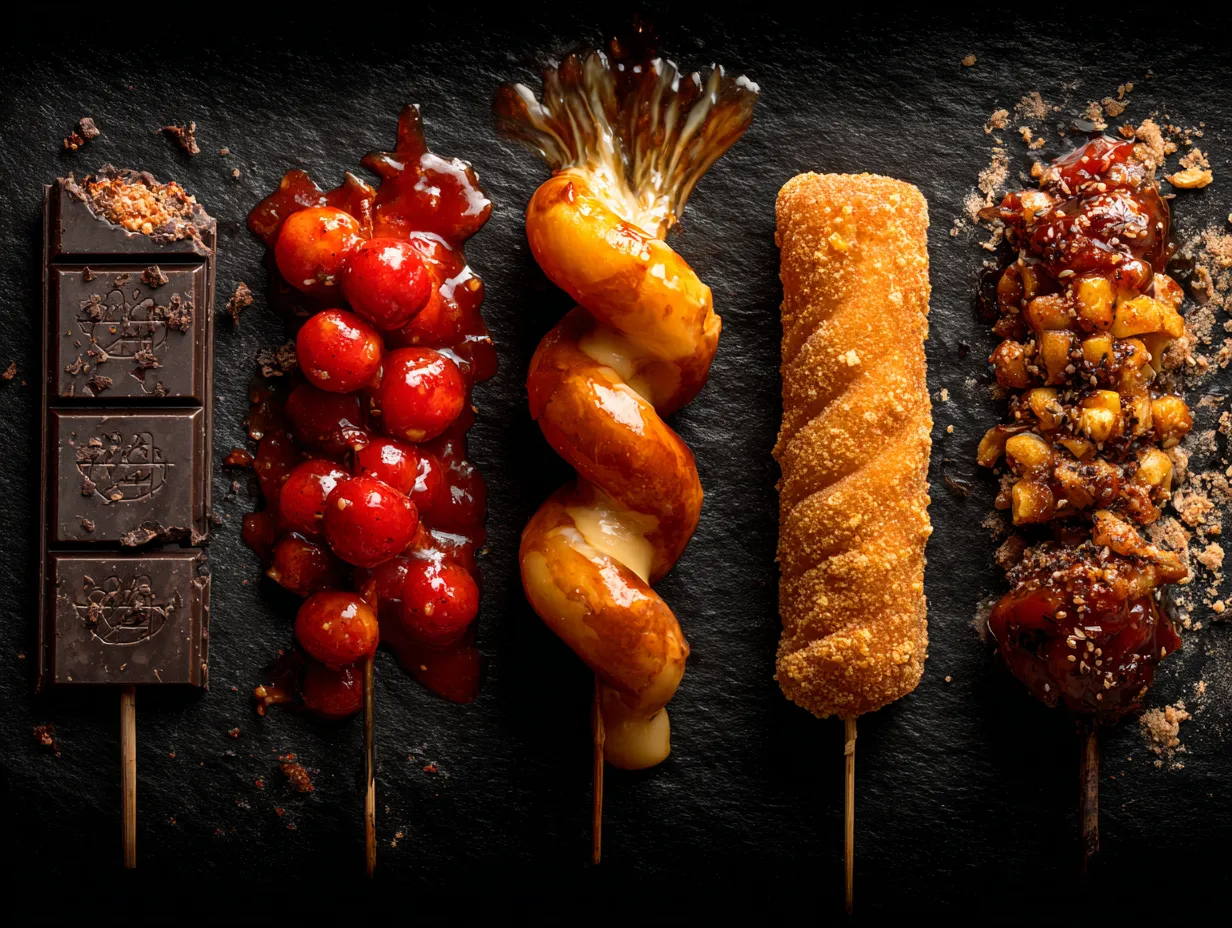
The American county fair corn dog uses a cornmeal batter, a hot dog, and a fryer. The Korean version replaces the cornmeal with a yeast-leavened batter or a rice flour batter, coats the exterior in panko breadcrumbs, uses mozzarella as the filling or combines mozzarella with hot dog, and often dusts the finished dog with sugar after frying. The result is a lighter, crispier exterior with a dramatically different cheese pull because mozzarella melts and stretches in a way that hot dog meat does not. The cheese pull is the content moment that built this trend, and it performs reliably in video form because the stretch ratio is extreme relative to the modest size of the snack.
Korean corn dog shops opened in dozens of US cities through 2024 and 2025. By 2026, the format had been adapted into home cooking content consistently enough that the genre of “Korean corn dog recipe” has its own stable search volume separate from trend-driven peaks. This is the marker of a trend that has moved into cultural vocabulary rather than simply trend territory.
Tteokbokki: Spicy Korean Rice Cakes Find a US Audience
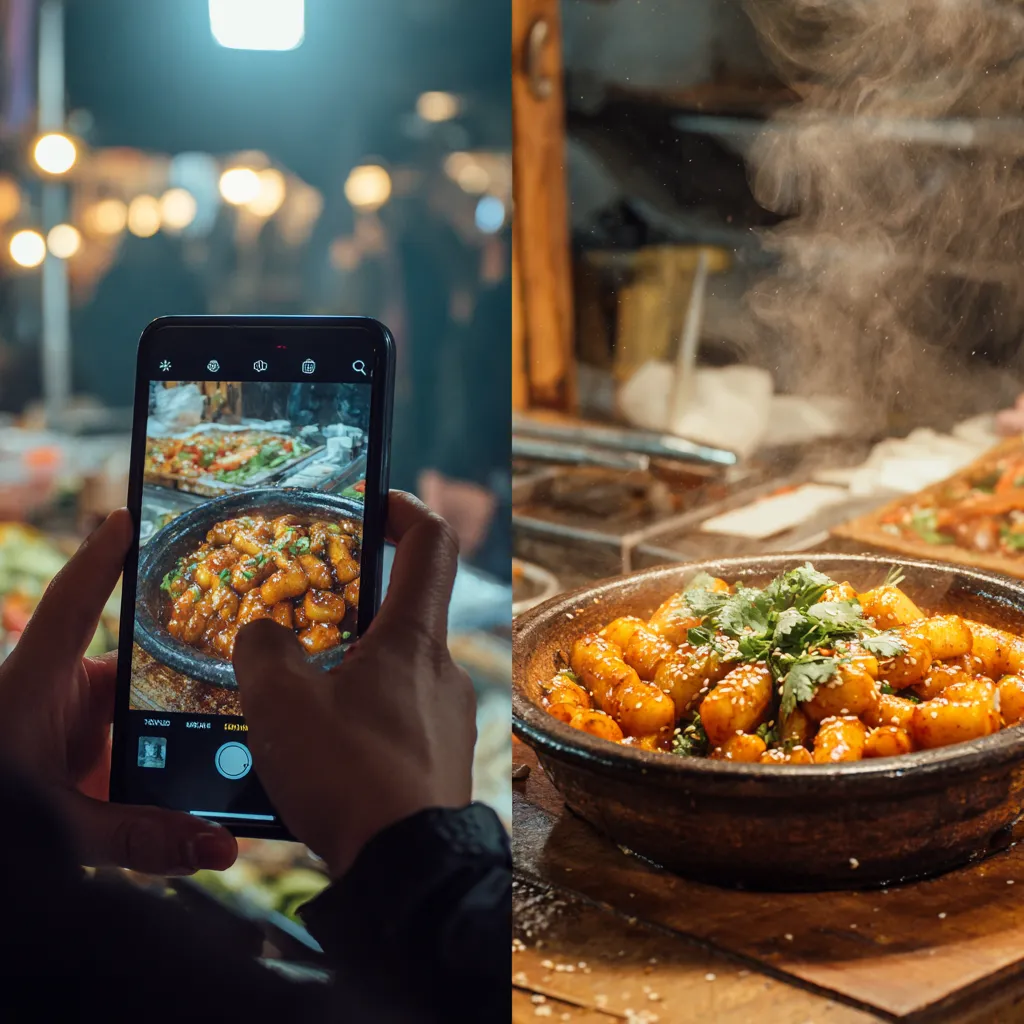
Tteokbokki, the Korean street food staple of thick cylindrical rice cakes cooked in a spicy gochujang and anchovy broth, reached American audiences through two simultaneous vectors in 2025. Korean celebrity endorsements, particularly from BTS’s Jimin who posted openly about his fondness for the dish, drove a surge of interest among K-pop fan communities. At the same time, food creators were making the dish at home and posting recipes that demonstrated its accessibility. The base ingredients, rice cakes, gochujang, soy sauce, and dashi or anchovy stock, are available at any Korean grocery store and increasingly at mainstream chains like H-Mart.
The dish is visually compelling because the sauce is a deep, glossy red-orange and clings to the rice cakes in a way that reads clearly at food photography scale. Several variations with different sauce profiles, including a creamy rose tteokbokki with cream added to the gochujang base, performed particularly well because the color contrast between the red sauce and the pale cream was visually distinctive.
Doner Kebab: The Vertical Rotisserie Finds Its TikTok Moment
The doner kebab has been a staple of European street food since Turkish migration established kebab culture in Germany in the 1970s. In the US, shawarma and gyros have long occupied the same flavor territory, but the specifically Turkish doner format, with its seasoned compressed meat stack slow-roasting on a vertical rotisserie and being shaved off in paper-thin slices to order, had a more limited presence until TikTok amplified it in 2025. The rotisserie itself is the visual hook: the slow rotation, the caramelization developing on the outer layers, and the shaving action that produces the characteristic texture are all compelling to watch. Several videos showing the process from rotation to finished wrap accumulated millions of views and drove searches for Turkish restaurants across US cities.
Tanghulu: Chinese Candied Fruit on a Stick
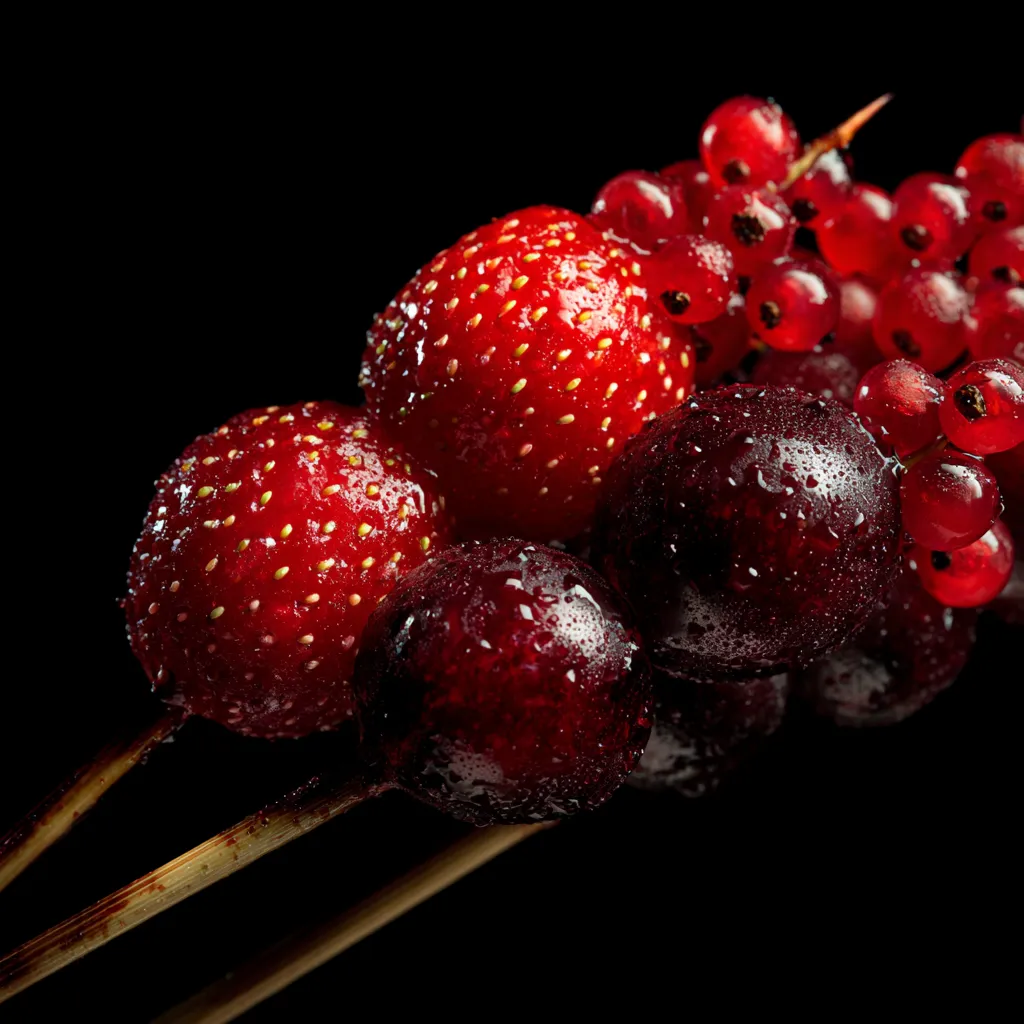
Tanghulu is a traditional Chinese street food made by skewering hawthorn berries or other fruit on bamboo sticks and dipping them in boiling sugar syrup that hardens on contact into a glass-clear shell. The result is a visual that reads like jewelry more than food. The glossy, transparent sugar coating over bright red hawthorn berries under strong photography lighting is one of the most arresting images in street food content, which is why tanghulu videos consistently accumulate millions of views without requiring any dramatic eating technique. The food is the visual event.
American creators adapted the format quickly, using strawberries, grapes, and other fruits with familiar appeal rather than hawthorn berries, which are difficult to source outside of specialty markets. The strawberry tanghulu version became particularly popular because the red color of the strawberry visible through the transparent sugar is even more striking than the hawthorn original. Home cooking attempts drove sustained search traffic through 2025 and into 2026, and the format appeared at Asian food festivals and pop-up markets across US cities as vendors recognized the visual-to-sales conversion efficiency of the format.
The Dubai Taco: A Hybrid That Demonstrates How Trends Evolve
The Dubai taco is not a traditional dish but a deliberate recombination of two viral trend elements: the spice profile and pistachio flavor associations of Dubai chocolate culture and the smash burger taco format that was already performing well on the platform. Ground beef seasoned with Middle Eastern aromatics including cardamom, cinnamon, and coffee, cooked smash-style on a corn tortilla, and topped with tahini-chili sauce, emerged in early 2025 and reached significant engagement because it allowed creators to participate in two ongoing trend conversations simultaneously. It is essentially evidence of how the TikTok food trend ecosystem operates as a recombination engine rather than a generator of entirely new concepts.
Cold Noodle Formats: Seasonal Spikes With Sustained Underlying Interest
Cold noodle content on TikTok spikes every summer as audiences seek recipes that work without heating the kitchen. The category encompasses multiple national traditions, Korean bibim guksu, Japanese hiyashi chuka, Taiwanese cold noodles with sesame paste, and Vietnamese bun with cold herbs and protein, all of which perform similarly in video format because the visual of cold noodles being tossed with colorful sauce and toppings generates appetite appeal even at ambient temperature. The seasonal pattern is reliable enough that brands began releasing cold noodle products timed to summer search peaks in 2025, which is a downstream market signal of a trend with genuine sustained interest.
Mango Pastries and Tropical Fruit Desserts
Mango pastry content grew at 7.21 percent year over year according to Tastewise’s 2026 trend tracking, driven by bright colors, the intersection of indulgent and health-adjacent positioning, and the visual versatility of mango as an ingredient in both Asian and Latin American pastry traditions. The format encompasses mango sticky rice Thai style, mango layer cakes, mango tarts with visible bright yellow curd, and mango-filled pastries in the Filipino tradition. The common thread is that mango’s color is one of the most visually striking in food photography, and its sweetness profile appeals across a very wide consumer base.
TikTok Food Trends That Peaked and Why They Didn’t Last
What Reactive Engagement Looks Like
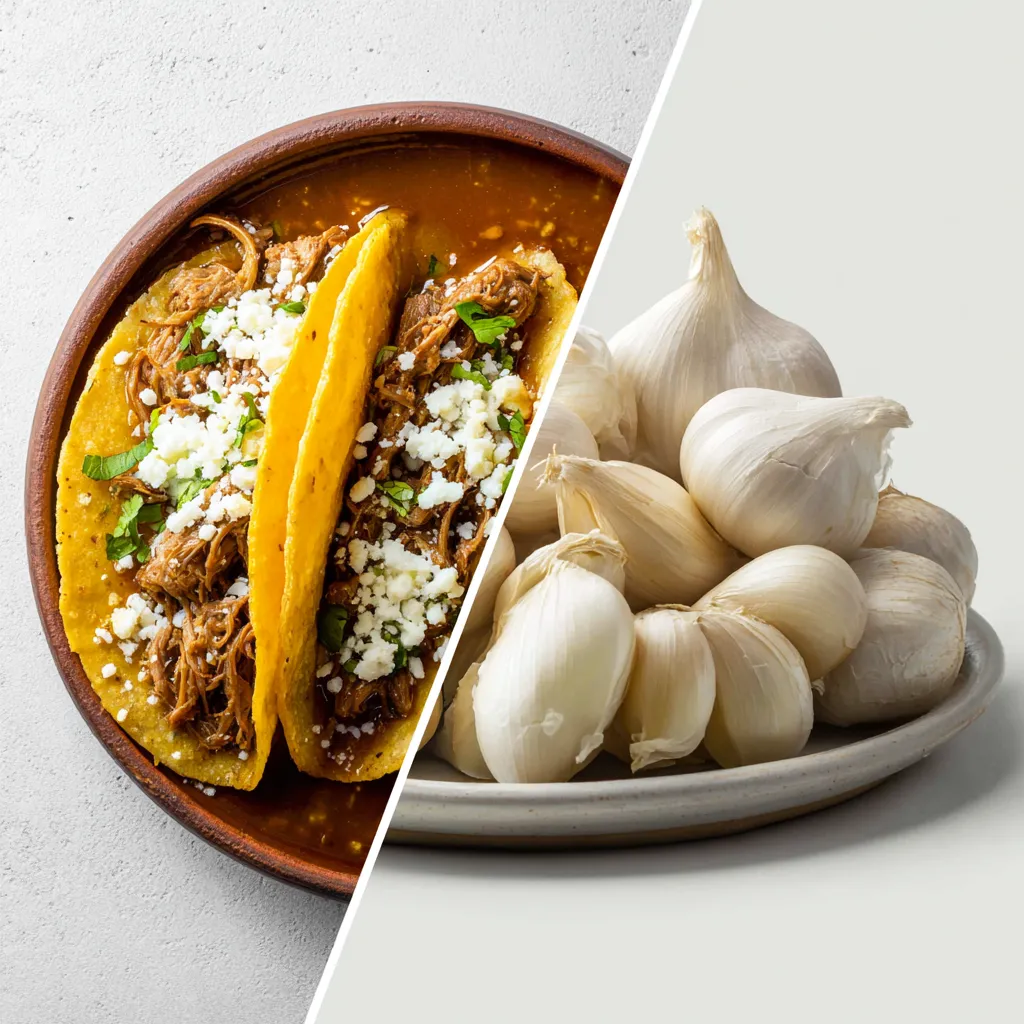
Understanding what makes a trend last requires examining what makes them fail. Several high-engagement TikTok food moments of 2025 and early 2026 generated millions of initial views but did not develop the sustained search interest and real-world adoption that marks a durable trend. The raw garlic trend, in which creators claimed that eating whole raw garlic cloves produced dramatic health benefits, generated significant engagement but also significant backlash from nutritionists and a very low rate of audience participation because the experience of eating raw garlic is simply unpleasant for most people. The engagement was reactive rather than participatory, which meant it did not create the sustained home cooking and product adoption cycle that durable trends require.
The Gap Between Visual Promise and Eating Experience
Freezing eggs in their shells, presented as a trick to multiply egg volume, was physiologically incorrect, flagged as unsafe by the USDA, and produced textural results that were objectively worse than standard egg preparation. The Japanese yogurt cheesecake trend of early 2026, combining Greek yogurt with pudding mix and cookie crumbles, generated significant initial engagement but faded quickly because the product did not deliver on the implicit promise of cheesecake in any meaningful way. Trends built on a deceptive gap between the marketing claim and the eating experience do not survive contact with a critical mass of first-time tryers.
The contrast with durable trends is clear. Dubai chocolate’s snap and crunch matched or exceeded the visual promise. Birria’s consomé dip and cheese pull produced exactly the eating experience the video suggested. Tteokbokki’s spice and chew surprised first-time eaters in a positive direction. When the product exceeds expectations, the participation cycle continues because each person who tries it becomes a new content creator validating the trend for their network.
How to Use TikTok to Stay Ahead of the Street Food Trend Cycle
Follow Creators Filming at Real Vendor Locations
For anyone who wants to track street food trends before they become mainstream, TikTok remains the fastest leading indicator available. The most useful practice is to follow creators who are physically located in cities with dense street food scenes and who film at actual vendor locations rather than in home kitchens. What a creator films at a market in Los Angeles or a food truck park in Houston represents actual vendor activity rather than algorithm chasing. When multiple creators in the same city start filming the same vendor or the same dish format, that is a reliable early signal that something is gaining real-world traction.
Read the Comments and Cross-Reference Google Trends
Monitor the comment sections of high-performing food videos, not the videos themselves. Comments reveal whether audience response is participatory, “I made this last night,” or reactive, “I can’t believe anyone would eat this.” Participatory comments predict durable trends. Cross-reference TikTok trends with Google Trends data weekly. A food item that appears consistently on TikTok but shows no corresponding Google search interest is not translating from social media into real-world consumer behavior. When TikTok content and Google search interest align and both are rising, the trend has crossed into mainstream awareness and commercial viability.
The Street Food Formats Most Likely to Break Through in Late 2026
Jianbing and Suya: The Next Wave of Authenticity
Based on early 2026 trend data and the structural patterns that predict which formats develop staying power, several street food formats are building the kind of engagement that suggests they will be mainstream by year’s end. Jianbing, the Chinese savory breakfast crepe made on a large griddle, filled with a crispy cracker, egg, hoisin, chili sauce, and scallions, and folded to order, has been building steadily in major US cities with significant Chinese-American populations and has now appeared at food festival booths in cities without that baseline presence. The assembly process is ideal for short-form video and the result is visually distinctive.
Furikake and Haitian Food: Slower-Building Momentum
Suya, the West African spiced grilled meat on skewers, is appearing at food festival circuits and in creator content that highlights its complex spice profile of ground peanuts, ginger, and paprika. The format is familiar enough (grilled meat on a stick) to be accessible while offering genuine flavor novelty. Haitian food, following its appearance in Datassential’s 2026 trend report and a wave of new restaurants in US cities, is generating the kind of editorial and social media coverage that precedes mainstream adoption. Furikake, the Japanese seasoning blend traditionally used on rice, is appearing in street food applications as a topping for corn, popcorn, and loaded fries at festival and food truck contexts, driven by creator content and growing mainstream availability at US grocery chains.
Frequently Asked Questions
What TikTok street food trends are most popular right now?
In terms of sustained engagement and real-world adoption through 2025 and 2026, the most significant TikTok street food trends are Korean corn dogs, tteokbokki, tanghulu, doner kebabs, and the Dubai chocolate format and its spin-offs. Smash burger tacos and birria have maintained strong performance across multiple years. Among emerging formats, jianbing and suya show strong early indicators.
Why do some TikTok food trends last and others disappear?
Durable trends share three traits: the eating experience matches or exceeds what the video promises, the dish is accessible enough for home cooks to attempt, and the base flavors are genuinely delicious rather than purely novel. Trends built on a gap between visual promise and eating experience, or on novelty without underlying flavor quality, generate reactive engagement rather than participatory engagement and fade quickly once people have tried and been disappointed.
How does TikTok decide which food trends to amplify?
TikTok’s algorithm prioritizes video completion rate above follower count. Food videos that hold attention to the end, typically because of a visual reveal, a dramatic texture contrast, or a strong first-bite reaction, get distributed to progressively wider audiences regardless of the creator’s existing following. This is why completely unknown creators can drive national food trends with a single video. The follower count threshold that traditional media platforms require for broad reach does not apply to TikTok’s For You Page distribution.
Can I find TikTok street food trends at restaurants near me?
The time between a trend peaking on TikTok and appearing at brick-and-mortar restaurants in major US cities is typically three to nine months. In cities with dense, independent food scenes like New York, Los Angeles, and Chicago, the lag is shorter. In smaller markets, expect six to eighteen months before a trending format has physical vendor representation. Food festivals and pop-up markets are typically faster to adopt new formats than fixed-location restaurants because they have lower overhead and shorter menu development cycles.
More from the Viral Street Food Trends Series
- The Biggest Viral Street Food Trends Right Now (Pillar)
- Dubai Chocolate Bar: What It Is and How to Make It
- Smash Burger Tacos: The Viral Mashup Everyone’s Making
- Birria Tacos: How the Trend Took Over the US
- Tornado Potato: The Fair Food TikTok Cannot Stop Watching
- Pickle Pizza and Other Wild Street Food Combos Worth Trying
- Viral Asian Street Foods Americans Are Obsessed With
- We Tried 10 Trending Fair Foods: Here’s the Honest Verdict
- Street Food Challenges: The Most Outrageous Food Dares by City
- What’s Trending at US Food Festivals This Season
For hands-on recipes from the trends covered here, see our Ultimate Guide to Making Street Food at Home.
© 2026 SnackyStreet.com. All rights reserved.