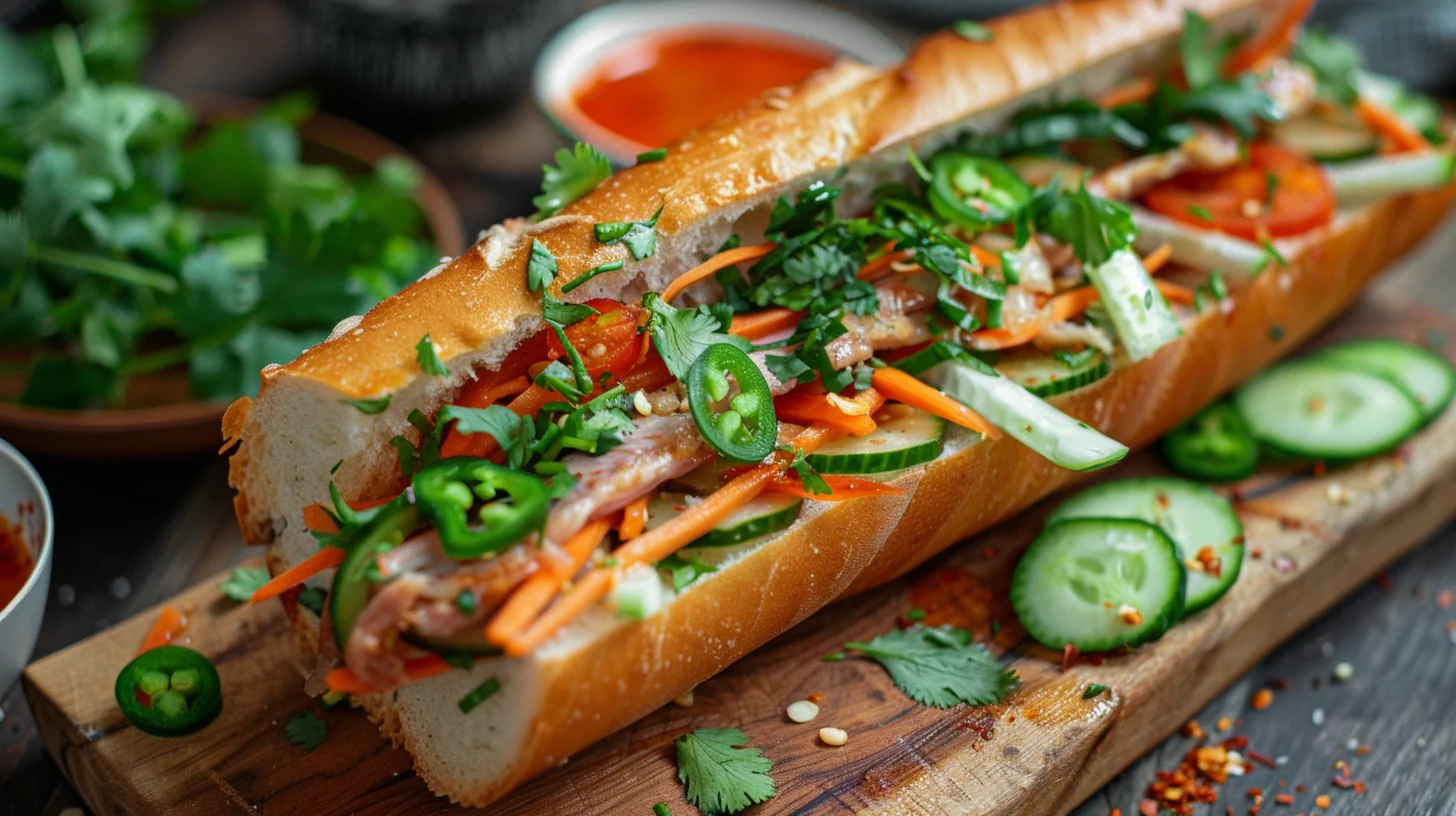
Vietnam gave the world one of its great sandwiches without intending to. When French colonizers arrived in the 19th century, they brought baguettes, pate, and Maggi seasoning. Vietnamese street vendors took these impositions of empire and transformed them with local proteins, pickled vegetables, and herbs so fresh they tasted like the garden itself. The result was the banh mi, a sandwich that exists nowhere else on earth, a collision of cultures that produced something neither culture could have imagined on its own.
Today, banh mi is Vietnam’s most globally recognized street food. This guide, part of our Ultimate Guide to Making Street Food at Home, teaches you to make a fully authentic banh mi in 30 minutes using mostly pantry ingredients and three protein options that fit different skill levels and schedules.
Keywords covered: banh mi recipe at home, Vietnamese sandwich recipe, pickled daikon and carrot recipe, do chua quick pickle, lemongrass pork banh mi, sriracha mayo banh mi sauce, banh mi bread substitute, how to make banh mi 30 minutes, Maggi seasoning banh mi, banh mi protein options.
Understanding the Six-Element Structure of Banh Mi
The Bread: Why Density Is the Enemy
Vietnamese banh mi baguettes are lighter and airier than French baguettes because Vietnamese bakers historically incorporated rice flour or cassava starch, producing a crust that shatters like glass when bitten while the interior stays cotton-soft. French baguettes are the best substitute. Sourdough, ciabatta, or any dense bread will overwhelm the fillings and destroy the balance.
The Fat Layer: Pate, Mayo, and What They Actually Do
Both cut sides of the baguette receive fat. One side gets sriracha mayo. The other traditionally gets a thin layer of chicken liver pate, which adds umami richness that reads as savory depth rather than organ meat. If pate is unavailable, cream cheese or a smear of quality butter provides the necessary fat layer that prevents the bread from going soggy from the protein.
The Other Four Elements: Pickles, Protein, Herbs, and the Final Drizzle
The pickled vegetables (do chua) are non-negotiable. Cilantro, cucumber, and fresh chiles provide brightness and crunch. Maggi seasoning or soy sauce gives the final drizzle of umami that ties everything together. Remove any of these and the sandwich becomes merely good instead of great.
The 30-Minute Do Chua: Quick Pickled Daikon and Carrot
Julienne Size: Why 2mm to 3mm Is the Sweet Spot
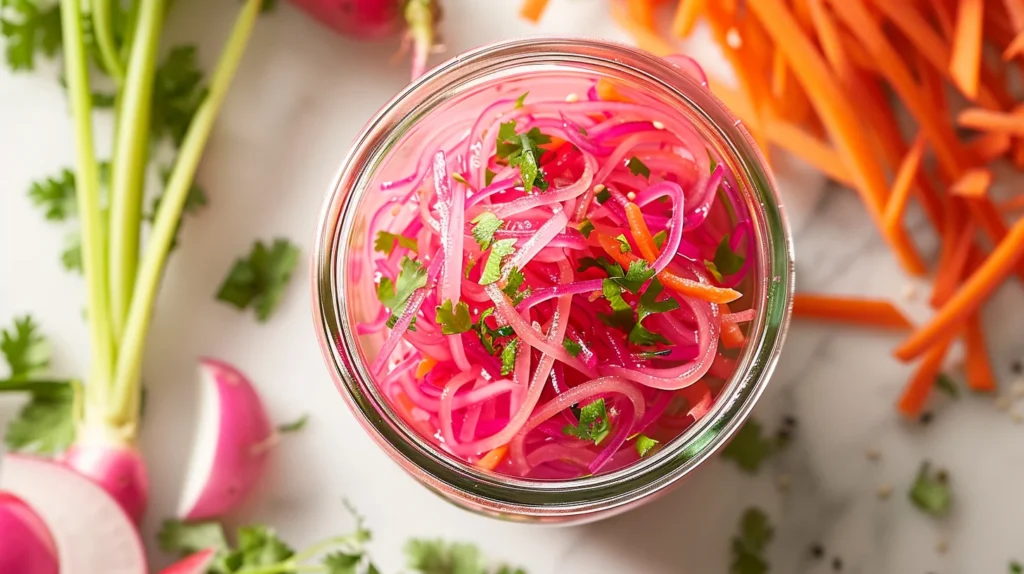
Peel and julienne 1 medium daikon radish and 2 medium carrots into thin matchsticks, approximately 2 to 3mm wide and 6 cm long. Thicker cuts do not absorb the brine quickly enough. Thinner cuts go limp and lose their crunch. In a jar, combine 1/2 cup unseasoned rice vinegar, 1/2 cup warm water, 2 tablespoons sugar, and 1 teaspoon salt. Pour over the vegetables and press down until submerged. Leave at room temperature for 30 minutes. The brine will turn pink from the carrot. These keep refrigerated for two weeks and improve every day.
Why Pickles Are the Most Important Element in the Sandwich
The acidity from the pickles cuts through fat, resets the palate between bites, and adds textural crunch that no other element can replicate. They do in a banh mi what lime-pickled onions do in a taco or quick daikon pickles do in our Mexican Street Corn guide: they are the counterweight that makes richness feel light.
The Three Protein Options: From Classic to Quick
Option 1: Lemongrass Pork, the Traditional Choice
Slice 400g pork tenderloin into thin medallions. Marinate 20 minutes minimum in 2 minced lemongrass stalks, 3 minced garlic cloves, 1 tablespoon fish sauce, 1 tablespoon soy sauce, 1 teaspoon sugar, 1 tablespoon oil, black pepper. Cook in a very hot pan in a single layer, 90 seconds per side, without moving, until caramelized at the edges. Crowding the pan creates steam and braised rather than seared pork.
Option 2: Five-Spice Chicken Thigh, the 15-Minute Version
Season 400g boneless chicken thighs with 1/2 teaspoon five-spice powder, 1/2 teaspoon garlic powder, 1/2 teaspoon smoked paprika, 1 teaspoon fish sauce, salt, and oil. Sear 4 to 5 minutes per side until deeply golden and cooked to 165F. Rest 3 minutes and slice thin against the grain. This shares the same high-heat principle as the protein approach in our Late-Night Street Food guide: maximum char, maximum flavor, minimum fuss.
Option 3: Ginger-Sesame Tofu, the Plant-Based Version
Press firm tofu 20 minutes, slice into 1/2-inch planks. Marinate in 2 tablespoons soy sauce, 1 tablespoon sesame oil, 1 teaspoon grated ginger, 1 teaspoon rice vinegar, 1 minced garlic clove for 15 minutes. Sear in a very hot non-stick pan until deeply golden on both sides, about 3 minutes per side. The sesame oil creates a nutty, aromatic crust that anchors all the other banh mi flavors beautifully.
The Sriracha-Hoisin Mayo
The Ratio That Makes It Work
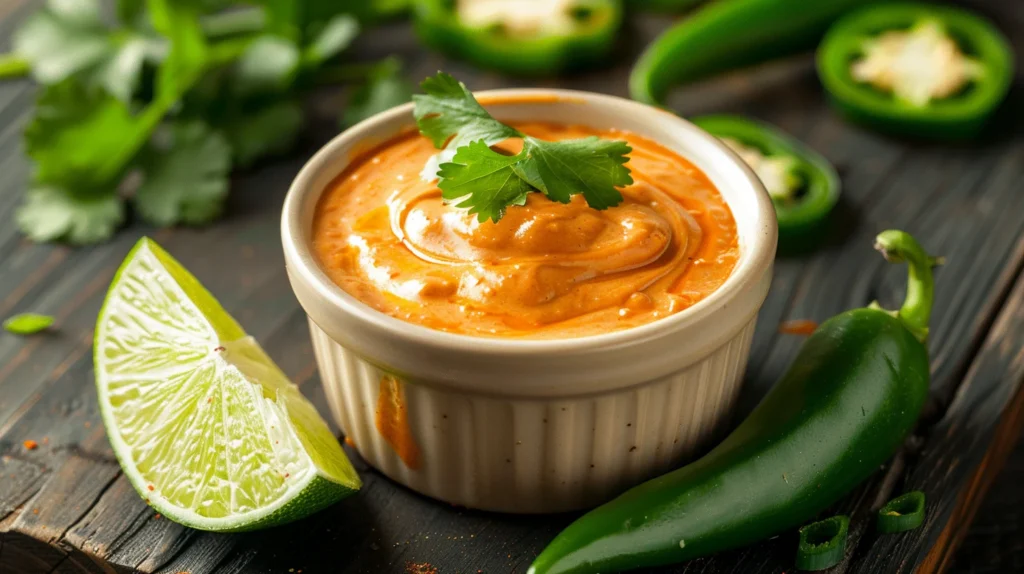
Mix 1/2 cup Kewpie or regular mayonnaise with 1 tablespoon hoisin sauce, 1 to 2 teaspoons sriracha, 1/2 teaspoon sesame oil, and a few drops of lime juice. The sauce should be creamy, slightly sweet, slightly spicy, with a sesame background that bridges the Vietnamese and Chinese influences in this dish. Make 3 days ahead and refrigerate. The layered sauce logic here mirrors what we build in our Copycat Street Sauces guide: fat base, acid, sweet note, heat element, all balanced so no single flavor dominates.
Kewpie vs Regular Mayo: Does It Matter?
Yes. Kewpie (Japanese-style mayo) uses only egg yolks, no whole eggs, and rice vinegar instead of distilled vinegar. The result is richer, creamier, and less acidic than American mayo. If Kewpie is unavailable, add a tiny amount of extra egg yolk to regular mayo to approximate the richness, or simply use regular mayo with the sauce as written. The hoisin and sriracha compensate well.
Assembly: The Order, the Physics, and the Press
Why Bread Temperature at Assembly Matters
Toast the baguette in a 325F oven for 5 minutes to re-crisp the crust, then let it cool 1 minute before spreading mayo. A too-hot baguette melts the mayo into a puddle that soaks into the bread and destroys the structure. The slightly cooled crust creates a barrier.
The Pressing Step That Street Vendors Never Skip
Spread sriracha mayo on both cut sides. Pate on one side. Lay protein flat across the length. Distribute do chua, cucumber slices, cilantro sprigs, and jalapeno slices in that order. Drizzle 1/2 teaspoon Maggi or soy sauce across the filling. Close the sandwich and press firmly for 3 seconds. Vietnamese vendors press their banh mi under their palms before wrapping in paper. This compression forces the bread to absorb the flavors from the fillings, transforming it from a dry exterior into a slightly flavored bread that carries the whole sandwich. Without this step you have a good sandwich. With it, you have a banh mi.
Related Articles in This Series
- The Ultimate Guide to Making Street Food at Home
- Easy Elotes (Mexican Street Corn) 4 Ways
- Korean Corn Dogs at Home: Crispy Cheesy Guide
- Street-Style Loaded Fries: Regional American Guide
- Homemade Soft Pretzels with Beer Cheese Sauce
- Authentic Jamaican Beef Patties from Scratch
- Late-Night Street Food Snacks Under 20 Minutes
- Copycat Raising Cane’s and Chick-fil-A Street Sauces