By Maya Rodriguez | Updated April 2026
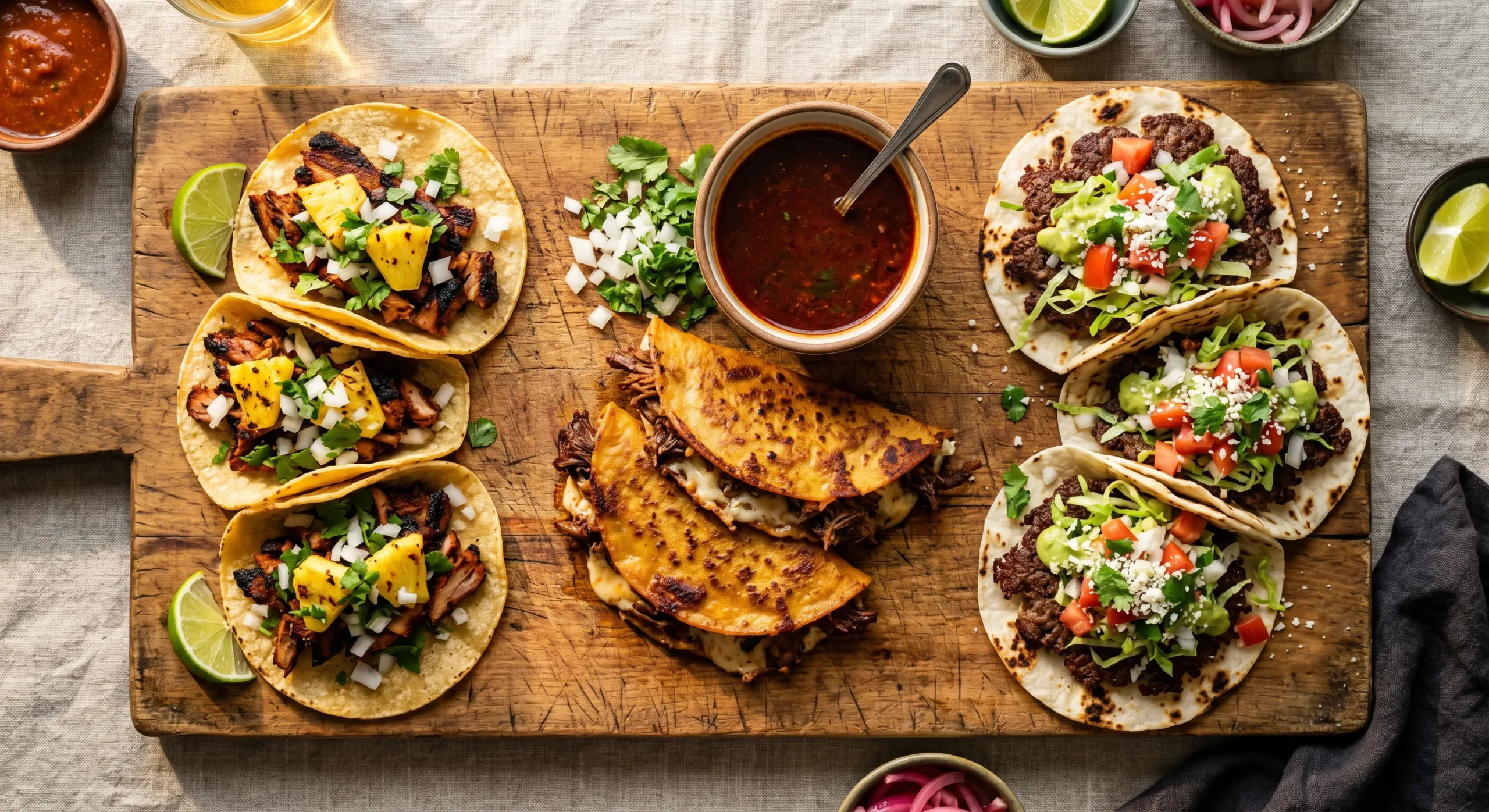
IMAGE PLACEHOLDER | Midjourney Prompt: Overhead flat lay of three types of homemade tacos side by side on a rustic wooden board: al pastor tacos with grilled pineapple and cilantro, crispy birria quesatacos dipped in red consomé, and smash tacos with lacy caramelized beef edges and bright toppings. Warm golden lighting, food magazine editorial style, vibrant colors, 4K detail.
There is a reason tacos are the most consumed street food in the United States. They are fast, affordable, endlessly variable, and somehow manage to be both a weeknight dinner and a weekend obsession at the same time. The taco truck across the street will always have the advantage of a seasoned flat-top and gallons of consomé simmering since dawn, but the difference between a great taco truck and a great homemade taco night is much smaller than most people think. This guide covers the three styles that Americans are most obsessed with right now: al pastor, birria quesatacos, and smash tacos. We break down each one from first principles, including what makes it unique, where things go wrong at home, and exactly how to nail it on your own stove or griddle.
This article is part of the Ultimate Guide to Making Street Food at Home, our complete playbook for recreating world-class street food in your kitchen. If you are building out a full taco night spread, you will also want to check out our recipes for Easy Elotes (Mexican Street Corn) 4 Ways and Copycat Street Sauces that pair perfectly with any of the three styles below.
Why These Three Tacos? A Quick Breakdown
Al pastor has been a Mexican street food staple for nearly a century, rooted in Lebanese shawarma techniques brought to Mexico in the early 20th century. Birria quesatacos went viral in the United States around 2020 and have since become one of the most searched recipes online, with food trucks from Los Angeles to New York building their entire reputation around them. Smash tacos arrived on TikTok and have stayed because the technique is genius: maximum surface area against maximum heat, producing lacy, caramelized beef edges in under three minutes.
Each of these three recipes uses a distinct cooking method. Understanding each one is the key to pulling them off consistently at home. We cover the full technique library in our street food at home guide, including the hard sear, the braise-then-crisp, and the smash method. Here is how each one applies to tacos.
Part 1: Al Pastor Tacos
IMAGE PLACEHOLDER | Midjourney Prompt: Close-up of homemade al pastor tacos on a small corn tortilla, thin slices of caramelized achiote-stained pork with charred edges, grilled pineapple chunks, diced white onion, fresh cilantro, and a squeeze of lime, served on a dark slate surface with a small bowl of salsa verde. Warm amber lighting, photorealistic food photography, shallow depth of field.
What Al Pastor Actually Is
Al pastor translates to “shepherd style,” a nod to the Lebanese immigrants who arrived in central Mexico in the 1920s and brought with them the vertical spit techniques used for shawarma and doner kebab. Over time, that preparation merged with Mexican adobo traditions, replacing lamb with pork and the Middle Eastern spice blend with guajillo chiles, achiote, and pineapple. The result is a distinctly Mexican invention that does not belong cleanly to any single culinary tradition, which is part of what makes it so interesting.
The defining characteristics are a chile-pineapple marinade that is slightly sweet, smoky, and tangy all at once, and a cooking method that chars the outside of the meat while keeping the inside juicy. The pineapple serves two purposes: it tenderizes the pork through enzymatic action and provides a caramelized sweetness that balances the heat of the chiles.
The Al Pastor Marinade: What You Need
The marinade is where everything starts. A good al pastor adobo uses dried guajillo chiles as its base. These are not optional. Guajillos provide the brick-red color, the mild fruity heat, and the smoky undertone that defines al pastor. Chipotle in adobo adds a deeper smokiness. Achiote paste gives color and a subtle earthy bitterness. Pineapple juice, white vinegar, garlic, Mexican oregano, cumin, and a small amount of sugar round it out.
Rehydrate the guajillos by removing their stems and seeds, then soaking them in hot water for 15 minutes until pliable. Blend everything together until completely smooth. The marinade should coat the back of a spoon. If it is too thick, thin it with a small amount of the chile soaking water.
The Pork: How to Slice and Marinate
Use boneless pork shoulder, also sold as pork butt. It has the right fat-to-meat ratio for this preparation. Slice it thin, ideally at a quarter inch or less. Thinner slices absorb the marinade faster and char better. If slicing by hand is difficult, partially freeze the shoulder for 45 minutes to firm it up before cutting.
Marinate for at least one hour. Overnight is better. The flavor difference between a one-hour and a 12-hour marinate is significant enough that if you are planning a taco night, you should start the marinade the morning before or even two days ahead.
How to Cook Al Pastor Without a Trompo
The trompo, that tall spinning vertical spit you see at taco stands, is what creates the one-sided char that makes authentic al pastor so distinctive. You do not have one. That is fine. Here are your three best home options.
Cast iron skillet method: Preheat your skillet over high heat for at least four minutes. Add the pork slices in a single layer and do not touch them for two full minutes. You want a hard sear on one side. Flip, cook for another 60 to 90 seconds, then remove. Cook in batches. This is the method that most closely replicates the one-sided char of a trompo.
Broiler method: Lay the marinated pork in a single layer on a sheet pan and broil on high, six inches from the element, for 15 to 20 minutes until the edges begin to char. This hands-off method is great for feeding a crowd.
Outdoor grill method: Cook over direct high heat, pressing the pork flat against the grate with a spatula. Grill marks plus the char from the chile adobo create something very close to the authentic flavor profile.
Once cooked, chop the pork into small pieces rather than serving it in whole slices. This is how it is done at taco stands and it matters. The smaller pieces give you more surface area, more caramelized bits, and better distribution across the tortilla.
Assembly and Toppings
Use small corn tortillas, warmed in a dry skillet or directly over a gas flame. Do not use flour tortillas for al pastor. The corn flavor is part of the balance. Top with the chopped pork, a few pieces of grilled or broiled pineapple, finely diced white onion, fresh cilantro, and a squeeze of lime. Salsa verde is traditional and ideal. Keep the toppings minimal. Al pastor is not a loaded taco, it is a precise one.
Part 2: Birria Quesatacos
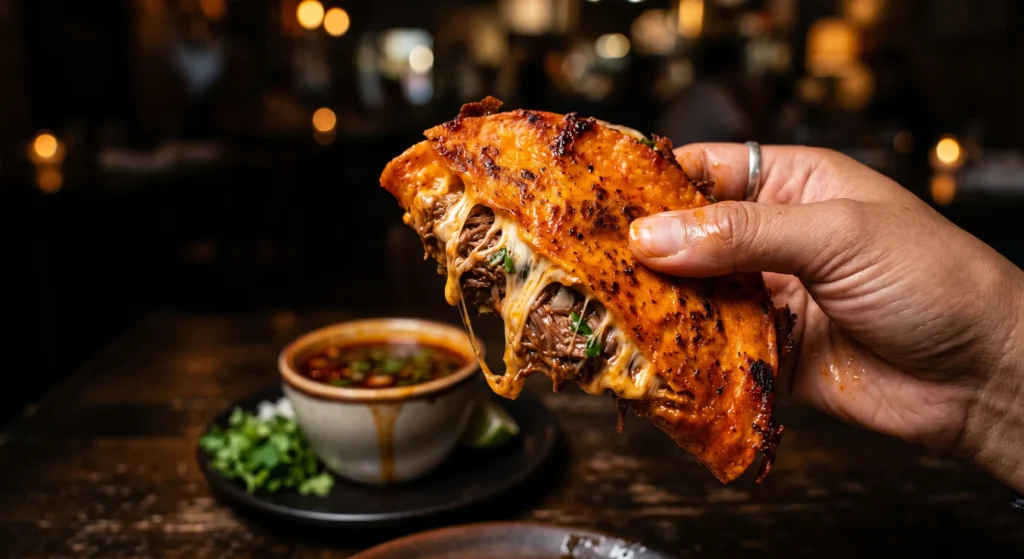
IMAGE PLACEHOLDER | Midjourney Prompt: A hand holding a crispy birria quesataco, the orange-red tortilla glistening from the consomé dip, strings of melted Oaxacan cheese visible at the fold, shredded beef filling visible inside, with a small cup of deep red consomé in the background for dipping. Dramatic dark moody background, bokeh effect, food photography close-up, hyperrealistic.
Where Birria Comes From and Why Quesatacos Are Different
Birria is a slow-cooked stew from the state of Jalisco, Mexico. Traditionally made with goat, it became most commonly prepared with beef as Mexican immigrants moved north into the United States. For most of its history, birria was served as a bowl of stew, usually for special occasions like weddings and quinceaneras. The transformation into a taco format happened in Tijuana, and the innovation that made it a phenomenon was dipping the tortilla in the red fat layer on top of the consomé before frying it.
Quesabirria, the cheese-stuffed version, became a social media sensation around 2020. Food trucks like Teddy’s Red Tacos in Los Angeles and Birria-Landia in New York built followings of thousands of customers willing to wait in line for an hour. The visual of the dripping, cheese-pulled, consomé-drenched taco was made for Instagram and TikTok, and the rest is history.
The Birria: Building the Braise
The key to great birria is layered flavor built from dried chiles, aromatics, and long slow cooking. Use a combination of beef chuck roast and short ribs if possible. The chuck provides lean shredded meat. The short ribs add richness and gelatin that gives the consomé its body. If you can only find one, use chuck.
Your chile base should include guajillo for color and mild heat, ancho for depth and earthiness, and a small amount of chipotle in adobo for smoke. Toast the dried chiles briefly in a dry pan before soaking them. Toasting wakes up the oils and compounds that have been dormant since drying, and it makes a noticeable difference in the finished consomé. Soak in hot water for 15 minutes, then blend with tomatoes, onion, garlic, Mexican cinnamon, cumin, cloves, and black pepper until smooth. Strain the sauce back into your pot.
Sear the beef in batches over high heat until deeply browned on all sides before adding the sauce. This step is not optional. The Maillard reaction on the surface of the meat creates compounds that simply cannot be achieved any other way, and they become part of the broth as the meat braises.
Cook covered at a low simmer for two and a half to three hours on the stovetop, six to eight hours on low in a slow cooker, or 45 minutes in a pressure cooker. The meat is ready when it shreds easily with two forks and offers no resistance.
The Consomé: The Part Everyone Gets Wrong
After braising, let the consomé rest for 10 minutes. You will see a layer of deep red fat rise to the surface. Skim this carefully into a separate bowl or small pan. This fat is not waste. It is the most important component in the taco assembly process. It is what you dip the tortilla in before frying. It is what gives the taco its signature red color and crispy exterior. Do not confuse it with the water-based broth below it. The broth goes into small cups for dipping. The fat is for cooking the tortillas.
Assembling and Frying the Quesatacos
Heat a non-stick or cast iron skillet over medium-high heat. Dip a corn tortilla briefly on both sides in the red fat, just enough to coat it. Do not soak it. Lay it flat in the hot pan. Immediately add a layer of shredded Oaxacan cheese on one half and a generous scoop of shredded birria on top of the cheese. Fold the tortilla in half and press gently with a spatula.
Cook for 60 to 90 seconds per side until the outside is deeply golden and crispy and the cheese has fully melted. The inside should be molten and the outside should have a lacquer-like finish. Serve immediately with a small cup of hot consomé on the side, diced white onion, fresh cilantro, and lime.
If you cannot find Oaxacan cheese, low-moisture mozzarella is the best substitute. Monterey Jack also works. Avoid pre-shredded cheese, which is coated in anti-caking agents that prevent proper melting.
Part 3: Smash Tacos
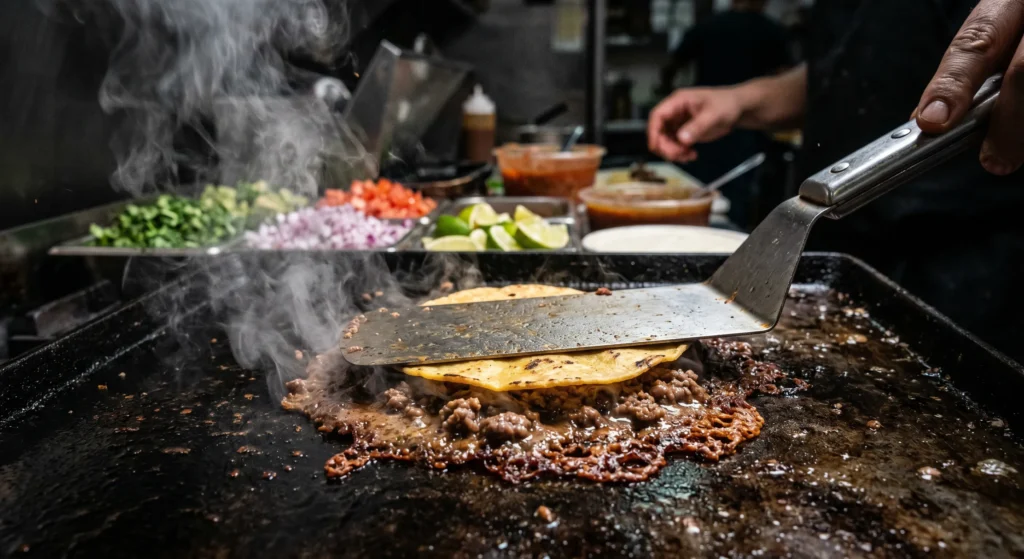
IMAGE PLACEHOLDER | Midjourney Prompt: Action shot of a smash taco being pressed onto a blazing hot cast iron griddle with a heavy spatula, the ground beef sizzling and spreading with lacy caramelized edges forming, a corn tortilla fused to the top, dramatic steam rising, vibrant taco toppings blurred in the background. Dark dramatic kitchen lighting, high contrast photorealistic style.
The Smash Taco Explained
The smash taco is a hybrid invention that takes the core technique of the smash burger and applies it to taco format. A ball of seasoned ground beef is pressed flat directly onto a small corn or flour tortilla, then placed meat-side-down on an extremely hot cooking surface and smashed hard with a rigid spatula. The meat spreads thin, makes full contact with the hot surface, and develops a crust of caramelized protein and fat around its entire perimeter in under three minutes.
The result is a taco with lacy, crispy, almost chip-like edges of browned beef fused directly into the tortilla. There is no separate patty. The meat becomes part of the tortilla structure. Add cheese while the tortilla side cooks, fold, and serve immediately.
The Meat: What to Use
Use 80/20 ground beef. The fat content is essential for the lacy edges. Leaner beef produces a dry, pale result. Portion the beef into loosely packed balls of about two to two and a half ounces each, roughly the size of a golf ball. Do not compact them. Season with salt, pepper, garlic powder, and optionally a small amount of cumin or taco seasoning. Season immediately before cooking, not ahead of time, which can draw out moisture.
The Technique: Heat Is Everything
Preheat your cast iron skillet or flat-top griddle over high heat for a minimum of five minutes. The surface temperature should be between 400 and 450 degrees Fahrenheit. Test it with a drop of water: it should evaporate instantly on contact. If it pools and sits, the surface is not ready.
Place a beef ball directly onto the hot surface and immediately lay a tortilla on top of it. Press down firmly with the widest spatula you have, using a second spatula or your fist for additional pressure. The goal is maximum contact between meat and surface. Hold for 10 to 15 seconds, then maintain pressure for another 30 seconds. Cook for two to three minutes total without moving until the edges are deeply browned and lacy.
Flip the taco so the tortilla side is now on the hot surface. Add a slice or small handful of cheese to the beef side. Cover with a dome lid or a small bowl for 30 seconds to trap steam and melt the cheese. Remove, add toppings, fold, and eat immediately. These do not keep well. Make them in batches and serve each one as it comes off the pan.
Toppings That Work Best for Smash Tacos
The smash taco is bold and rich. It needs acid and freshness to balance it. Shredded iceberg lettuce, sliced pickles, diced white onion, and a tangy sauce (burger sauce, chipotle mayo, or a simple mix of mayo, lime juice, and hot sauce) are the classic approach. Sliced jalapenos add heat. Cotija crumbled on top bridges the gap between burger and taco. Keep it tight. This is not a loaded taco, it is a precise combination of rich, salty beef and sharp, bright toppings.
If you want a sauce to take it further, our copycat street sauces guide has a Cane’s-style dipping sauce that works perfectly with smash tacos and loaded fries alike.
Building the Ultimate Taco Night at Home
IMAGE PLACEHOLDER | Midjourney Prompt: A festive overhead shot of a full taco night spread on a large wooden dining table: a platter of al pastor tacos, a skillet of crispy birria quesatacos next to a cup of red consomé, a stack of smash tacos, small bowls of salsa verde, diced onion, cotija, limes, and pickled jalapenos. Warm ambient dinner lighting, abundant and inviting, editorial food styling.
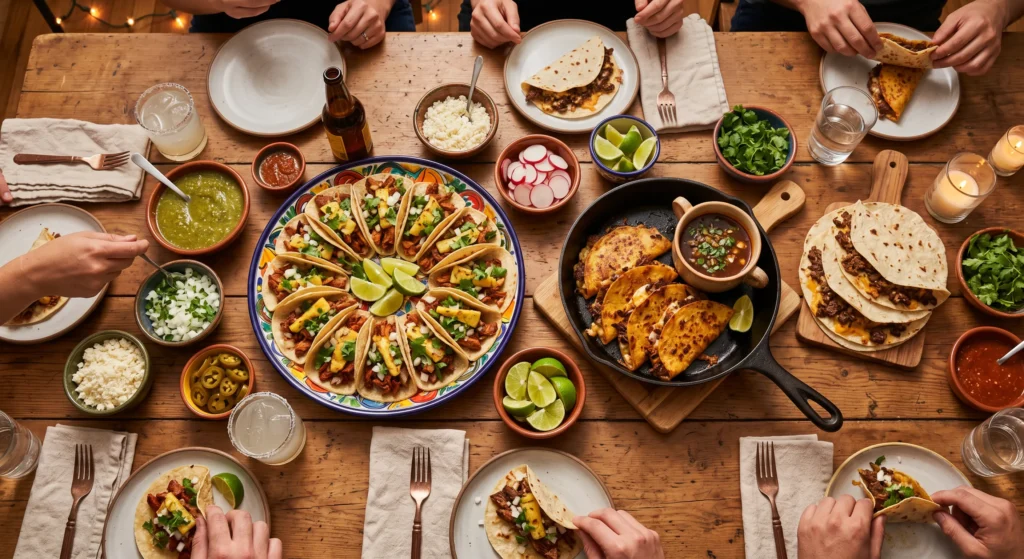
Running all three styles at once is easier than it sounds if you organize your prep correctly. Make the birria braise one to three days ahead and refrigerate it. The flavor actually improves as it sits. Prepare the al pastor marinade the night before. On the day of your taco night, cook the birria meat fresh in the skillet while the al pastor cooks in the oven under the broiler. Smash tacos are made last and served immediately, so save them for the finale.
Set up a toppings bar with separate bowls for diced white onion, chopped cilantro, sliced radishes, lime wedges, cotija, and at least two salsas. A good salsa verde and a chipotle-based salsa roja cover all three taco styles. Warm a stack of corn tortillas in a dry skillet and keep them wrapped in a clean kitchen towel until ready to serve.
For sides, our Easy Elotes guide has four versions of Mexican street corn that pair naturally with any of these tacos. If you are feeding a crowd and want to add something quick to the spread, our Street-Style Loaded Fries guide gives you a regional American fry format that turns any taco night into a full street food feast.
Common Taco Mistakes and How to Fix Them
Tortillas tearing during the birria dip: Warm your tortillas in a dry skillet for 30 seconds per side before dipping them in the consomé fat. A cold, stiff tortilla will crack under the weight of the liquid.
Al pastor that tastes flat: Two likely causes. First, the chiles were old or not properly rehydrated. Dried chiles should be pliable and slightly glossy, not brittle and powdery. Second, there was not enough acid in the marinade. Add more pineapple juice or a splash of white vinegar and taste again before marinating.
Smash tacos that are pale and rubbery: The pan was not hot enough. There is no workaround. If your surface is not screaming hot before the beef hits it, you will get steamed meat instead of seared meat. Five full minutes of preheating is the minimum for cast iron.
Birria consomé that is thin and watery: You used the water-based broth instead of the fat layer for dipping the tortillas. They are two different components. The fat floats on top and is skimmed off separately. The broth goes in the dipping cup.
Frequently Asked Questions
What is the best cut of beef for birria tacos?
Bone-in short ribs combined with boneless chuck roast gives you the best result. The short ribs add richness and gelatin to the broth. Chuck provides lean, shreddable meat. If you can only find one, use chuck. It is affordable, widely available, and produces excellent birria on its own.
Can I make birria tacos without dried chiles?
You can get close using chipotle in adobo combined with good quality chili powder and smoked paprika, but the depth and complexity of dried guajillo and ancho chiles is difficult to replicate. Dried guajillos are available at most grocery stores with a Latin food aisle and are worth sourcing. They keep for months in a sealed bag.
What tortilla size is best for smash tacos?
Street taco sized corn tortillas, about five to six inches in diameter, are ideal. The beef ball should be sized to just barely fit the tortilla when smashed. Flour tortillas also work and are more durable, but the corn version has better flavor contrast against the beef.
How do I store leftover birria?
Store the shredded beef and the consomé separately in airtight containers. Both keep for three to four days in the refrigerator and up to three months in the freezer. Assembled tacos do not store well. Make them fresh each time from the refrigerated components.
Is al pastor the same as adobada?
They are closely related but not identical. Adobada is marinated pork that typically does not include pineapple and is more commonly associated with northern Mexico and the American Southwest. Al pastor specifically includes pineapple juice in the marinade and is more closely tied to the vertical spit tradition from central Mexico. Many taqueros use the terms interchangeably, which adds to the confusion.
More Street Food at Home
This article is one of 10 recipes in the Street Food at Home series at SnackyStreet.com. Each one goes deep on a single dish so you can master it properly rather than just follow a basic recipe. Here is the full collection:
- The Ultimate Guide to Making Street Food at Home (Pillar)
- How to Make NYC-Style Halal Cart Chicken and Rice at Home
- Copycat Raising Cane’s and Chick-fil-A Street Sauces
- Easy Elotes (Mexican Street Corn) 4 Ways
- Korean Corn Dogs at Home: The Crispy, Cheesy Guide
- Street-Style Loaded Fries: Regional American Variations
- Vietnamese Banh Mi You Can Make in 30 Minutes
- Homemade Soft Pretzels with Beer Cheese Dipping Sauce
- Authentic Jamaican Beef Patties from Scratch
- Late-Night Street Food Snacks Under 20 Minutes
© 2026 SnackyStreet. All rights reserved.